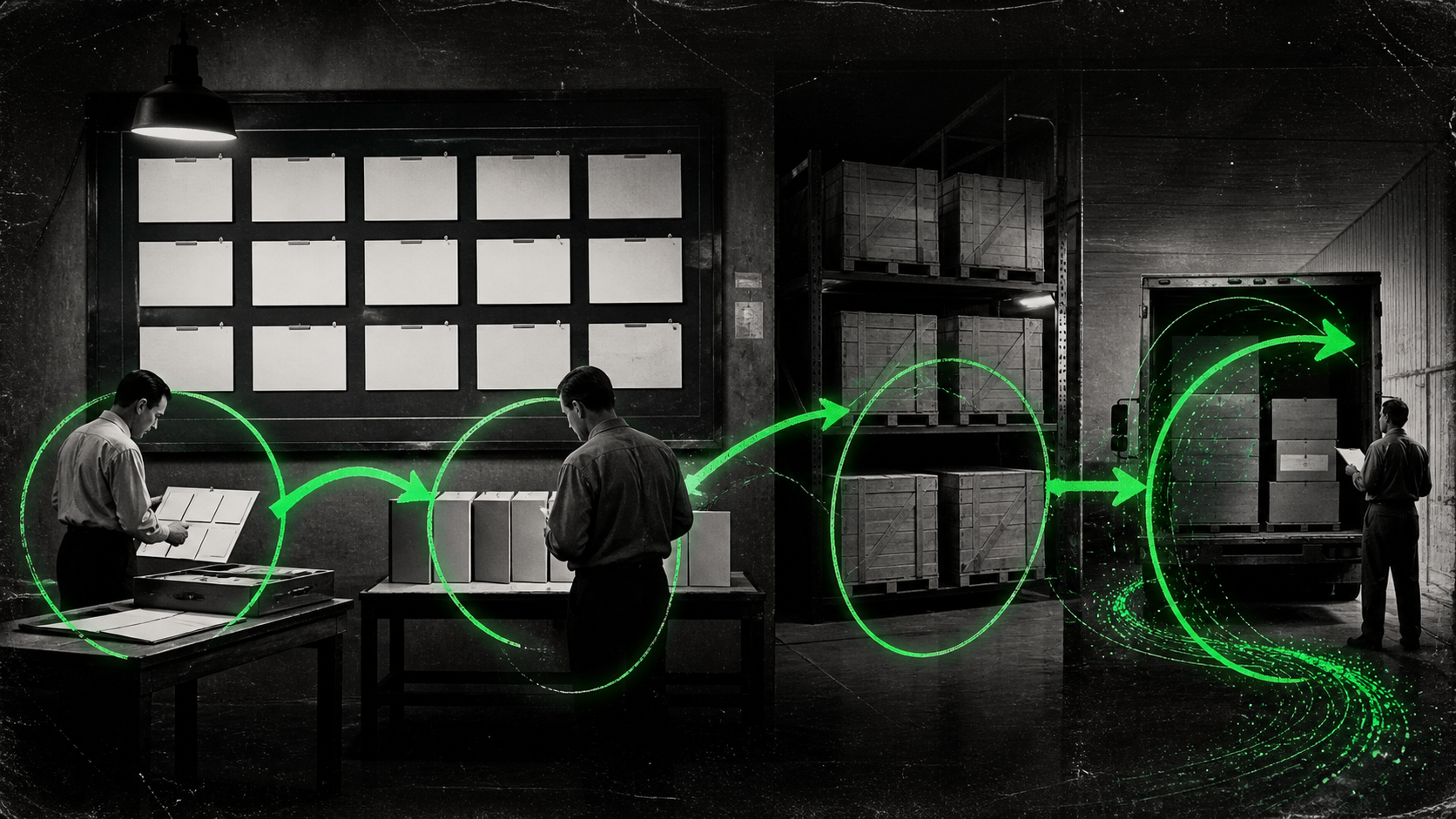
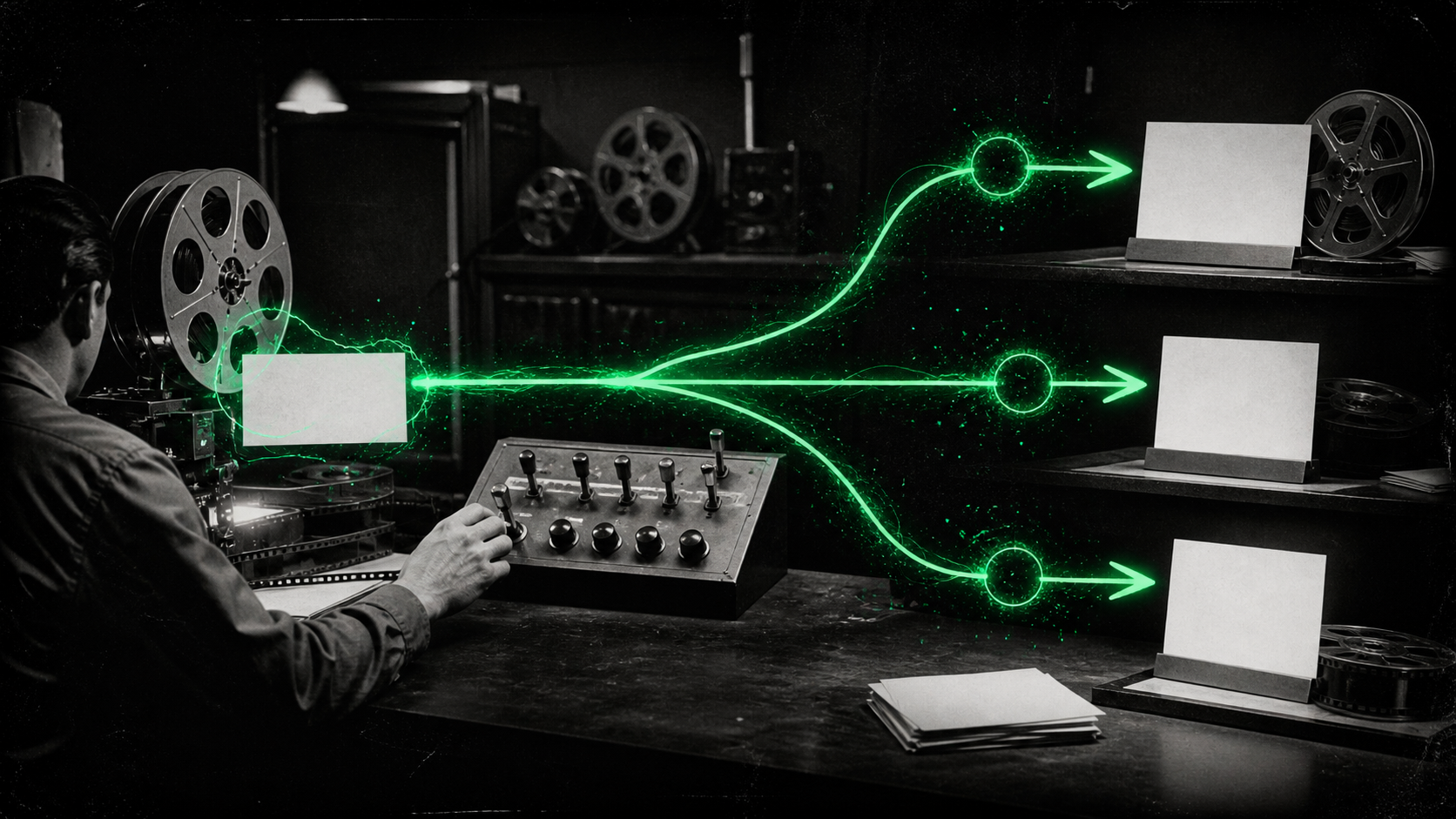
The point of a UGC testing framework isn't to produce more videos. It is to make the next brief smarter.
Every asset should answer a creative question. Does the early transformation beat the slow setup? Does a real comparison resolve the buyer's doubt? Does the occasion make the product worth saving? If you cannot name the decision, you are not running a test. You are uploading variations and hoping the dashboard explains them later.
Before the result arrives, write down the control, the one change you care about, the signal that matters, and what you will do next.
What is a UGC testing framework?
A UGC testing framework is a repeatable system for turning creator assets into usable decisions. It defines:
- The job of the asset.
- The control it will be compared against.
- The creative variable being changed.
- The primary signal used to judge the change.
- The result that would make the team reject its own idea.
- Other changes that may limit the conclusion.
- The next brief created by the learning.
The framework doesn't make messy platform data perfect. It stops your team from changing the definition of success after seeing the result.
Give the asset one job
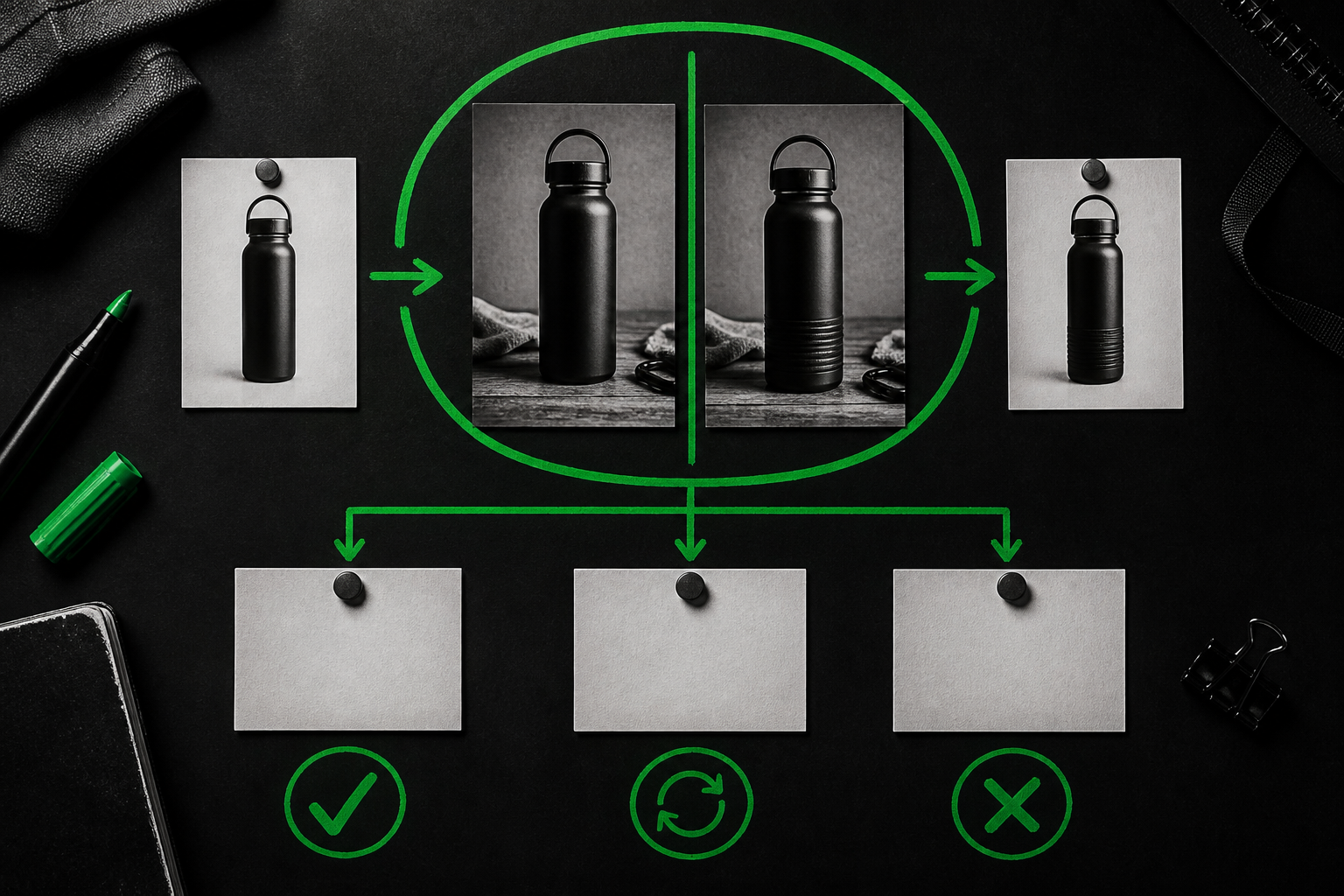
Creator content can earn attention, explain a product, remove an objection, create desire, or push a buyer toward action. Those jobs overlap, but one should lead.
Write the job as a sentence:
This asset needs to make [specific audience] believe, understand, or do [specific thing] by showing [visible mechanism].
For example:
- Make small-space buyers understand the furniture transformation by showing it unfold immediately.
- Make skeptical buyers evaluate durability by showing the product under recognizable pressure.
- Make food buyers want the texture by showing the break, pull, pour, or bite at close range.
- Make launch followers wait for the reveal by showing the collection without showing the hero item.
Now the asset has a reason to exist. That reason determines the test.
Keep a control your team can explain
A control is the current version you are trying to beat or learn against. It doesn't have to be your best-performing ad of all time. It needs to be stable enough that the comparison means something.
Use the same product, offer, destination, audience logic, and conversion event when possible. If you change the creator, hook, length, offer, edit, landing page, and targeting together, you may get a winner. You won't know why it won.
The cleanest creator tests often compare two openings built from the same body:
- Product shown immediately versus product revealed later.
- Spoken claim versus visible demonstration.
- Finished result first versus process first.
- Single-product demo versus labeled comparison.
Platform tools can help enforce cleaner conditions. TikTok Ads Manager's split-testing guidance describes tests that hold other variables stable and separate audience exposure between versions. That is a media setup. Your creative strategy still has to define the useful question.
Change one decision when you need a clean answer
One-variable testing is not a religion. It is a tradeoff.
Change one decision when you need to know whether a specific mechanism should survive. Explore multiple variables when speed matters more than attribution, then run a cleaner confirmation test on the strongest direction.
Here is the practical sequence:
- Explore several genuinely different mechanisms.
- Identify the direction worth another round.
- Hold the body stable and isolate the decisive change.
- Confirm the learning before turning it into a rule.
That final step matters. One result can be noise, creator fit, or timing. A repeated result under comparable conditions is more useful, but it is still evidence for your brand, audience, and setup, not a law of creative.
Choose the signal before the result arrives
Every metric can flatter the wrong idea.
Views can hide weak intent. Click-through can reward curiosity that dies on the landing page. Conversion can make a strong offer look like strong creative. Comments can be active because people are confused.
Pick one primary signal based on the asset job, then add diagnostic signals that help explain it.
Asset job: Earn the first beat. Primary signal: Early retention. Diagnostic questions: Did viewers stay past the opening action?
Asset job: Explain the product. Primary signal: Completion or qualified click. Diagnostic questions: Did comments still ask how it works?
Asset job: Remove an objection. Primary signal: Qualified click or conversion step. Diagnostic questions: Did the same objection remain in comments?
Asset job: Create a repeatable idea. Primary signal: Saves or shares. Diagnostic questions: Did viewers want to use or send the idea?
Asset job: Drive action. Primary signal: Conversion event. Diagnostic questions: Did the landing experience match the promise?
Don't grade every post against every metric. The scorecard should reflect the decision you are making.
Define what would prove your idea wrong
This is the part most teams skip.
Before launch, write the result that would make you stop believing the hypothesis. If you wait, every weak result gets an explanation and every strong result becomes a victory lap.
A useful rejection condition sounds like this:
- If the visible demo doesn't improve early retention and product questions remain, the proof isn't clear enough.
- If the delayed reveal earns completion but hurts qualified clicks, the suspense may be attracting the wrong attention.
- If the occasion video gets saves but no product-path behavior, the ritual may be stronger than the brand connection.
- If the comparison creates comments about fairness, the setup needs work before another media test.
That isn't pessimism. It is how you keep creative learning honest.
Record what else changed while it is fresh
Creator tests are not lab experiments. Real campaigns move.
Log anything that may have affected the comparison:
- Different creator audience or delivery.
- Organic distribution before paid spend.
- Offer, price, inventory, or landing-page changes.
- Music, length, caption, or thumbnail changes.
- Seasonality, news, or platform trend overlap.
- Product availability or comment moderation.
- Unequal spend, run time, or audience saturation.
Another change does not automatically invalidate the result. It limits what you can say about it.
This is where most creative reports get sloppy. They present a difference, erase the conditions, and call it a learning. Keep the conditions attached.
Use comments as objection data, not applause
Comments can tell you whether the video resolved the right question.
Sort them by function:
- Resolved: viewers restate the product truth correctly.
- Unresolved: viewers ask the question the video was supposed to answer.
- New objection: the proof creates a different concern.
- Comparison dispute: viewers challenge the set, conditions, or verdict.
- Action signal: viewers ask where, how, when, size, fit, or availability.
Don't confuse comment volume with positive movement. A blind taste-test video can generate disagreement because the comparison set is interesting. It can also generate disagreement because the test looks rigged. The words tell you which one happened.
The UGC test card
Use one card per decision:
```text ASSET JOB What must the viewer believe, understand, or do?
BUYER DOUBT What is stopping that action now?
VISIBLE PROOF What will the camera show instead of claim?
CONTROL What stable version are we comparing against?
CHANGED VARIABLE What single creative decision changes?
PRIMARY SIGNAL Which metric decides the result?
REJECTION CONDITION What result tells us the idea did not work?
OTHER CHANGES What changed outside the test?
NEXT ACTION Keep, revise, confirm, or stop? ```
That card is short on purpose. If the test needs a presentation to explain it, the decision probably isn't isolated.
Turn the result into the next brief
The learning is not the winning file. It is the rule the next creator can use.
Bad learning: the blue-shirt creator won.
Better learning: the immediate physical demonstration held attention better than the spoken setup under comparable conditions.
Best next brief: keep the immediate demonstration, use a new creator, and test whether a tighter camera angle on the proof improves qualified clicks while the rest of the video stays unchanged.
This is how creative compounds. The next batch inherits a decision instead of starting from another blank brainstorm.
You can use the same logic with a UGC creative brief, a product demo video, or a bank of TikTok hooks for brands. Each concept enters the system with a job and leaves with a documented lesson.
A weekly operating rhythm
Keep the cadence boring.
At the start of the cycle, choose the decisions worth testing. Before launch, lock the test cards. During the run, watch delivery and obvious errors without rewriting the hypothesis. At the end, classify the result and write the next brief while the context is still fresh.
The team should leave every review with four outputs:
- What we believe now.
- How confident we are.
- What limits the conclusion.
- What we will test next.
No deck full of thumbnails. No winner with no explanation. No pile of lessons nobody can use.
Build a system that learns
UGC volume is easy to count. Learning is harder.
Give each asset one job, hold a control, and choose the signal before results arrive. Record what would prove the idea wrong, then write the next brief from what actually happened.
The goal is not more content. It is fewer fuzzy decisions each round.
If you want senior operators to build and run the system with your team, see Emerald's approach to social media marketing.
FAQ
What is a UGC testing framework?
A UGC testing framework is a repeatable way to define the creative decision, hold a control, change a limited variable set, choose the primary success signal, record what else changed, and decide what happens next.
What should you test first in UGC?
Start with the buyer doubt and the visible proof used to resolve it. A strong first test often compares two opening mechanisms while keeping the creator, product, offer, and destination stable.
How many variables should change in a creative test?
Change one decision when you need a clean learning. Multi-variable batches can explore faster, but they make it harder to know which change produced the difference. Use exploration to find a direction, then isolate the decisive change.
When should a brand stop a UGC concept?
Stop or redesign it when the primary signal misses the threshold you set, the intended objection remains in comments, the proof is not visible, or too many other things changed to interpret the result.
How we built this guide
This framework connects four decisions every useful creative test needs: a hypothesis, success signal, rejection condition, and a record of what else changed. Public posts can suggest creative ideas, but they cannot establish causality or predict results for a brand adaptation.