The best TikTok hooks for brands start an unresolved action, test, reveal, or judgment. The viewer understands what is happening in the first frame and has a reason to see how it ends.
A hook is not just a sentence over footage.
If the copy makes a vague promise that the viewer will not believe what comes next, but the video shows a product sitting on a counter, the viewer is doing all the work. Give them motion, stakes, a visible set, a missing answer, or a result that needs an explanation.
What makes a good TikTok hook for a brand?
Before calling it a hook, make sure it does four things:
- It makes the subject readable on a phone.
- It starts a question the post can actually answer.
- It connects to a real product truth or use occasion.
- It leaves enough room for the rest of the video to pay it off.
The first frame, on-screen copy, spoken line, and sound do not need to say the same thing. They need to support the same question.
If the footage promises a transformation and the voiceover starts a founder story, you have two openings fighting each other.
Plan frame zero before the script
Frame zero is the first image a viewer can process. Write it as a shot direction.
Not this:
*Start with a relatable pain-point hook.*
This:
*Open with the separate product components landing on the workbench while the finished shape remains unknown.*
Now the creator, editor, and strategist can see the same idea.
Shrink the frame to phone size. Can you identify the action and object? If text is required, can you read it without pausing? Does the scene create a question before the caption finishes?
Do this before the shoot, not after the first edit comes back.
Seven TikTok hook structures brands can test
These are structures, not scripts. Use the one that fits what your product can honestly show.
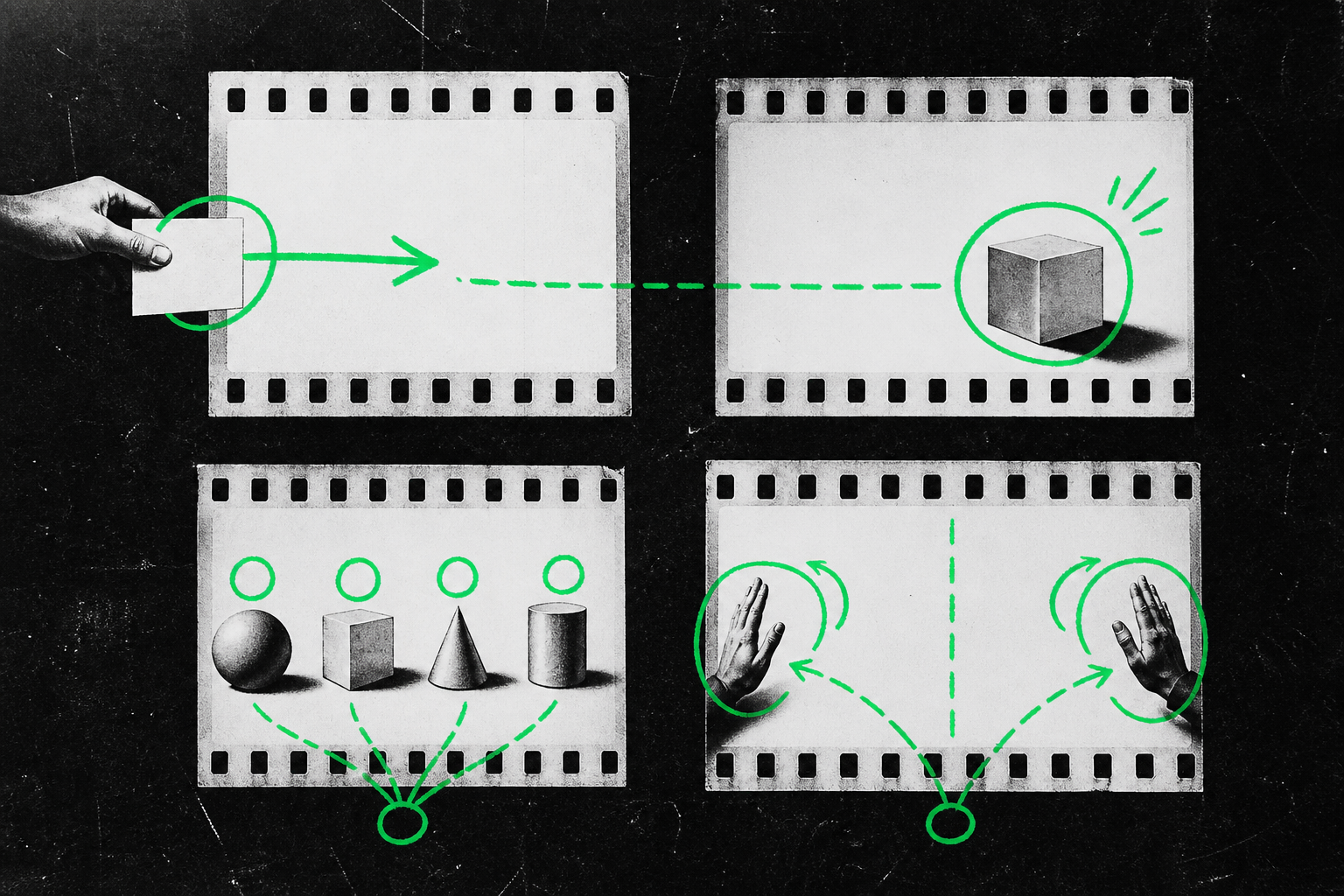
1. Start the transformation
Open with the product already changing state.
A public convertible-chair source begins with a hidden extension being pulled out. The viewer understands the function through movement, then gets the wider retail context later.
Use this for folding, cleaning, fitting, assembling, organizing, restoring, decorating, or any product with a readable before and after.
Do not tease a transformation your footage cannot show clearly.
2. Show the result, then explain it
Open on the finished texture, reveal, or surprising result. Use the body to show how it happened.
A public stuffed-cookie source opens as the cookie pulls apart and its center becomes visible. The result creates a practical next question: how did they make that?
This structure fits food, beauty, home projects, packaging, and visual transformations. It fails when the result gives away the whole experience and leaves no useful process behind it.
3. Put an unusual amount in frame
Quantity can create a question without a spoken setup.
A cooking source opens with a creator behind a large pile of packaged cheese. The visible excess signals that a serious cooking process is coming.
Use this only when the amount has a legitimate role: a bulk order, complete collection, large event, inventory reset, batch process, or comparison set. Wasting product for spectacle is not a strategy.
4. Declare a finite set
Show the full lineup and promise a verdict.
A public drink-rating source stages the products in the opening, then isolates them one at a time for judgment. The audience knows the sequence will end with an order or winner.
This works for rankings, tests, collections, flavors, tools, routines, or options. Define the scoring rule. Random opinions create comments, but they do not always create trust.
5. Give the audience the answer first
Set up a challenge where the viewer knows something the creator does not.
A blind taste-test source hides the drinks from the creator while keeping the labeled lineup visible to the audience. Every sip carries anticipation because the viewer knows the answer.
Use this for blind comparisons, mystery boxes, hidden prices, ingredient guesses, sound tests, or recognition games. Protect reaction honesty. A fake surprise kills the premise.
6. State a specific negative constraint
Tell the viewer one thing not to do, but make the missing answer narrow enough to resolve.
A fragrance source uses a narrow warning about where not to apply perfume as an information gap. We are citing the visible source structure, not endorsing its beauty advice.
This hook needs extra care. The body must answer the exact question, and the advice needs a credible source. Do not turn an unverified health, safety, or product claim into fear copy.
7. Mirror the action you are responding to
If you are stitching, reacting, or answering, match the source movement so the handoff feels continuous.
A public reaction-style recipe source mirrors the original pouring action before moving into its own response.
The movement tells the viewer that the second clip belongs to the first. Build a new perspective, instruction, or correction after the handoff. Do not simply replay the original.
!Four opening-frame structures showing object entry, result first, a finite set, and mirrored motion
When should the product appear?
Show it immediately when the product itself creates the question.
That might be a strange shape, a hidden function, a visual texture, an excessive quantity, separate parts, or a recognizable comparison.
Delay it when the creator or setup needs to create the question first. A conversation can start without the product if the person has enough credibility and the reveal is worth the wait. A challenge may show the rig before the brand. A problem-led demo may need the broken state before the fix enters.
Do not hide the product because somebody said mystery always improves retention. Mystery without relevance is just missing information.
Spoken hooks still matter
A spoken hook can add stakes, identity, context, or a point of view the footage cannot carry alone.
Use it to answer one of these:
- Why is the creator doing this now?
- What changed their mind?
- Who is the test for?
- What rule or assumption are they challenging?
- What will be decided by the end?
Then give the voice something to stand on visually.
For example, a line about buying every version belongs over the full set entering frame. A line about testing the product in a real apartment belongs over the constraint. A line about a recurring question belongs with the comment or product detail that triggered the answer.
The sentence and image should close one loop together.
Hook copy that usually fails
“Stop scrolling”
It asks for attention without earning it.
“You need this”
It skips the buyer problem and product proof.
The generic perfect-product POV
Sometimes the footage earns it. Most of the time it is a generic label placed over a catalog shot.
The claim that nobody is talking about it
Usually false. And even when true, it does not explain why the viewer should care.
A paragraph of setup
If the first frame needs several lines to become interesting, the action is not clear enough.
You can keep conversational copy. Just make it specific to the behavior on screen.
Build a hook-control test
Do not compare seven completely different videos and call it a hook test.
Keep the creator, product, offer, main proof, and body as stable as practical. Change the opening decision.
Example:
```text CONTROL Product enters on a table while the creator names the problem.
VARIANT A The product starts changing state in frame zero.
VARIANT B The finished result appears first, then the process resets.
VARIANT C The comparison set appears together before the first verdict.
PRIMARY SIGNAL Retention through the handoff from hook to proof.
KILL CONDITION The opening holds attention but viewers leave before the product or evidence becomes clear. ```
That last line protects you from the entertaining hook that attracts the wrong audience.
Use a UGC testing framework to record the result. Use a UGC creative brief template to make sure the first frame survives production.
The hook has to pay its debt
Every hook borrows attention. The rest of the post has to pay it back.
If you open a test, show the result. If you declare a set, finish the ranking. If you show the finished object, explain the path. If you warn against a mistake, give a sourced and useful answer.
Pay that debt and the content can feel native without sliding into disposable clickbait.
For the larger system behind the creative, read our UGC content strategy guide. If you want Emerald to research, brief, produce, and test the work with you, see our social media marketing services.
FAQ
What is a good TikTok hook for a brand?
A good brand hook starts a clear action, test, reveal, or judgment that the viewer can understand immediately and wants to see resolved. The first frame and opening line should create the same question.
Should the product appear in the first frame?
Show the product immediately when its shape, transformation, quantity, or use creates the question. Delay it when the creator, problem, or test setup needs to create context first.
Do spoken hooks matter on TikTok?
Yes, but they work best when the footage supports the line. A strong sentence over dead or unrelated footage asks the viewer to do too much work.
How many TikTok hooks should a brand test?
Test enough distinct openings to compare real creative ideas, but keep the product, creator, offer, and body as stable as practical. The goal is a clean learning decision, not a large pile of unrelated videos.
How we built this guide
We analyzed visible opening frames and sequences in public short-form posts to build creative hypotheses. The examples cannot prove that a hook alone caused performance, and Emerald does not present the source posts as client work.