Most UGC content strategy dies in the brief.
The brand sends a creator a few adjectives, a product page, five talking points, and a request to make it feel native. The result is usually polished enough to approve and vague enough to forget.
A real UGC content strategy does something harder. It decides what the viewer needs to see before they will believe the product, then turns that moment into a testable piece of creative.
The hard part is translating “we saw a format doing well” into an original idea with a clear reason to exist.
What is a UGC content strategy?
A UGC content strategy is a system for choosing, briefing, testing, and improving creator-made content. For a brand, it should answer six questions before a creator opens the camera:
- What buyer tension is the video addressing?
- What does the viewer doubt?
- What can the camera show that makes that doubt easier to resolve?
- Which creator can make that proof feel native?
- What signal would make us keep, revise, or kill the idea?
- What would prove the original hypothesis wrong?
That last question is where most briefs fall apart.
If the only success condition is “make it engaging,” nobody learns anything. A good result cannot teach you what to repeat. A bad result cannot tell you what failed.
The difference between a format and a mechanism

Creators do not need more prompts to mimic.
They need a clear job for the video.
Say a short-form post begins with a piece of furniture becoming a bed. The surface-level format is a product demo. The mechanism is different: the transformation resolves before the viewer has time to wonder whether it is real. A later wide shot, price tag, or room reveal can then work as a receipt instead of a slow setup.
That is portable. “Film a chair in a warehouse” is not.
The same distinction applies to a creator who puts their full weight on a convertible surface before showing how it folds. The format is still a demo. The mechanism is a physical stress test that answers the cheap objection first: will this thing hold up?
And sometimes the product is not the first payoff at all. A preparation sequence can make the final scene feel earned. The product works because it unlocks an occasion, not because a creator spent 20 seconds naming features.
The useful question is never “what trend should we copy?” It is: what did the viewer get to see for themselves?
Start with the doubt, not the script
Every category has a version of the same problem.
- A pillow can be soft in a product description and flat by midnight.
- Better-for-you food can promise great taste and still look like a compromise on camera.
- A skincare routine can list ingredients and never make the starting problem feel real.
- A piece of convertible furniture can look clever until someone has to sleep on it.
The content job is to make the exact doubt visible, then give the product a chance to answer it.
Not with a claim.
With visible proof.
Visible proof is the specific thing the camera can show: the material rebounding, the before-and-after state, the real portion, the price tag, the setup, the comparison, the creator's hands doing the task.
If the proof is vague, the brief is vague. “Show the benefits” is not a direction. “Show whether the material comes back after repeated weight” is.
A creator brief should contain a test, not a script
The best creator briefs are specific about the decision and loose about the performance.
Use this structure:
Brief field: Buyer tension. The decision it forces: What uncomfortable thought is already in the viewer's head?
Brief field: Visible proof. The decision it forces: What can the camera let the viewer judge?
Brief field: Opening action. The decision it forces: What happens in frame zero?
Brief field: Brand reveal. The decision it forces: When does the product enter, and why there?
Brief field: Creator fit. The decision it forces: Who could make this feel like a post instead of a read?
Brief field: Test hypothesis. The decision it forces: What should improve if the mechanism is doing its job?
Brief field: Failure signal. The decision it forces: What outcome tells us the idea did not work?
This is not a demand for rigid scripts. It is the opposite.
The creator should still choose the words, setting, pacing, and details that make the video theirs. But they should not have to invent the strategic core while holding a product and staring at a blank camera roll.
For the field-by-field version, use this UGC creative brief template.
Three proof patterns worth testing
If demonstration is the central job, start with the product demo video guide before choosing the exact shot structure.
1. Resolve the transformation early
Use this when the product's value is a visible change: a fold-out, a clean-up, a fit, an assembly, a reveal, a before-and-after.
Show the change before the explanation. Then use the rest of the clip to answer the next questions: Is it stable? Is it available? Would I use it? What does it look like in a real room or routine?
The test is not “did people like the transformation?” The test is whether the early reveal earns a stronger first-three-second hold than a slower setup with the same product and creator.
2. Put the product under the kind of pressure buyers fear
Use this when the objection is physical: taste, texture, durability, comfort, capacity, ease, or fit.
Do not tell viewers a product is sturdy. Put it under pressure they recognize. Do not tell them a food substitute tastes normal. Let a real person make the bite, comparison, or meal that makes “normal” judgeable.
The evidence needs to fit the category. A fake stress test is worse than no stress test. If the difference is invisible at phone size, the proof is not doing its job.
3. Sell the occasion, not the object
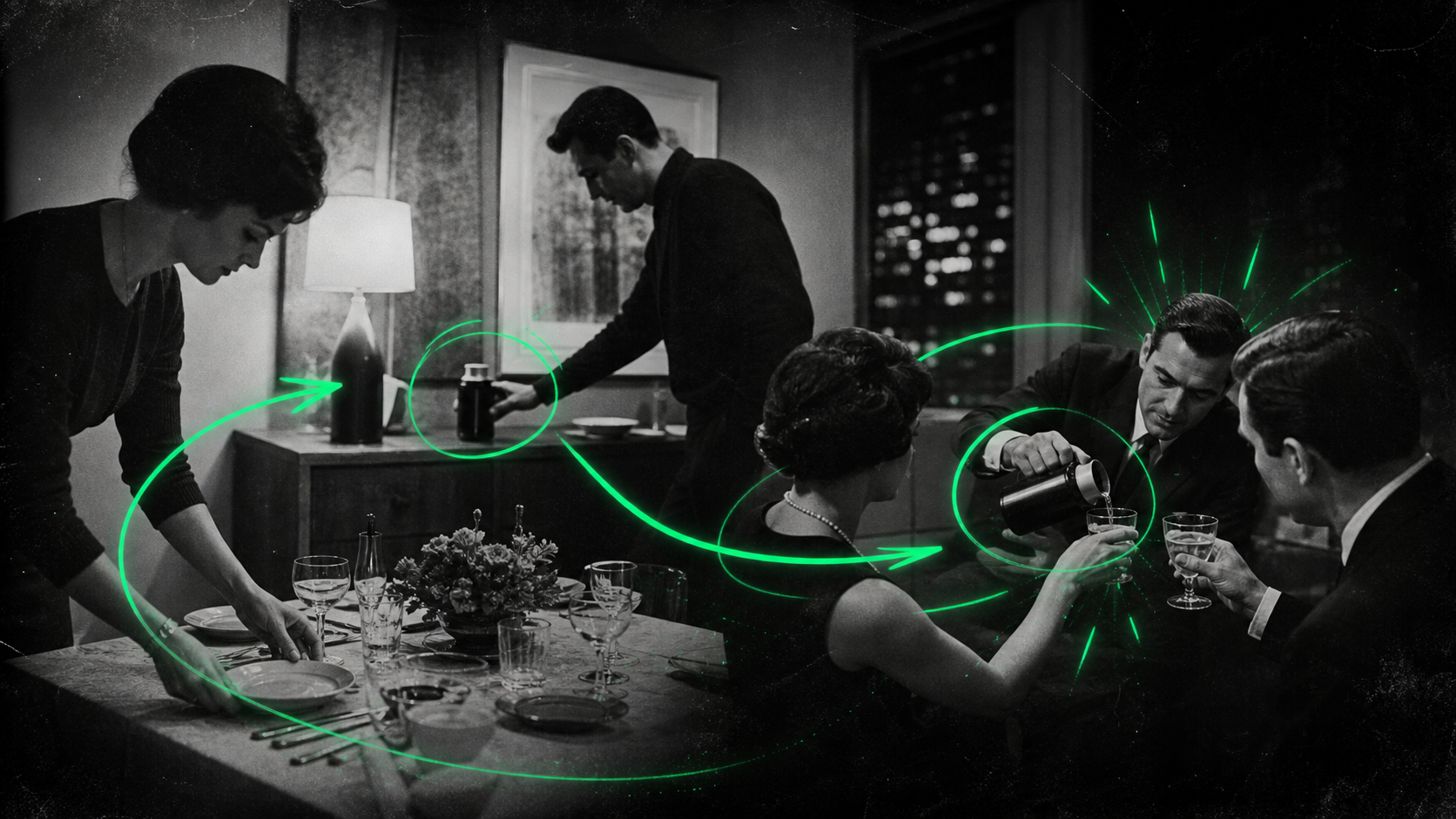
Some products are better when the video starts with the situation they make possible: a last-minute guest, a low-effort dinner, a late-night reset, a party ritual, a small win in a bad day.
Here, the product does not need to open the story. The viewer needs to recognize the occasion first.
The test is usually saves and shares, not just a click. If people save the idea because they want to recreate the moment, the product has become part of a useful ritual.
What to measure after the post goes live
Do not grade every creator post on the same metric.
If the hypothesis is an early visual reveal, look at the first-three-second hold against a comparable control. If the hypothesis is doubt removal, read the comments for the objection you wanted to resolve and compare click-through. If the post is built around an occasion, watch saves and shares.
Then record the result next to the original hypothesis.
A simple UGC testing framework keeps that result connected to the next brief instead of leaving it in a reporting dashboard.
This prevents a common creative-team failure: calling something a winner because it got views, then recreating the wrong part of it for the next ten videos.
The honest limitation
A source post is not a formula.
Its performance can be affected by the creator, audience, timing, distribution, product availability, edit, and things nobody can see from the final video. A visible mechanism gives you a better hypothesis. It does not give you permission to claim a result before you run the test.
That is why we keep the source observation, the adapted concept, and the campaign outcome separate. The source tells us what may be worth testing. The brand's own data decides whether it earns a second round.
Build the brief your creator can actually use
If your current brief is a moodboard plus a feature list, start smaller.
Pick one buyer doubt and one thing the viewer can inspect on camera. Give the creator a clear job, compare the result with a real control, and carry the useful part into the next brief.
Now the content library starts learning instead of simply getting larger.
If you need a social media marketing system that produces usable creative, not just a content calendar, see how Emerald approaches social media marketing.
FAQ
What should be in a UGC content brief?
Include the buyer tension, the visible proof, the opening action, the required product truth, the creator fit, the distribution/use-rights requirements, and the success signal. Keep the creator's execution flexible unless a compliance requirement makes a line non-negotiable.
Is UGC content strategy only for TikTok?
No. The underlying job travels: make the product or outcome visible, retain the native behavior of the platform, and test one mechanism at a time. The execution changes across TikTok, Reels, Shorts, paid social, and product-page video.
Should brands copy viral creator content?
No. Copying a surface feature creates a delayed imitation. Extract the viewer problem, the visible proof, and the story logic. Then rebuild the execution around the product and creator you actually have.
How many creator concepts should a brand test first?
Start with enough variation to learn, not enough variation to create chaos. One buyer tension, two or three distinct proof mechanisms, and a small number of comparable hook variations is usually more useful than a long list of unrelated concepts.
How we built this guide
The proof patterns in this article come from visible details in three public short-form posts. We did not guess about missing audio or context. A source post can suggest what to test, but it cannot prove that a brand adaptation will perform.