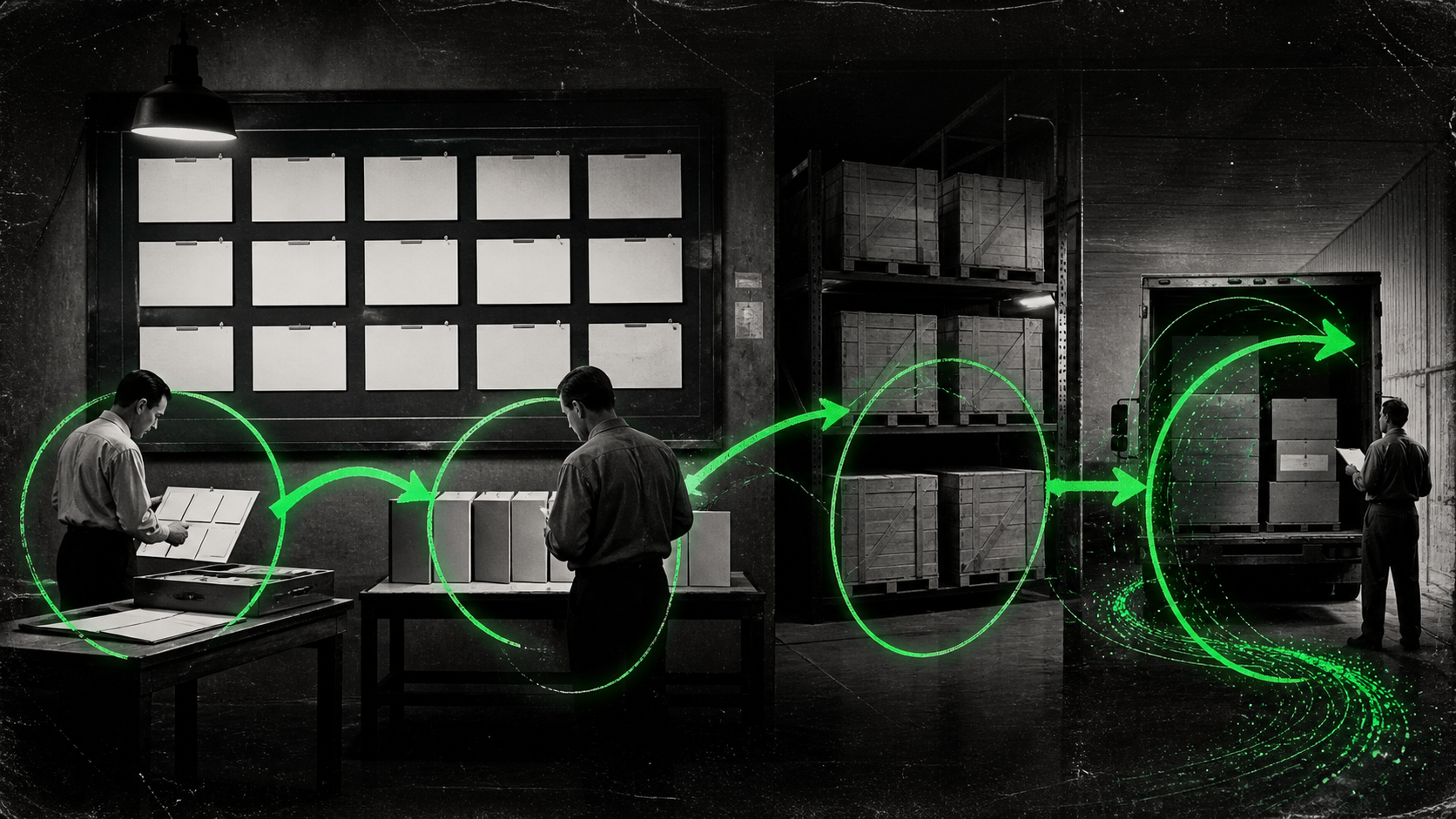
A strong product demo video answers a buyer's doubt on camera. It does not rotate the product, list features, and hope the viewer connects the dots. It picks one question, shows the product under the right conditions, and gives the buyer something they can judge for themselves.
The camera should do the convincing.
If the doubt is durability, apply pressure. If it is complexity, show the setup. If it is taste or texture, make the preparation and reaction credible. If it is a hidden function, reveal the transformation clearly.
Start with the buyer's doubt
Before you write the script, finish this sentence:
*The buyer wants the outcome, but they do not believe __________.*
Maybe they do not believe the chair can convert without feeling flimsy. They cannot tell whether specialty glass is actually different from ordinary glass. They think the tool looks complicated. They assume the drink needs a blender and five extra ingredients.
Pick one.
A product demo becomes muddy when it tries to prove everything at once. The material, setup, price, look, speed, performance, portability, and lifestyle payoff all fight for the same few seconds.
One video can hold supporting details. It still needs one proof job.
Choose a demo type that fits the doubt
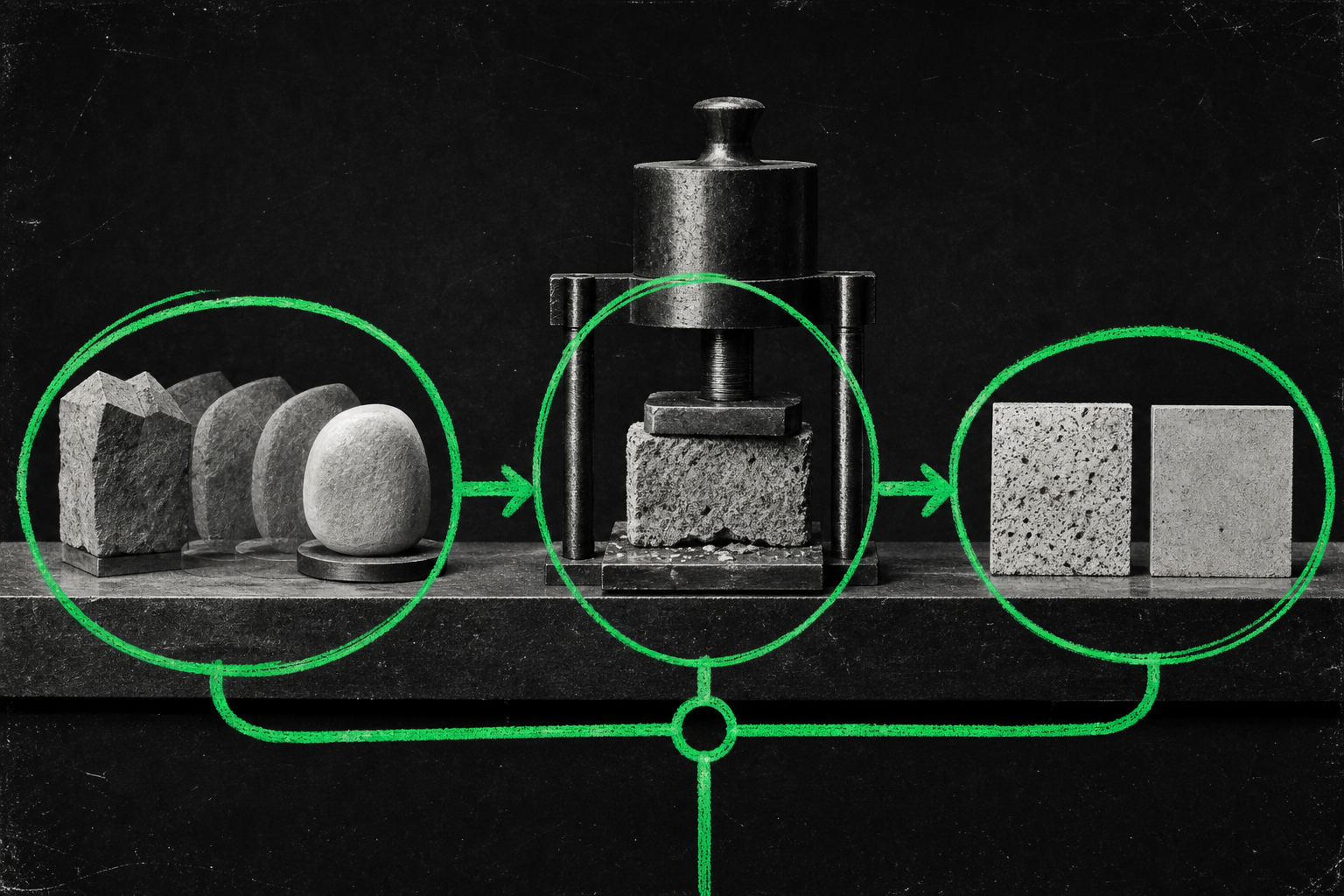
The format should follow the objection.
Transformation demo
Use this when the value is a visible change in state.
A public convertible-chair source starts with the hidden extension already moving. The viewer does not wait through a room tour before learning what the product does.
The portable lesson is not “film in a warehouse.” It is to resolve the non-obvious transformation while attention is highest, then use later shots for context, scale, availability, or use.
Film the start state, the movement, the connection points, and the end state. Do not hide the hard part behind a cut if ease of use is part of the promise.
Stress or pressure demo
Use this when the buyer fears failure under use.
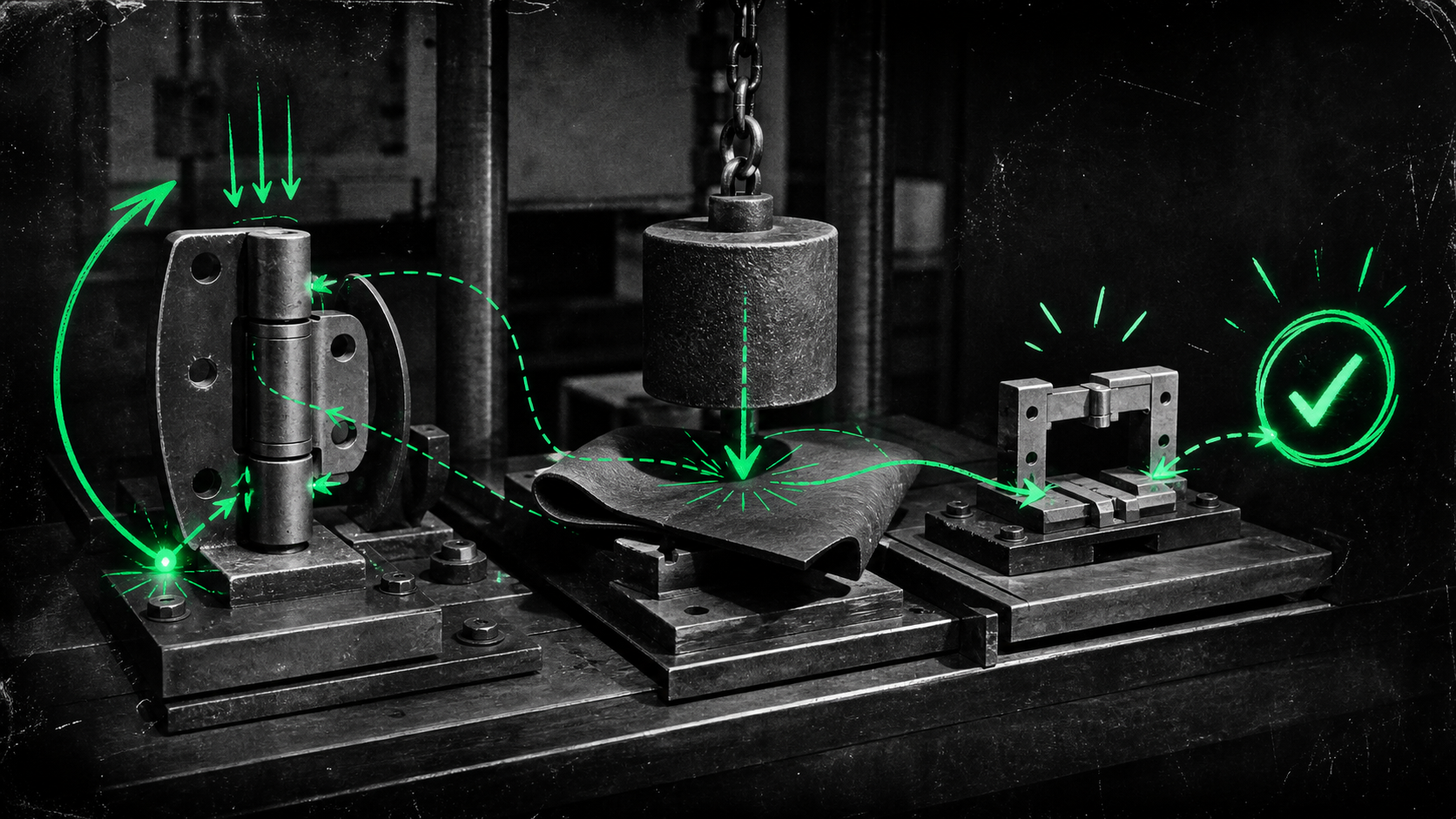
Pressure might mean weight on furniture, repeated handling, a spill, a difficult surface, a crowded container, or a real installation constraint. The test should resemble the buyer's actual worry.
Do not stage abuse that the product was never designed to handle. And do not label something a stress test if the conditions are theatrical, hidden, or irrelevant.
The point is not drama. It is a fair chance to inspect the claim.
Continuous-process demo
Use this when edits could make the proof feel suspicious.
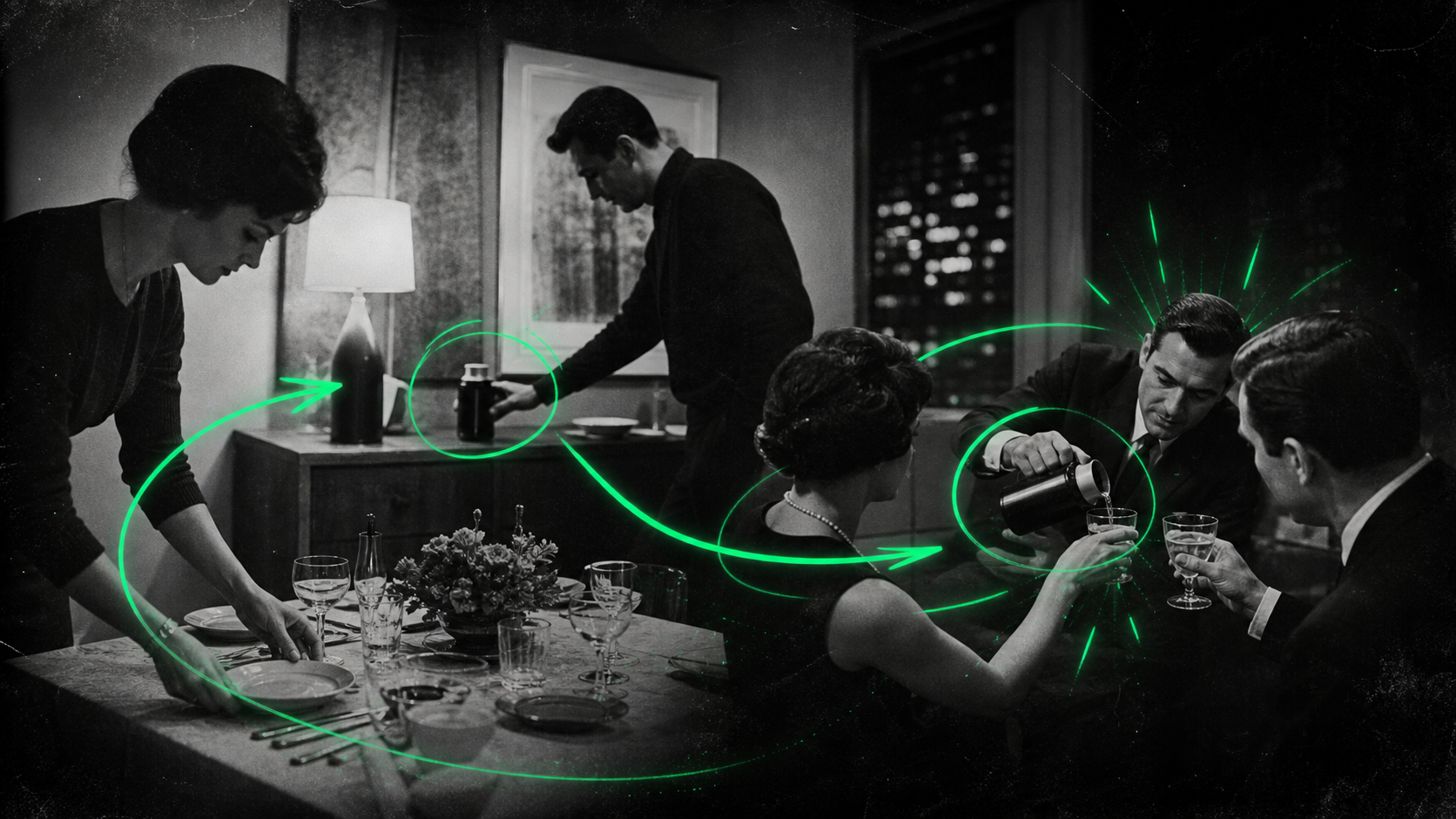
A public clear-protein preparation source keeps the tub, scoop, transparent shaker, water, and creator connected from preparation through the sip. That continuity gives the viewer fewer hidden steps to wonder about.
You can use the same logic for assembly, cleaning, software setup, cooking, or application. Keep the evidence in frame. If you must cut, preserve enough continuity that the viewer understands what changed between shots.
Side-by-side comparison
Use this when the difference is hard to appreciate alone.
A public art-glass source uses a cloth movement and a split view to make an optical property visible. The comparison gives the eye a reference.
Keep conditions fair. Same light. Same angle. Same distance. Same task. If one side gets the favorable setup, the comparison damages trust.
Component-first assembly
Use this when understanding how the product is built increases interest or perceived usefulness.
A modular hammer source begins with the head and handle as separate objects, then shows their connection. A familiar finished object becomes an unresolved assembly.
This works best when the joining action is visually satisfying and the parts explain a real difference. Random disassembly just creates motion.
!Three product demonstration stations for transformation, stress testing, and comparison
Build the demonstration in five decisions
1. Write the claim you need the camera to show
Do not start with camera angles.
Write the approved product truth first. Then ask which part can be shown honestly. “Easy to assemble” becomes the complete assembly with visible connection points. “Reduces glare” becomes a controlled side-by-side view. “Mixes with water” becomes the scoop, water, shake, and result in one sequence.
If the claim cannot be verified or shown, remove it from the demo.
2. Define fair test conditions
List the setup a reasonable buyer would expect.
What material is being used? How much preparation happened before the camera started? Are the compared products in the same environment? Is the creator using the product as directed? Does a disclaimer or qualification need to appear?
Honest conditions make ordinary demos stronger. Hidden conditions make dramatic demos weaker.
3. Put the evidence where a phone can see it
A product difference may be real and still disappear on a small screen.
Move closer. Simplify the background. Increase contrast. Slow down the decisive movement. Use a stable angle. Add a real object for scale. Show the relevant detail twice only if the first pass is genuinely hard to read.
Do not solve weak footage with paragraphs of overlay text.
4. Decide when the product name appears
The brand does not always need to lead.
If the product shape is instantly recognizable and useful, put it in frame. If the action creates the question, let the object enter with the answer. If the content is a retail discovery, the shelf or location may be part of the evidence.
This is a sequencing choice, not a rule about hiding logos.
5. End with a receipt
A receipt is the final piece that makes the demo actionable or credible: the completed setup, the in-use result, the comparison, the included parts, the product detail, or a verified location and price.
Do not end on a generic smile if the buyer still has an unanswered question.
Result first or payoff later?
Show the result first when the transformation itself creates the question.
A finished cookie pulled apart to reveal its center can earn the next beat because the viewer wants to know how it got there. A folding product can demonstrate the main function immediately, then answer stability and fit.
Hold the payoff when the process makes it believable. A difficult installation, restoration, or preparation sequence may need visible work so the reveal feels earned.
The decision is not about attention span. It is about credibility.
Ask: if I show the result now, does it create curiosity or remove the reason to stay?
For more opening options, see TikTok hooks for brands.
What not to do
Do not use motion as a substitute for proof
Spinning packs, pouring liquid, snapping lids, and moving hands can look polished while answering nothing. Every action should either create the question, show the mechanism, or close the loop.
Do not let the creator make unapproved claims
Personal experience is not a free pass for medical, nutrition, financial, safety, or performance claims. Supply approved language and exclusions before filming. Review organic and paid usage separately when the rules or risk differ.
Do not compare unfairly
If the lighting, quantity, angle, preparation, or editing favors your product, say what changed or redesign the test. A clean comparison is more persuasive than a rigged win.
Do not copy the source execution
Use source posts to identify mechanisms. Build original footage, wording, art direction, talent, and sequencing for your brand. You can read the full process in how to reverse engineer viral content.
How to test a product demo video
Write the learning decision before launch:
```text Demo job: Buyer doubt: Evidence shown: Control: Primary signal: What would make us revise it: What would make us kill it: Variables that changed: ```
If the demo is supposed to remove an objection, inspect comments for that objection and watch behavior through the evidence moment. If the opening is the variable, keep the creator, offer, product, and edit as comparable as possible.
Views alone will not tell you which part to repeat.
Use a UGC creative brief template to protect the proof during production, then connect it to a UGC content strategy that records the learning.
Make the product earn the claim
The best demo does not ask the creator to sell harder. It gives the product a fair test and lets the viewer watch the answer arrive.
Pick one doubt, choose evidence that fits it, and make the decisive moment readable on a phone. If the demo still needs a paragraph of explanation, the footage has not finished the job.
If you want Emerald to build and run that system with your team, see our social media marketing services.
FAQ
What should a product demo video include?
Include the buyer doubt, the product in use, visible evidence that addresses the doubt, enough context to understand the setup, and a clear next action. Keep unsupported claims out.
How long should a product demo video be?
Use the shortest runtime that makes the evidence clear. A simple transformation may resolve quickly. A technical setup may need more context. Cut repetition, not the proof a buyer needs to judge the product.
Should a product demo show the result first?
Show the result first when the change itself creates curiosity and remains credible without context. Hold it back when the preparation, difficulty, or test conditions are what make the result believable.
How do you measure a product demo video?
Choose a signal tied to the demo's job, such as retention through the proof moment, product-specific questions, click behavior, or downstream conversion. Compare it with a useful control and record what else changed.
How we built this guide
We analyzed visible scenes in public short-form posts without guessing about unavailable audio or context. The cited posts illustrate demonstration structures, but they cannot prove that a specific mechanic caused performance. Emerald is not presenting them as client work.