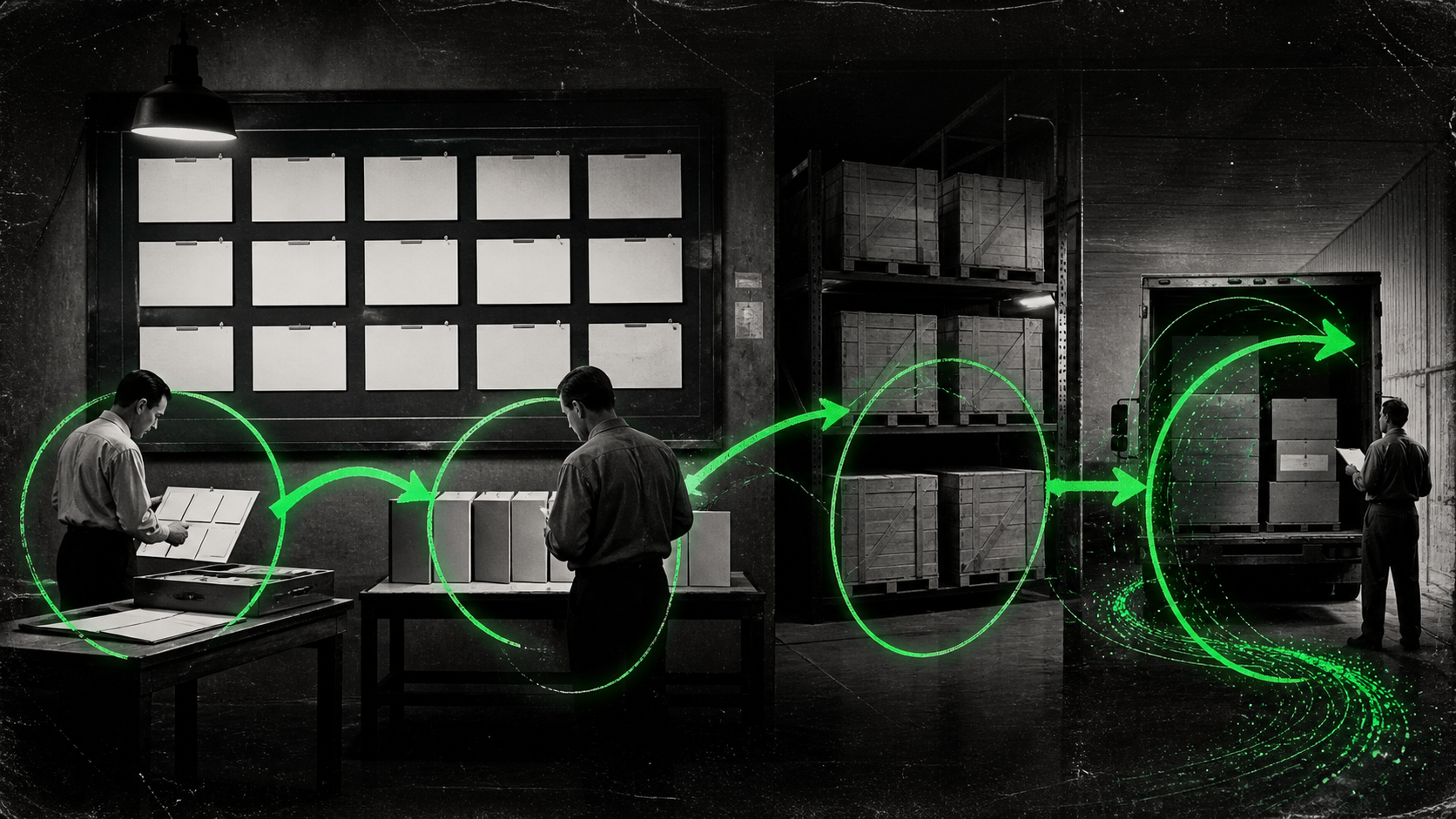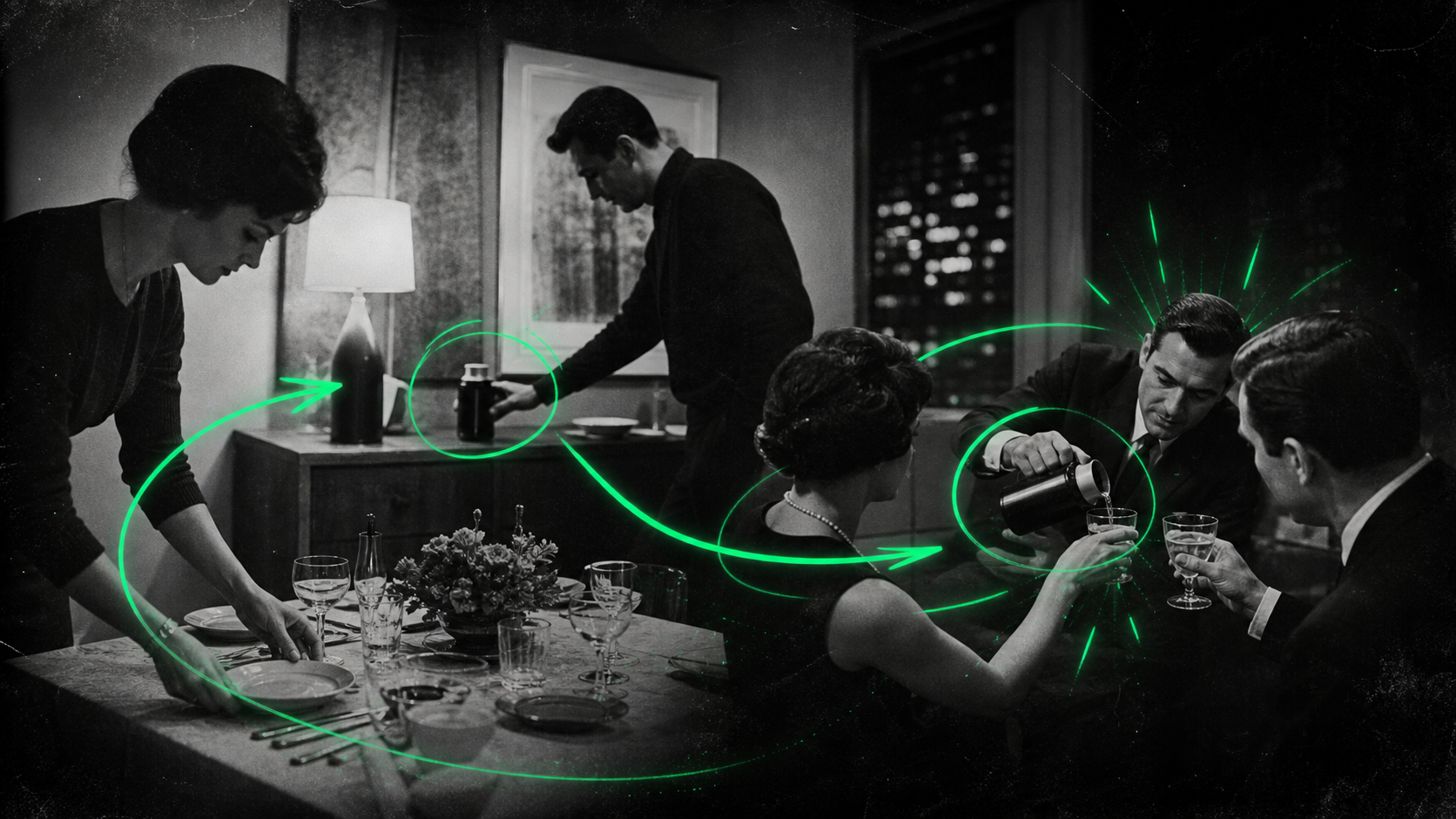
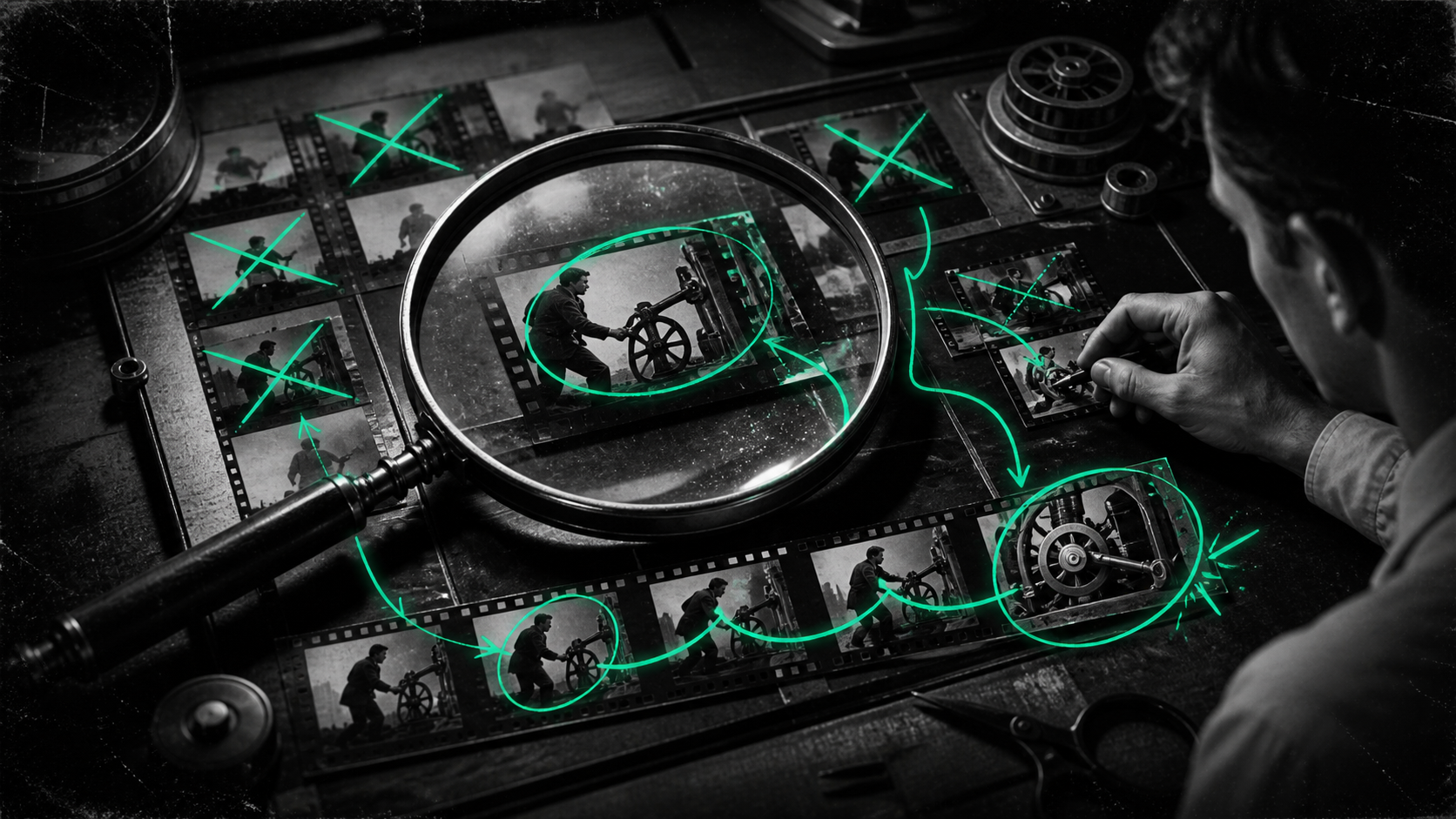
To reverse engineer viral content, stop copying what the post looks like. Break it into the viewer tension, opening action, visible evidence, sequence, and payoff. Then rebuild those decisions around your product, your audience, and a new creative execution.
That distinction matters. Most brands save a strong post, point to the caption style, and ask a creator to make their version. By the time it ships, the format feels late and the strategic reason it worked is gone.
The better move is to preserve the logic and replace the surface.
What it means to reverse engineer viral content
Reverse engineering content is a form of creative analysis. You watch a post closely enough to explain why someone might keep watching, what information arrives in each beat, and which visible moment pays off the opening.
You are not trying to prove why it performed. You cannot see the full distribution context, audience relationship, posting history, timing, or paid support from the finished post alone.
You are trying to find a testable idea.
Here is the working distinction:
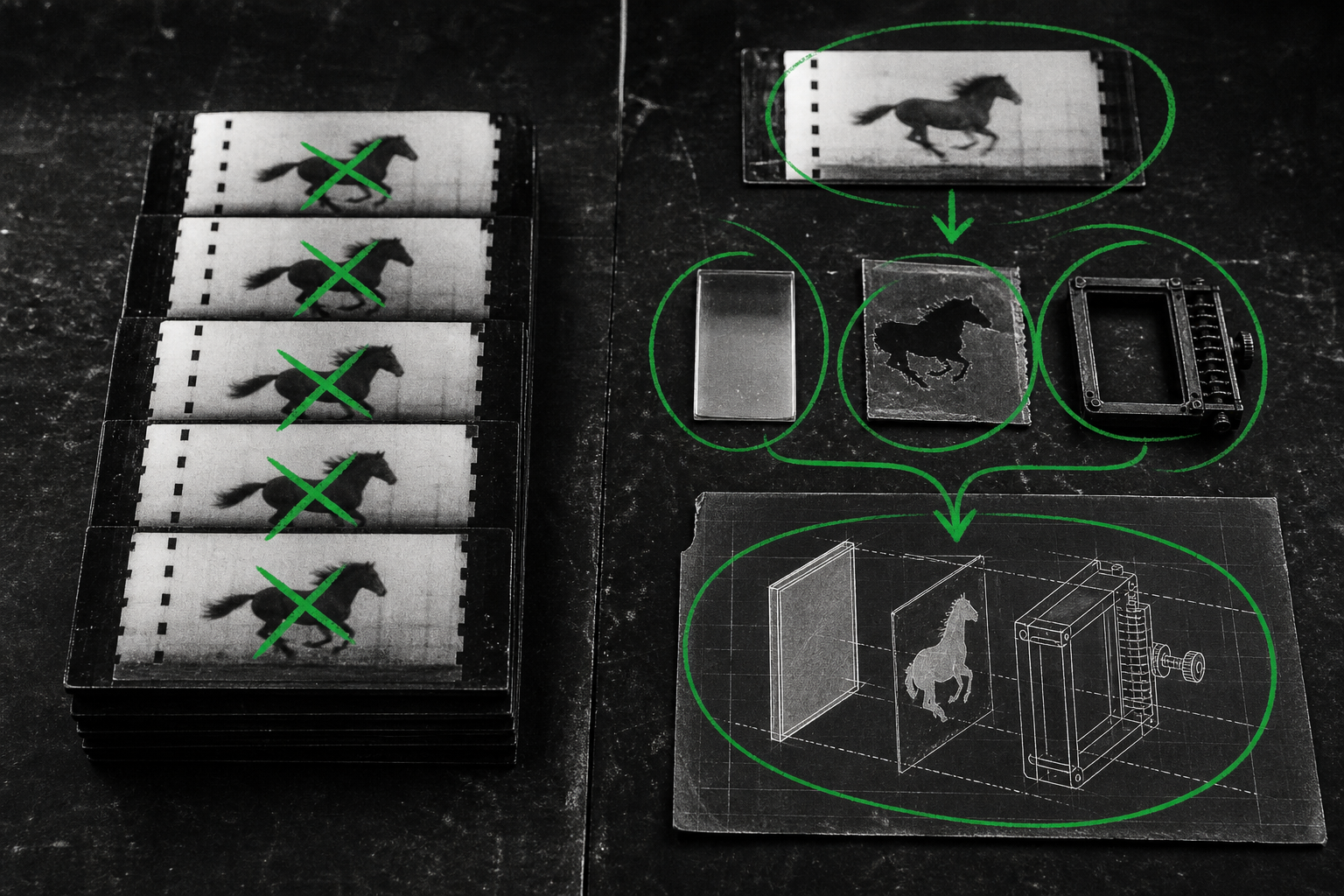
Surface feature: A creator pulls out a sleeper chair in a warehouse. Portable mechanism: Resolve a hidden transformation before the viewer starts doubting it
Surface feature: A cook copies another creator's pouring motion. Portable mechanism: Match the source action so the response feels continuous
Surface feature: A hammer appears as separate pieces on a bench. Portable mechanism: Show familiar components before revealing the finished object
Surface feature: Bold text says a product is surprising. Portable mechanism: Open on an action that creates a question the viewer can answer
The left column produces imitation. The right column gives you options.
Start by deciding whether the source is worth using
Not every high-view post belongs in your research folder.
A usable source should meet a stricter standard:
- The original post still resolves to a public URL.
- You can inspect the actual video, not just a thumbnail or reposted summary.
- The opening, sequence, and payoff are visible enough to describe without guessing.
- The idea does not depend entirely on copyrighted footage, a celebrity, or a creator identity you cannot reproduce.
- You can name a reason to test the mechanism for your buyer.
If the audio is missing, mark it unknown. If a claim appears on screen but you cannot verify it, do not repeat it as fact. If you only have a screenshot, do not invent what happened between frames.
This sounds fussy. Good. Creative research gets expensive when a weak observation turns into a confident brief.
Use a seven-part content teardown
You do not need a giant spreadsheet. You need a consistent read.
For every source post, capture these seven fields:
1. Topic
What is literally happening? Keep this plain. Furniture transformation. One-pan cooking. Tool assembly. Product ranking.
2. Angle
What makes this version worth watching? A hidden function. A difficult task. A shortcut. A comparison. A withheld answer.
3. Opening action
Describe frame zero as if you were directing the shot. A hand pulls a concealed extension. Dry pasta drops into sauce. A hammer head lands beside a handle.
*Creator introduces product* is not specific enough to film.
4. Visual format
Name the production vehicle: handheld retail discovery, top-down tutorial, direct-to-camera explanation, locked-off challenge, close-up assembly.
5. Key evidence
List what the viewer gets to inspect. The mechanism moving. The glass losing its reflection. The ingredients staying in one pan. The same shaker going from scoop to sip.
6. Payoff
What question gets closed? Does it transform? Does the shortcut work? What does the object become? Which item wins?
7. The mechanism in one sentence
Write the reusable logic without the source brand, creator, or setting.
For example: show a familiar object in separate pieces, assemble it in close-up, and delay the full reveal until the viewer understands how the parts connect.
That is a direction another strategist can use.
Strip off the product and see if the idea survives
This is the fastest quality check I know.
Remove the original product name, creator handle, text style, music, and setting. Can you still explain what the viewer is waiting to see?
If not, you probably saved an aesthetic, not a mechanism.
Look at three frame-verified examples from the source library:
- A convertible chair post shows the transformation immediately, then widens out so viewers can see where the product is sold.
- A reaction-style cooking post mirrors the source creator's pouring movement so the response feels like a continuation.
- A modular hammer assembly shows the parts first, then assembles the tool while the viewer waits for the finished form.
Those are three different-looking videos. Underneath, each gives the viewer an unfinished action they can mentally complete.
Those actions are what you carry into the new concept.
!Diagram contrasting copied creative surfaces with a portable content mechanism
Turn the mechanism into a brand-native concept
Once you have the mechanism, rebuild it through four decisions.
Name the buyer doubt
What does your customer not believe yet?
Maybe the furniture looks flimsy. The recipe looks like too much work. The technical product looks interchangeable. The tool's advantage sounds impossible to see.
Do not start with the feature list. Start with the doubt that blocks the next action.
Choose visible evidence
What can the camera show that makes the doubt easier to judge?
Use movement, deformation, assembly, a clean comparison, a real task, a price or location receipt, or a continuous process. The right evidence changes by category. A strong food close-up proves nothing about durability. A dramatic stress test proves nothing about taste.
Pick a creator who can own the action
Creator fit is not a demographic checkbox. It is credibility inside the behavior.
The right person for a difficult installation demo may be someone who already makes or repairs things. The right person for a hosting shortcut may be someone whose audience already watches them cook for other people.
If the creator has to cosplay competence, the post feels like an ad before the product even appears.
Build a new surface
Change the setting, performance, script, shot design, props, graphic treatment, and sequence details. Do not trace the source frame for frame.
Your goal is original work built on an observed principle. The final post should make sense even if nobody on the team can see the inspiration link.
Write the test before you write the script
The script is not the strategy.
Before production, write this:
```text Viewer doubt: Opening action: Visible evidence: Expected signal: What would prove us wrong: Control to compare against: ```
The last two lines matter most. If your new concept changes the creator, hook, offer, edit length, and distribution at the same time, you will not know what caused the result.
A source mechanism gives you a reason to test. It does not give you a result in advance.
For a cleaner production handoff, pair this analysis with a UGC creative brief template. Then use a UGC testing framework to keep the control and learning decision visible.
The rights boundary
Creative research is not permission to reuse somebody else's work.
Do not download and republish source footage, clone a creator's likeness or voice, lift a script, reuse music without the right license, or recreate a distinctive execution so closely that the source is obvious.
Broad creative ideas can travel. Specific expression may be protected or permissioned. The line can get messy, especially when a campaign uses paid distribution, talent, recognizable trademarks, or platform-native audio.
Treat this article as a creative operating guide, not legal advice. If a concept sits close to the source, have qualified counsel review it before production.
The operating rule
Save posts for the question they answer, not the way they look.
Then rebuild the answer with your product truth, your creator, and your own visual language. You will get fewer lazy copies, clearer briefs, and tests that can teach the next round something.
If you want a senior team to turn category research into original social tests, see Emerald's social media marketing approach.
FAQ
What does it mean to reverse engineer viral content?
It means breaking a strong post into the viewer tension, opening action, visible evidence, sequence, and payoff that made it worth watching. You then rebuild those decisions for your own product and audience instead of copying the execution.
Is it legal to copy the format of a viral video?
A broad format or idea may be reusable, but the original footage, script, music, graphics, distinctive expression, and creator identity may carry rights or permission issues. Build a new execution and have counsel review material risk.
How do you find the mechanism behind a viral post?
Watch without sound. Record what happens in the opening frame. Name the question the viewer is waiting to resolve. Identify the visible moment that answers it. Then write the mechanism without mentioning the original product or creator.
Can one viral post prove a content strategy?
No. A source post can suggest a useful creative hypothesis. Your own controlled tests decide whether that mechanism works for your product, audience, creator, and distribution.
How we built this guide
We analyzed the visible frames in public short-form posts without guessing about missing audio, context, or causality. The posts can suggest creative hypotheses, but they cannot prove that one mechanic caused performance. The article imagery uses new editorial scenes rather than source footage or creator likenesses.