Blind taste-test marketing lives or dies on the setup.
The audience knows something the creator doesn't. Every sip moves the creator closer to the answer. The reaction matters because viewers understand the rules before the verdict arrives.
Get the rules wrong and the reaction feels staged. Get them right and viewers can judge the comparison instead of watching another creator read approved talking points.
The work happens before the first sip: choose a fair comparison, protect the reveal, and keep preference separate from nutrition or health claims.
What is blind taste-test marketing?
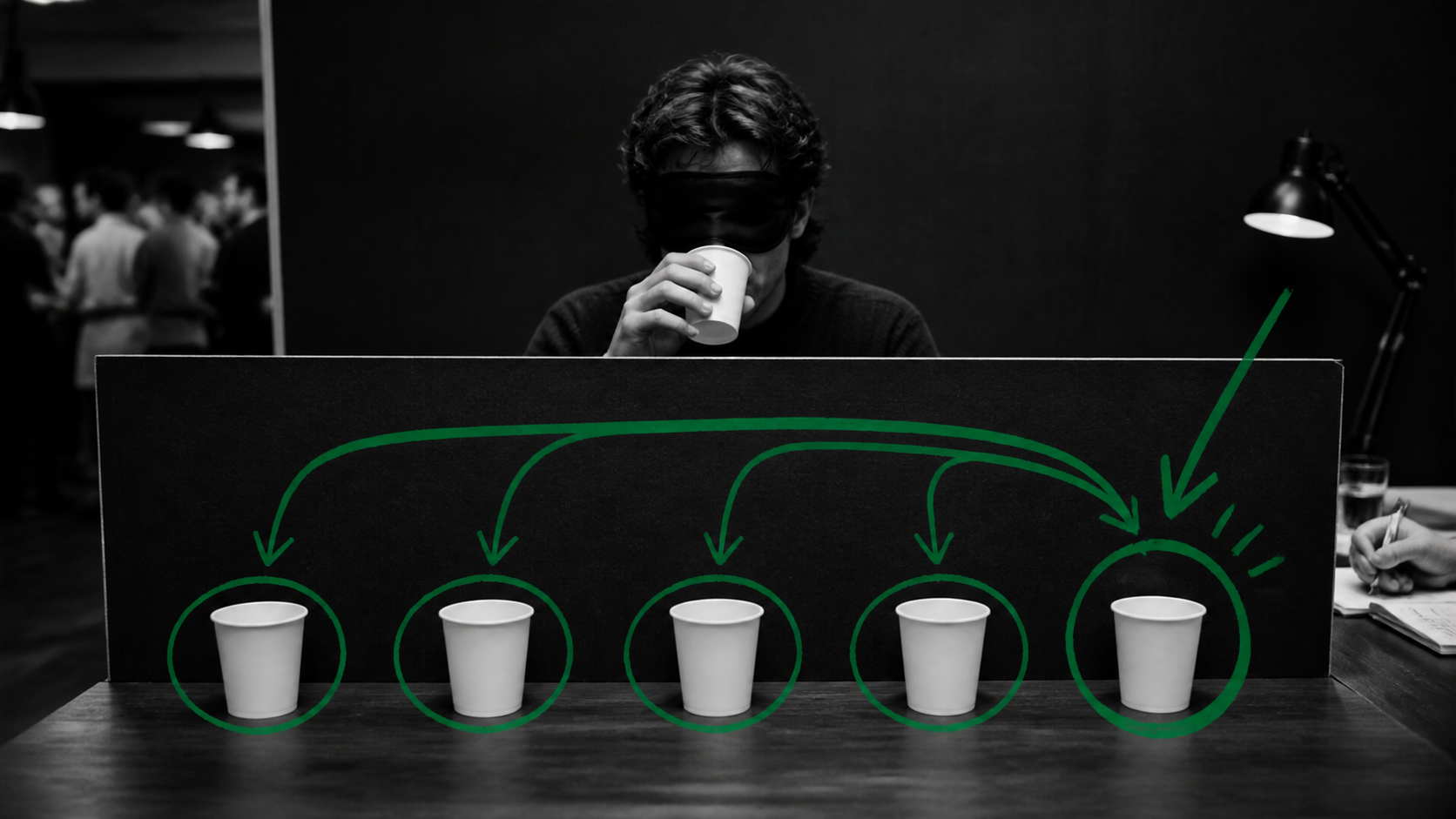
Blind taste-test marketing is a creator or brand video in which the taster doesn't know the identity of one or more samples while evaluating them. The audience may see the answer key from the start, which creates an information gap: viewers know the truth and watch for the moment the creator catches up.
The word blind only describes what the taster can identify. It doesn't automatically make the test scientific, independent, or fair.
That distinction matters.
A creator choosing a favorite flavor is sharing a personal preference. A brand saying its product tastes better than a competitor is making a comparative advertising claim. Those aren't the same job, and they shouldn't be edited as if they are.
The test is won or lost before the first sip
Most bad taste tests start with the reaction. The creator grimaces, points, and declares a winner. But the viewer has no idea what was served, whether the samples were comparable, or how many takes disappeared in the edit.
Build the conditions first.
1. Declare the comparison set
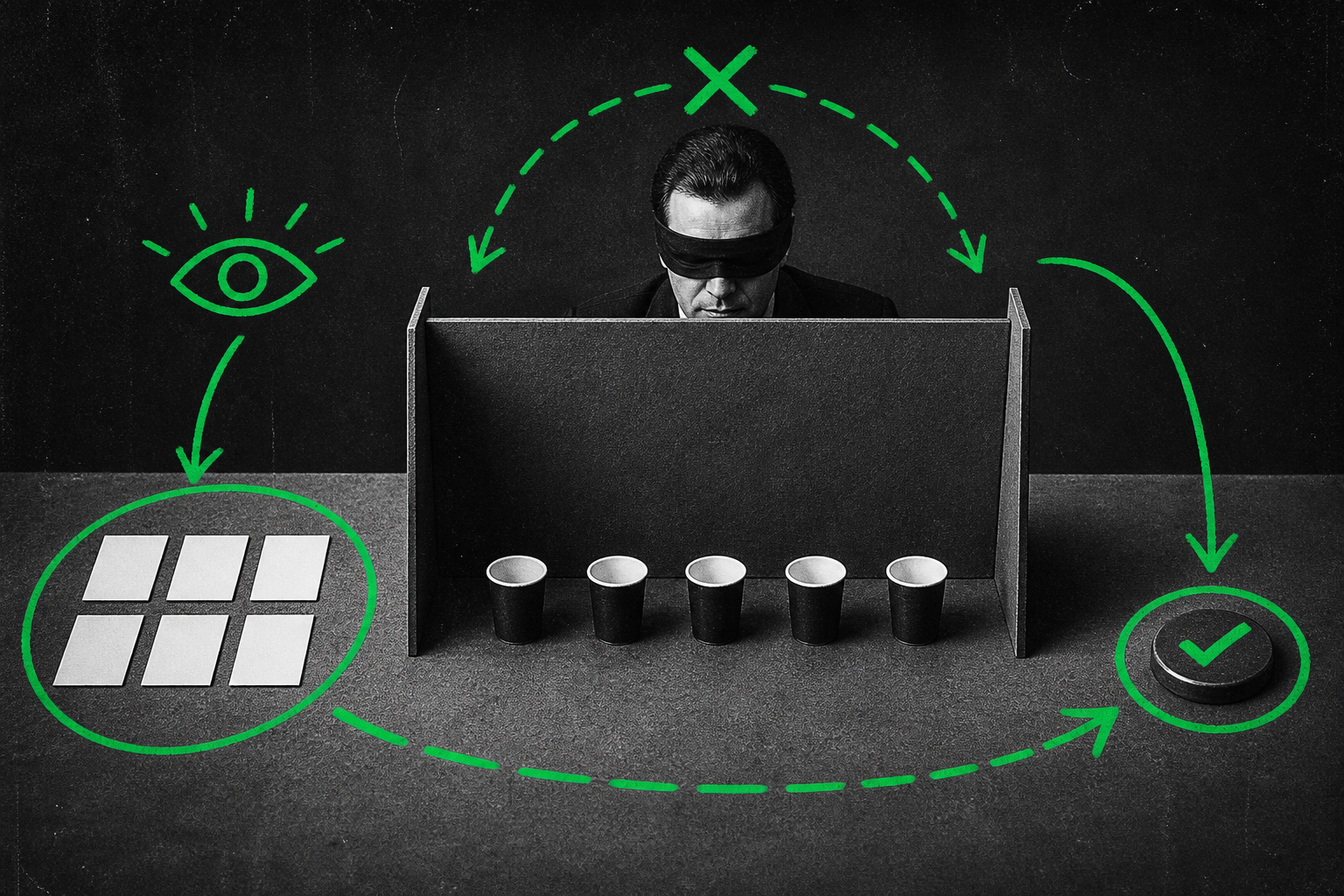
Show every sample included in the test. If there are decoys, show those too. If the products are different flavors rather than competing brands, say so plainly.
The viewer needs to know the possible answers. A finite lineup gives every reaction context.
A Protein2o source example uses a tabletop box with multiple straws. The labeled drinks remain visible to the audience while the box conceals them from the creator. The storytelling mechanism is simple: the viewer knows; the creator guesses.
That is a clean open loop. No fake suspense required.
2. Build a concealment rig the camera can explain
The rig doesn't need to look expensive. It needs to make the rules obvious.
Use identical cups, sleeves, numbered lids, a box with hidden containers, or an off-camera pour controlled by someone other than the taster. Keep labels, package shapes, and distinctive colors from giving away the answer.
Then show enough of the rig that a skeptical viewer can understand it. If the concealment only exists outside the frame, people have to take your word for it.
3. Standardize what could change the result
Serve comparable portions. Keep temperature, ice, glassware, and timing consistent. Reset the palate when the category calls for it. Don't put one freshly opened drink next to another that has been sitting out.
This still doesn't turn creator content into laboratory research. It removes obvious sources of bias so the reaction is worth watching.
Let the viewer hold the answer key
The smartest version of this format gives the audience more information than the creator.
Keep a labeled lineup in the foreground. Use an edit that cuts between a visible key and the hidden tasting station. Or add simple sample markers that viewers can track without telling the taster.
That changes the question in the viewer's head.
Instead of wondering what the products are, they wonder whether the creator will spot the difference. The tension sits inside the test, not inside a scripted hook.
You can see a related mechanism in a declared drink-rating lineup: the products are staged before the verdicts begin, then judged one at a time. It isn't blind, but the finite set gives the audience a reason to stay for the order.
For more on that structure, see our guide to tier-list content.
Protect the reaction from the edit
The reaction is the product of the format. Don't edit it into something it wasn't.
Keep each sample's sip, pause, first response, and reveal in the correct order. If the creator changes their mind, leave that in. If two options taste similar, that ambiguity can be more believable than a perfect winner.
Here is the useful production rule:
The edit can shorten time. It cannot change the meaning of the verdict.
Avoid reaction inserts recorded later, reordered samples, selective winner takes, and audio that makes a mild response look extreme. Those tricks may create a sharper clip, but they destroy the reason the format works.
If the creator has a brand relationship, disclose it clearly in the video. The FTC's social media disclosure guidance says a material connection should be obvious and hard to miss. A tag or buried caption isn't the same thing as a disclosure viewers can actually notice.
Separate taste from nutrition and health claims
A creator can honestly say which sample they prefer. That doesn't prove one product is healthier, more effective, or nutritionally superior.
Keep these three claim types separate:
Claim type: Personal taste. What the video can support: The creator preferred a sample under the shown conditions. What requires separate evidence: A universal best-tasting claim
Claim type: Package fact. What the video can support: A label visibly states an amount or ingredient. What requires separate evidence: Whether the label is current and applicable to the exact item
Claim type: Health or performance. What the video can support: Nothing from taste alone. What requires separate evidence: Competent support for the exact health, safety, or efficacy claim
The FTC's advertising substantiation policy requires a reasonable basis for objective claims before an ad runs. Its health-products guidance applies a higher evidence standard to health-related claims.
So don't let the edit smuggle in a conclusion the test never measured. A creator liking one drink more doesn't establish better hydration, recovery, digestion, energy, or health.
A production plan your creator can actually use
Give the creator a one-page test card instead of a word-for-word script.
Before filming
- State the exact question: preference, flavor identification, or product recognition.
- List the full comparison set.
- Lock the serving conditions.
- Decide who controls the answer key.
- Mark any claims the creator cannot make.
- Put the sponsorship disclosure into the shot plan.
During filming
- Capture the full setup before tasting.
- Keep the answer key visible to the audience when possible.
- Record each first reaction without prompting.
- Ask the same neutral follow-up for every sample.
- Film the reveal in the same session.
During editing
- Preserve sample order.
- Don't manufacture a stronger reaction.
- Label personal preference as personal preference.
- Keep package facts separate from the verdict.
- Show the disclosure long enough to be noticed.
That gives the creator room to sound like themselves while protecting the part the audience needs to trust.
How to test the content, not just the drinks
The first creative question is whether the format helps the viewer stay, judge, or act.
Run the blind version against a straightforward product tasting with the same creator, product set, offer, and distribution conditions. Keep the opening as the main variable. Then choose a primary signal before results arrive.
For an organic post, that signal might be completion, saves, shares, or comments that engage with the actual comparison. For paid creative, it might be qualified click-through or the next conversion event. The right metric depends on the job you gave the video.
Don't call a format proven because one source post accumulated views. Creator, audience, timing, and distribution all matter. The source gives you a hypothesis. Your controlled test tells you whether the mechanism travels.
Our UGC testing framework shows how to isolate that decision without turning one result into a universal rule.
When not to use a blind taste test
Skip the format when the conditions can't be made honest.
Don't use it when the creator already knows the sample order, the brand requires a predetermined winner, the products aren't meaningfully comparable, or the reveal would encourage unsupported nutrition or health conclusions.
And don't force it onto a product that needs a different kind of proof. Texture may need a close-up. Preparation may need an uncut demonstration. An occasion may need a lifestyle product video. The camera job should come from the buyer's doubt, not from a format your team wants to copy.
Build a test where the setup carries the story
A trustworthy blind taste test does not need a louder reaction. It needs rules the viewer can understand and footage that does not manipulate the verdict.
Let the audience see the set, conceal the answer from the creator, standardize what matters, and keep preference claims narrow. Then judge the content on whether it answered a real buyer question.
If you want a creator program built around visible proof and clean testing, see how Emerald approaches social media marketing.
FAQ
What makes a blind taste test fair?
Use the same serving conditions, conceal product identity from the taster, declare the comparison set, preserve the full reaction, and separate personal preference from objective product claims. It won't become a scientific study, but the audience can understand what happened.
Can a brand sponsor a blind taste-test video?
Yes. The creator-brand relationship needs a clear disclosure, and the edit cannot turn a staged or selective result into an apparently independent verdict. A sponsored test can still be honest if the setup and relationship are visible.
Should the audience see the answer key?
Usually. Letting viewers know which sample is which creates anticipation while the creator remains genuinely blind to the lineup. It also makes the rules easier to understand at phone size.
What should a brand measure after a taste-test post?
Measure the signal tied to the format's job: early retention, completion, comments about the comparison, qualified clicks, or downstream conversion. Pick the primary signal before the test so the team doesn't choose a flattering metric afterward.
How we built this guide
We analyzed visible storytelling mechanics in public creator posts. Those examples cannot prove that a format caused performance or that an adaptation will repeat the result. This article does not use source-post views, private brand strategy, or client outcomes.