
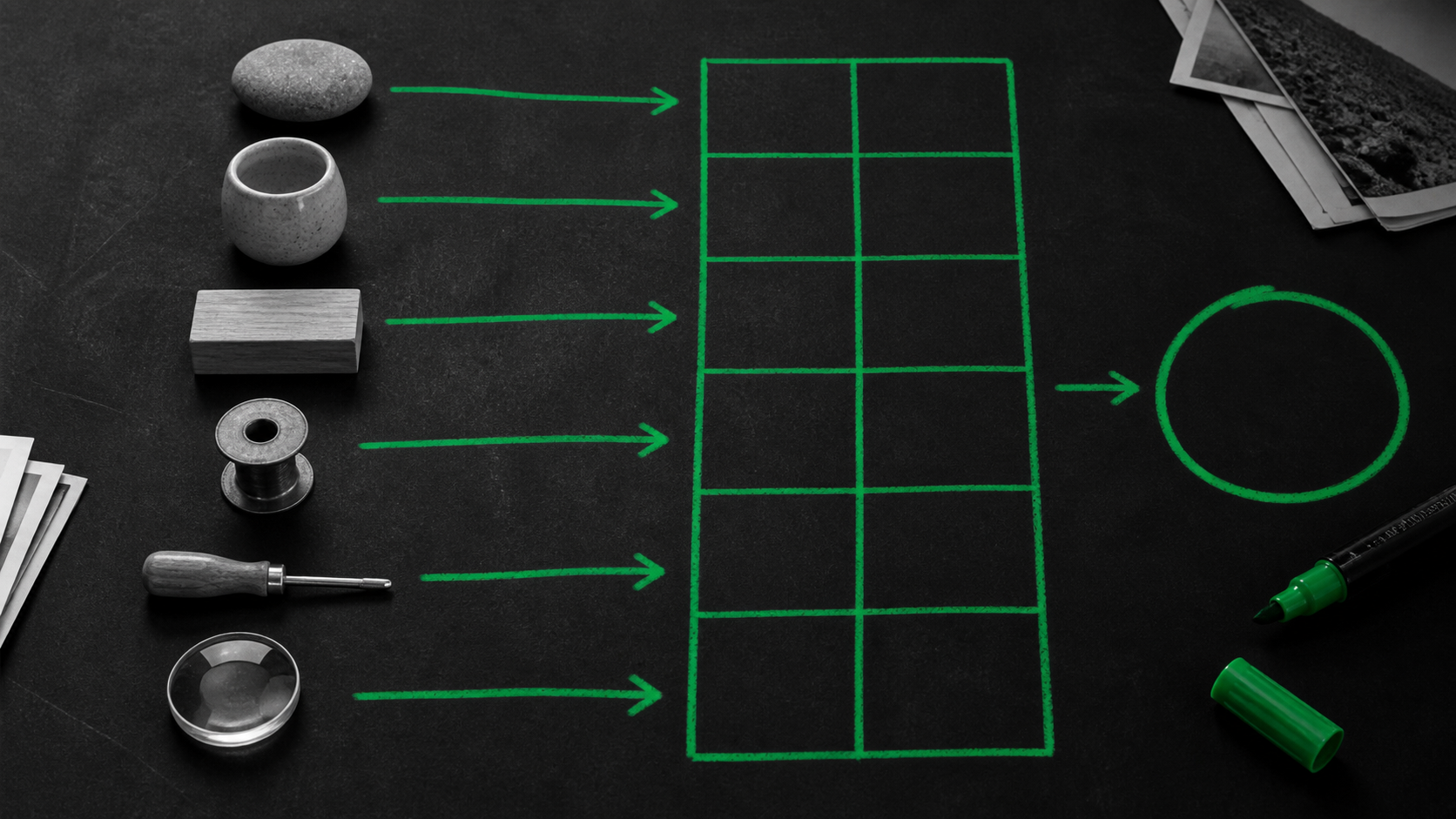
Tier list content works when the viewer knows the set, understands the scoring rule, and has to wait for the final order.
The ranking does not need to be scientific. It does need to be honest.
The opportunity is bigger than dragging products across a colorful board. A clear set and a scoring rule can turn one opinion into a series people understand, remember, and argue with.
What is tier list content?
Tier list content ranks a finite set of products, ideas, flavors, tools, or options into named levels. The creator judges one item at a time while the audience tracks what remains and compares each verdict with their own.
The format creates three open questions:
- What will win?
- What will lose?
- Will I agree with the person judging it?
That third question matters. Disagreement is not a flaw in ranking content. It is part of the participation. The problem begins when the scoring feels random, sponsored without disclosure, or rigged to put the brand on top.
Declare the complete set in the opening

The audience needs to know the boundaries of the test.
Put the lineup in frame. Name the category. State the number of items if that helps. Show enough packaging or identifying detail that viewers can follow the order.
One public example opened with several drinks already staged in the foreground. The creator then isolated each product for judgment. That staging did useful work before a word of analysis: it promised multiple verdicts and a final order.
Your opening can be this plain:
- Every seasonal flavor from one retailer
- The five tools in our install kit
- Six fragrances for a summer wedding
- Four ready-to-drink options from the same category
- Every opening hook from this month's creator batch
<!-- factcheck-allow-quote: "Ranking some things I tried" --> A finite set creates completion. “Ranking some things I tried” does not.
Build a scoring rule a normal person can use
A tier list is opinion content. That does not excuse mushy criteria.
Pick two to four dimensions that fit the category. Translate each one into a question.
For a beverage:
- Flavor: Would I want another sip?
- Texture: Does it feel thin, heavy, smooth, or chalky?
- Occasion: When would I choose it?
- Repeat: Would I buy it again?
For a tool:
- Setup: How much work before it is useful?
- Control: Can I get the result I intended?
- Fit: Who is it actually for?
- Tradeoff: What do I give up for the benefit?
For creative:
- Opening: Does frame zero create a clear question?
- Proof: Can the viewer inspect the product claim?
- Brand path: Does the product enter naturally?
- Repeatability: Can the idea produce another useful test?
The criteria do not need decimal scores. They need consistency.
Show one item at a time
Once the set is declared, simplify the frame.
Move one product to a bare surface. Show the use, taste, comparison, or evidence. Deliver the verdict. Place it on the board. Then bring in the next item.
This rhythm helps the viewer track the ranking:
→ item enters
→ category-relevant test
→ creator reacts or explains
→ verdict appears
→ board updates
→ next item enters
Keep the test comparable. If one drink is served cold in a glass and another is tasted warm from the package, the ranking may still be entertaining, but the comparison is harder to trust.
Make the verdict earned
“S tier because I like it” gives the viewer nothing to evaluate.
Connect each placement to the scoring rule. Use the product itself when possible.
For food or beverage, show the pour, texture, bite, or ingredient role. For tools, show setup and result. For fragrance, name the occasion and contrast it with a nearby option. For content, replay the opening and identify the exact moment that created or lost the question.
This does not mean every ranking needs to be objective. It means the opinion has a receipt.
A good verdict sounds like this:
<!-- factcheck-allow-quote: "The flavor works, but the finish is too sweet for the occasion we set. That puts it in B" --> “The flavor works, but the finish is too sweet for the occasion we set. That puts it in B.”
The viewer can disagree with the judgment while still understanding it.
Use the board as a memory device
The board should help the audience remember the state of the ranking.
Keep it visible between verdicts or return to it after every placement. Use labels that fit the category and remain readable on a phone. Standard letter tiers are familiar, but custom labels can be clearer when they teach the decision.
For example:
- Buy again / depends / skip
- Best for daily use / best for specialists / not worth the setup
- Strong test / needs a change / kill the idea
- Dinner / party / travel / no occasion
Avoid custom labels that are funny but impossible to interpret. Clarity earns the joke.
Invite disagreement without manufacturing conflict
Tier lists naturally produce comments because viewers arrive with preferences. You do not need to insult the audience to get the discussion.
Use prompts that extend the test:
- Which placement would you change?
- What should enter the next round?
- Which criterion matters more to you?
- Should the winner face a new challenger?
The best comments can become the next episode. If viewers keep questioning sweetness, durability, setup time, or value, make that the scoring focus for the next list.
Do not fake a controversial placement to bait outrage. You may get comments and lose trust at the same time.
Brand safety and sponsorship
Ranking content becomes sensitive when the brand pays for the test, supplies the products, or owns one of the options.
Disclose the relationship clearly. The FTC's guidance for influencers says a material relationship should be hard to miss, and a video disclosure should appear in the video rather than only in the description.
Also decide what kind of comparison you are making:
- one brand's own lineup
- a creator's independent category ranking
- a sponsored ranking containing competitors
- a feature comparison with measurable criteria
Each carries different claim and review needs. Do not call a product “best” if the test did not define the set, criteria, and evidence. Do not script a supposedly independent verdict.
For food and beverage rankings, control nutrition and health claims separately from taste opinion. A creator can prefer a flavor without having authority to make a comparative health claim.
Turn one ranking into a series
The format becomes more valuable when each episode changes one useful dimension.
Series plan:
- Baseline: Rank the complete core lineup.
- Occasion: Re-rank for travel, gifting, weekday use, or a specific meal.
- Constraint: Rank under a budget, setup-time, space, or ingredient limit.
- Audience: Bring in a credible second judge with a different need.
- Challenge: Put the winner against new entrants.
Keep the scoring system consistent while changing the question. That gives people a reason to return without replaying the same opinion.
A tier list creator brief
Give the creator this before filming:
The complete set: Every item included and excluded.
The scoring question: What is the ranking trying to decide?
The criteria: A small set of plain-language dimensions.
The test behavior: What the creator must do with each item.
The evidence shot: What makes each verdict easy to judge?
The disclosure: What relationship must be clear in the post?
The claim limits: What cannot be said without separate evidence or review?
The continuation: Which comment or result should trigger the next episode?
That keeps the strategy firm while leaving the creator's actual opinions and delivery intact.
How to test tier list content
The first test should not change the entire ranking.
Compare openings:
- full lineup in frame
- strongest disagreement first
- scoring criteria first
Or compare board behavior:
- board visible throughout
- board revealed after every verdict
- final board withheld until the end
Keep the products, judge, criteria, and distribution stable. Then evaluate early retention, completion, comment quality, and product interest.
Be careful with causality. A public source post can show you a useful structure. It cannot tell you which variable caused its performance. Your controlled version supplies the learning.
Use our UGC testing system to write the hypothesis before the post goes live.
Make the opinion useful
Tier list content is not a magic template. It works because the decision stays visible.
Declare the set, name the criteria, test every item the same way, and explain the verdict. Now the audience has something real to disagree with, and you have a format worth repeating.
If you need a creator brief that protects the scoring rule without scripting the personality out of the post, start with our UGC creative brief template or see Emerald's social media marketing approach.
FAQ
Why do tier list videos work?
They give viewers a finite set, delayed final order, and a clear place to compare their own opinion with the creator's. The scoring needs to stay understandable for that tension to hold.
How many items should be in a tier list?
Use enough items to create meaningful comparison while keeping each verdict clear. The right number depends on video length, category complexity, and how much evidence each placement needs.
Do tier lists need letter grades?
No. Custom levels can be more useful when they match the decision, such as buy again, depends, and skip. Keep every label readable and easy to interpret.
Can a sponsored creator rank competing products?
They can, but the relationship, comparison basis, claim support, and platform rules need careful review. Do not present a scripted brand outcome as an independent opinion.
How we built this guide
This article uses visible observations from public ranking, reaction, and product-selection videos. We use source structure to develop hypotheses, not to claim why a post performed or guarantee results. No creator quote or source-post metric is used as public proof.
- Declared beverage rating lineup
- Blind test with a complete visible set
- Finite product-selection structure
- FTC influencer disclosure guidance
Structured data
```json { "@context": "https://schema.org", "@type": "Article", "headline": "Tier List Content: Build a Ranking People Can Argue With", "description": "How to create ranking videos with a finite set, clear scoring rule, earned verdicts, and a repeatable series.", "mainEntityOfPage": "https://emerald.digital/insights/tier-list-content", "author": { "@type": "Person", "name": "Matthew Berman" }, "publisher": { "@type": "Organization", "name": "Emerald Digital" }, "image": "https://emerald.digital/media/insights/creator-breakout-program/tier-list-content-hero.png" } ```
```json { "@context": "https://schema.org", "@type": "FAQPage", "mainEntity": [ { "@type": "Question", "name": "Why do tier list videos work?", "acceptedAnswer": { "@type": "Answer", "text": "They give viewers a finite set, delayed final order, and a clear place to compare their own opinion with the creator's." } }, { "@type": "Question", "name": "How many items should be in a tier list?", "acceptedAnswer": { "@type": "Answer", "text": "Use enough items to create meaningful comparison while keeping each verdict clear. The right number depends on video length and category complexity." } }, { "@type": "Question", "name": "Do tier lists need letter grades?", "acceptedAnswer": { "@type": "Answer", "text": "No. Custom levels can be more useful when they match the decision, as long as every label is easy to interpret." } }, { "@type": "Question", "name": "Can a sponsored creator rank competing products?", "acceptedAnswer": { "@type": "Answer", "text": "They can, but the relationship, comparison basis, claim support, and platform rules need careful review." } } ] } ```