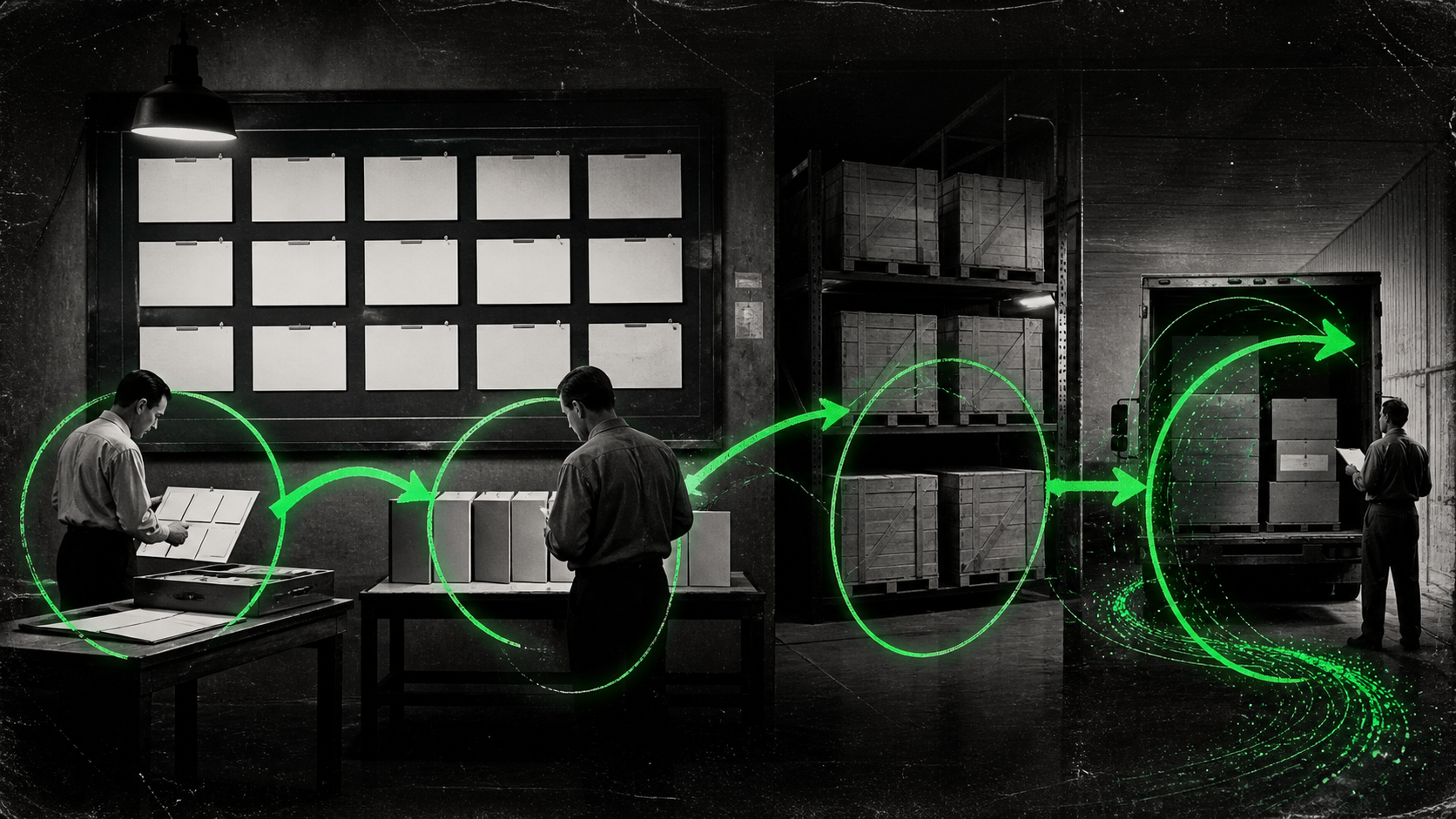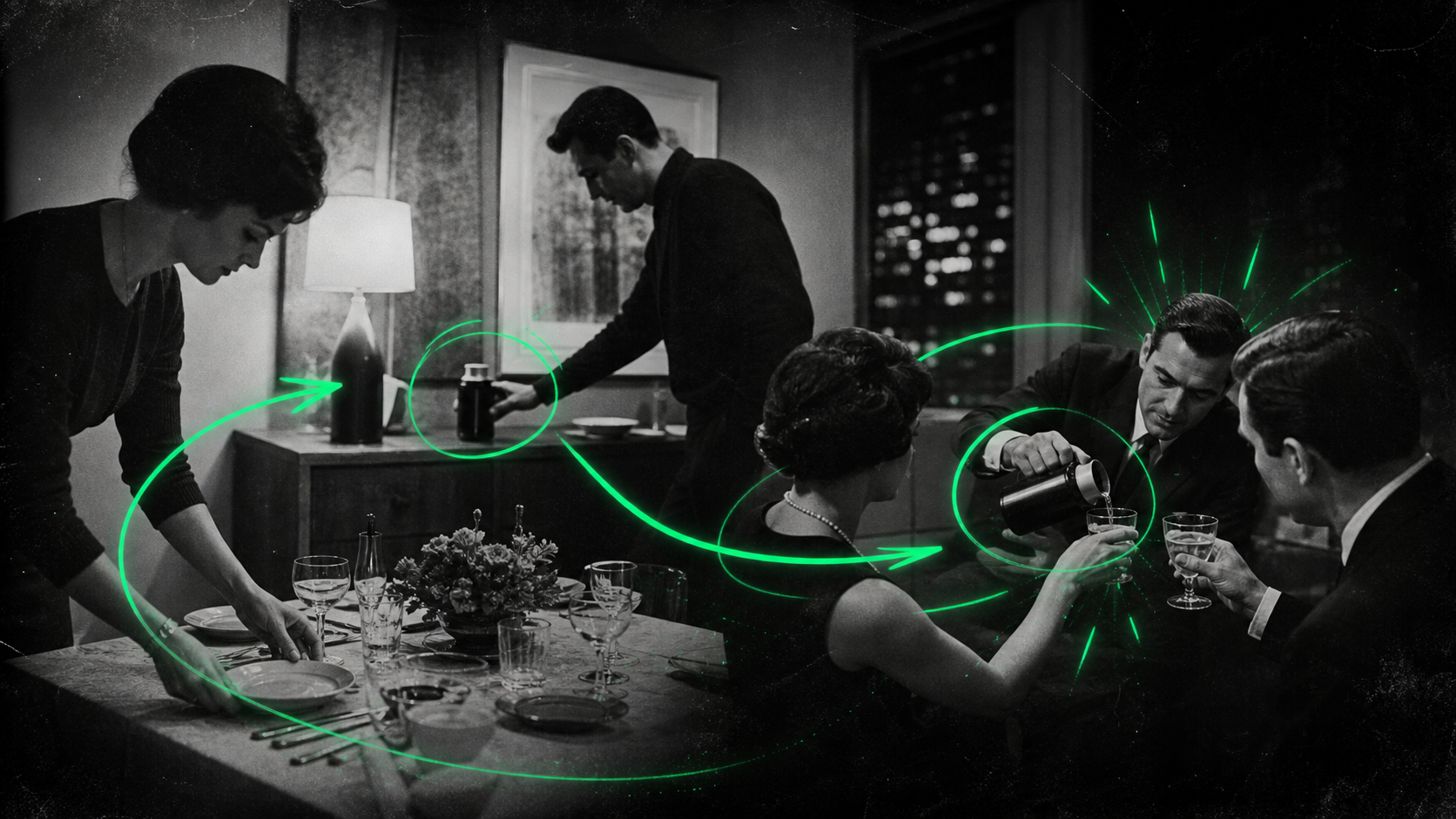

A before-and-after video works when the audience can trace how one state became the other.
A messy room followed by a perfect room is a reveal. It becomes believable when the footage also shows the constraint, the work, the hard part, and the finished result under comparable conditions.
That applies to furniture, food, tools, beauty, home improvement, and almost any product promising a visible change. The planning question is simple: what must the viewer see between the before and the after?
What makes a before-and-after video believable?
A believable before-and-after video shows three things:
- The starting condition clearly enough to judge.
- The mechanism that caused the change.
- The finished state under comparable conditions.
The reveal is not the whole story. It is the receipt at the end of the work.
If the viewer cannot tell whether the camera angle, lighting, scale, product, or environment changed, the result becomes harder to trust. If the middle disappears, the brand is asking the audience to accept a claim instead of showing how the outcome happened.
Start with the constraint, not a generic before shot
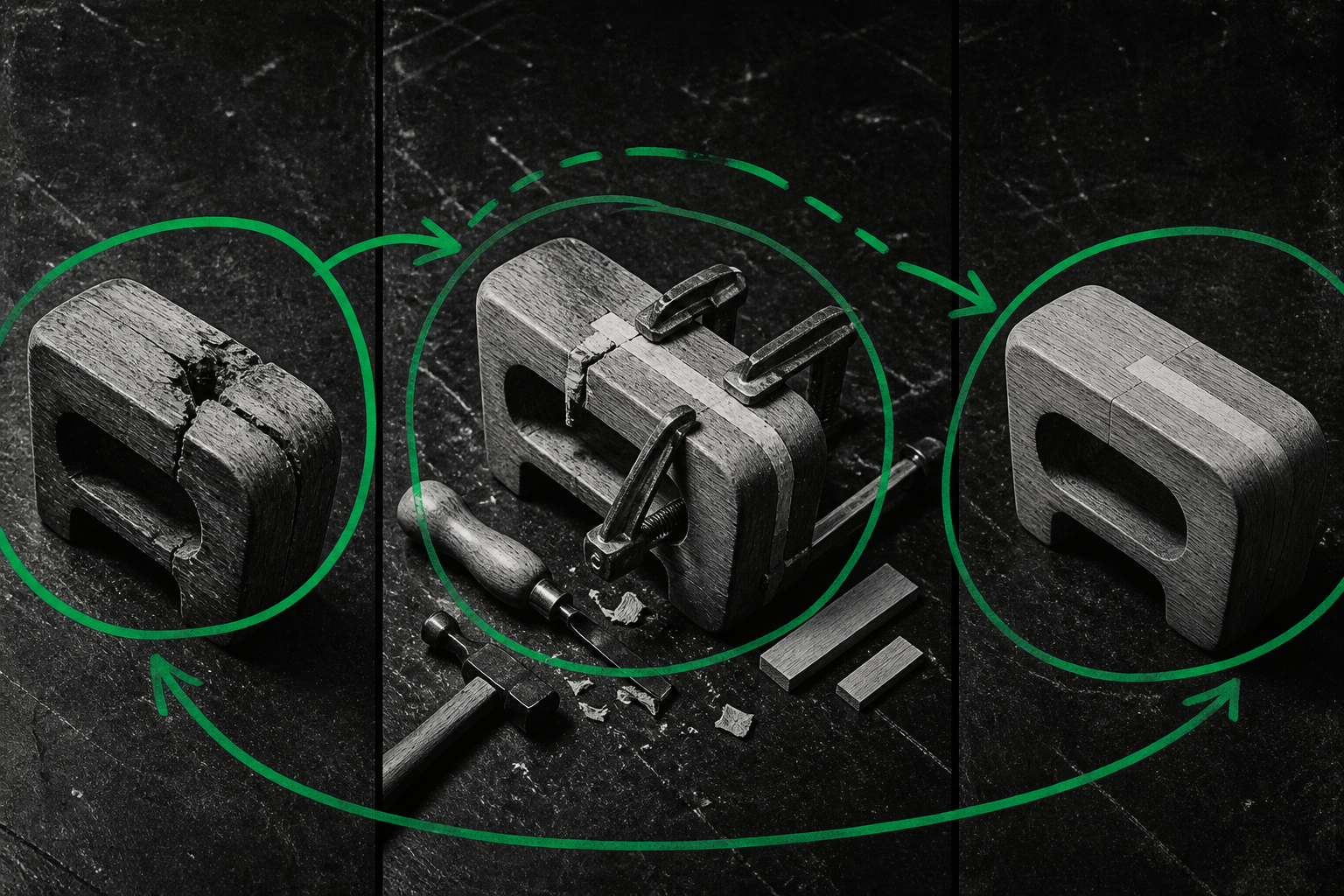
The opening frame needs to establish what is wrong, limited, unfinished, or difficult.
A blank wall isn't automatically interesting. A blank wall above a stairwell, where ladders barely fit and alignment is hard, contains a real constraint. A chair sitting still isn't a before state. A compact chair that needs to become a guest bed has a job to perform.
The more specific the constraint, the easier it is to decide what the camera must prove.
Use this sentence before filming:
We need to show how this goes from [specific starting constraint] to [specific usable result] by [visible mechanism].
If the team cannot complete that sentence, the transformation is probably cosmetic. The footage will look fine, but it won't answer a buyer question.
Decide whether to reveal early or make viewers earn it
There are two useful sequencing choices. Neither is always right.
Reveal the change early when the mechanism is the hook
Convertible furniture is a good example. In a retail discovery video, the product begins changing almost immediately. The audience sees the hidden extension move before they get every detail about the chair.
That early reveal answers the first question fast: what does this thing do?
The rest of the video can then answer whether the product looks stable, how much space it uses, and whether it is actually available. The payoff arrives first. The proof follows.
Use this order when the transformation is quick and visually legible:
- Show the change.
- Reset to the starting state.
- Demonstrate the mechanism.
- Show the result in context.
Hold the reveal when preparation creates the value
Some transformations become more satisfying when viewers watch the work accumulate.
A trampoline sleepover sequence spends time on sweeping, cleaning, and preparation before the cozy nighttime scene appears. The ordinary work gives the final result weight. Without that middle, the outcome would be a mood shot.
Use this order when the ritual is repeatable or save-worthy:
- Establish the starting condition.
- Show a meaningful portion of the work.
- Mark progress so viewers know the change is real.
- Deliver the finished state.
The decision comes down to the product job. If the product's value is instant transformation, show it. If the process is the useful idea, earn it.
Put the mechanism on camera
The middle is where credibility lives.
Show the hinge moving. Show the parts locking together. Show the tool solving the awkward step. Show the ingredient changing color. Show the surface being cleaned or assembled.
A modular hammer assembly video starts with separated components and follows their physical connection into a finished tool. An anti-reflective glass comparison makes an optical difference visible by putting two surfaces next to each other.
Neither example asks the audience to imagine the mechanism. The object does the explanation.
This is also why our product demo video guide starts with buyer doubt. The camera should do the work that a feature list cannot.
Use progress markers that survive a skeptical watch
Transformation videos often fail because the editor removes every piece of continuity.
Keep markers in frame that help viewers verify they are seeing the same object, room, recipe, or person:
- The same camera position or a clearly disclosed angle change.
- A distinctive edge, surface, mark, or surrounding object.
- A visible sequence of parts, ingredients, or steps.
- Day labels only when the dates and conditions are real.
- Side-by-side footage captured under comparable lighting and framing.
Continuity doesn't mean the entire video needs to be one take. It means the edit shouldn't create a result the footage cannot support.
Side-by-side proof is only useful when the sides match
A split screen can make a difference obvious. It can also exaggerate one.
Match scale, distance, lighting, orientation, speed, and relevant settings. If one side is zoomed, brightened, color graded, or shown at a different stage, label the difference or don't use the comparison.
For product demonstrations, record the control and treatment in the same session when practical. For a process change, show which inputs changed. For a room or object, preserve at least one common reference point.
The standard is simple: could a reasonable viewer explain what changed besides the product or process being tested?
If yes, more than one thing changed. Fix it or make the difference clear.
Don't let the edit make the claim
Before-and-after content carries extra risk because viewers naturally infer causality. They see one state, see a product, and see another state. The edit can imply the product caused the result even if nobody says it out loud.
That is still a claim.
The FTC's advertising substantiation policy applies to express and implied objective claims. For endorsements, the FTC says material brand relationships should be disclosed clearly.
Health, wellness, skincare, weight, and performance transformations need particular care. A chronological label doesn't prove the product caused the change. A selected success isn't automatically typical. A flattering angle isn't a controlled condition.
The creator brief should identify the implied claim before filming, not after legal sees the final cut.
A six-shot before-and-after plan
You don't need a long script. You need a visible chain.
Shot 1: The constraint
Show the specific starting problem at a scale viewers can understand.
Shot 2: The proposed change
Introduce the product, tool, or process and what it is supposed to do.
Shot 3: The first irreversible action
Move, cut, unfold, mix, attach, clean, or start the task. This tells viewers the transformation is underway.
Shot 4: The difficult middle
Keep the moment where success is not automatic. That beat makes the result credible and often teaches the viewer something useful.
Shot 5: The result
Show the finished state clearly. Don't hide it under fast cuts or excessive text.
Shot 6: The comparison
Return to the starting angle, use a side-by-side, or demonstrate the finished product doing its job.
This plan can collapse into a short clip or expand into a tutorial. The logic stays the same.
How to test a transformation video
Choose one sequencing question per test.
You might compare an immediate result-first opening with a process-first opening. Or compare a side-by-side proof shot with a standalone beauty shot. Keep the creator, offer, product, destination, and distribution conditions as stable as you reasonably can.
Decide what the video is supposed to change. Early retention can tell you whether the opening earned attention. Saves can tell you whether the process is worth repeating. Qualified clicks or conversion can tell you whether the visible change moved a buyer closer to action.
Then log the result next to the hypothesis. Our UGC testing framework gives you the decision card.
One source post cannot prove a format. It can show a visible storytelling mechanism worth testing. Your own controlled comparison decides whether it belongs in the next batch.
When before-and-after is the wrong format
Don't use the format when the outcome cannot be shown honestly, the starting condition is unavailable, the product's effect depends on unverified claims, or the comparison requires manipulated conditions to look meaningful.
Use a straight demonstration when the product action is enough. Use sensory marketing video when texture or sound is the real value. Use a lifestyle product video when the occasion matters more than a physical change.
The format has to fit the proof.
Map the transformation before you script the post
A before-and-after video is not a transition effect. It is a sequence that shows its work.
Map the starting constraint, the decisive action, and the final comparison before filming. Keep the conditions consistent enough that a skeptical viewer can follow the change without taking your word for it.
When the footage earns the result, the reveal does not need extra hype.
If you want a social program built around product evidence viewers can judge, see how Emerald approaches social media marketing.
FAQ
Should a before-and-after video show the result first?
Show the result early when the transformation itself is the hook, then prove how it happened. Hold the result when the work is the satisfying part and the audience needs the process to value the payoff.
How do you make a before-and-after video credible?
Keep the camera, lighting, angle, scale, and relevant conditions consistent. Show progress markers and enough of the mechanism that viewers can connect the starting state to the result.
What should be included between the before and after?
Include the steps that caused the change, the difficult or uncertain moment, and a visible marker that proves the same object, space, or process continued through the sequence. Cut dead time, not evidence.
Can brands use before-and-after videos for health or beauty products?
They can, but the conditions, typicality, disclosures, and implied efficacy claims require close review. A visual change doesn't replace substantiation for an objective product claim.
How we built this guide
We analyzed visible sequence and proof mechanics in public creator posts. Those examples cannot establish why a post performed or predict a result for a brand adaptation. This article does not use source-post performance numbers, private brand strategy, or client results.