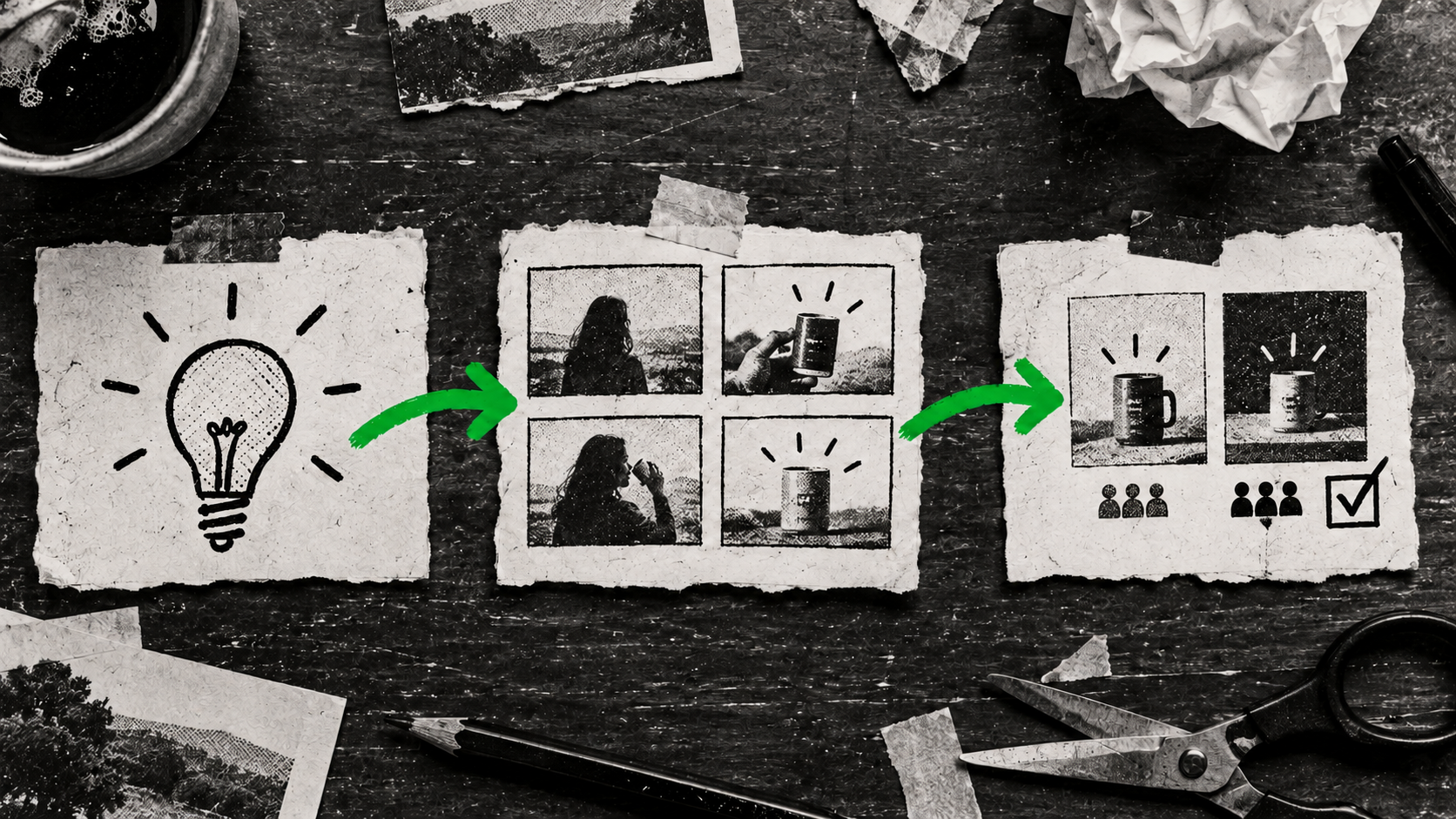
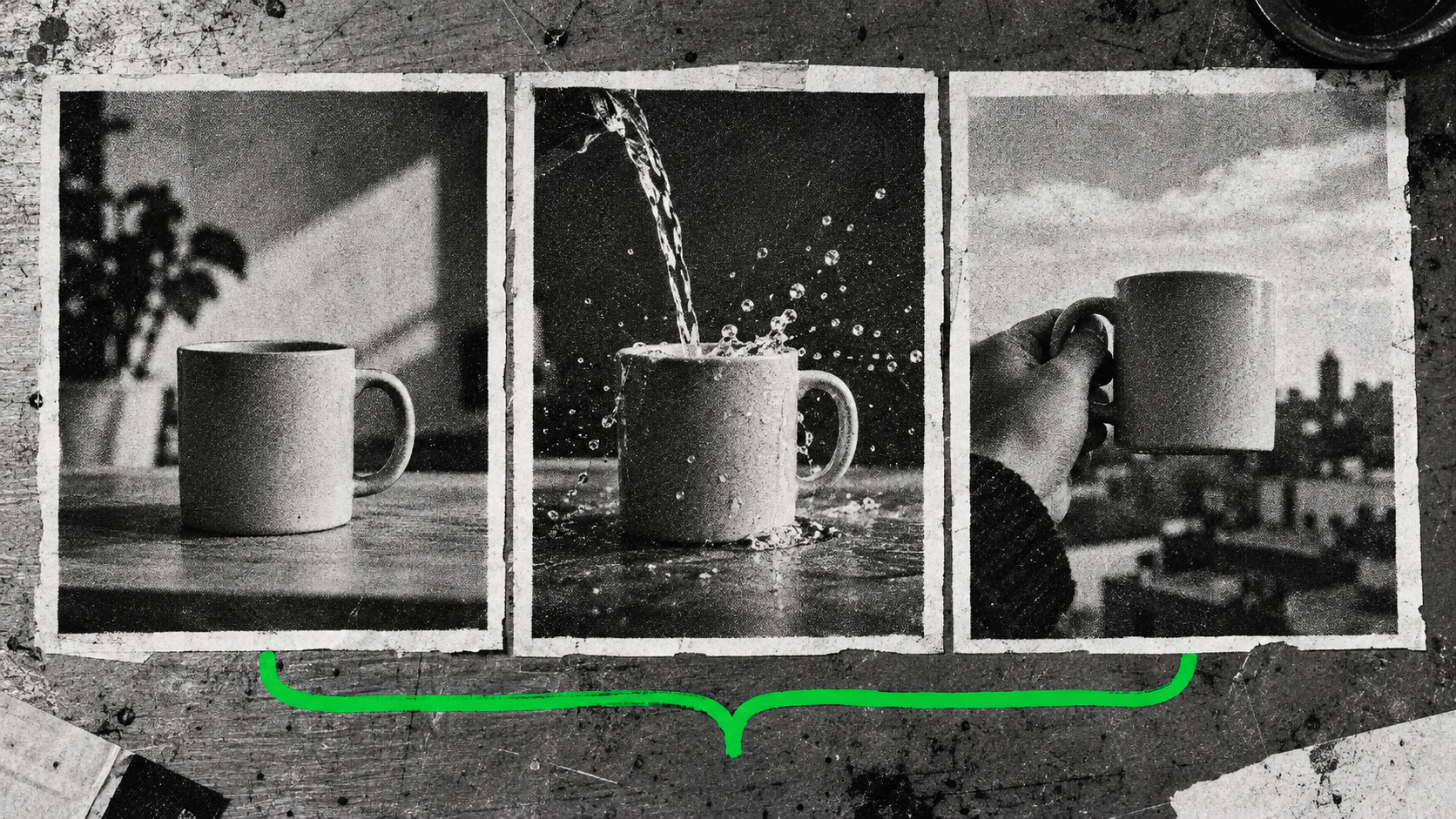
A three-video creator test should prove one thing: which proof mechanism resolves your buyer's core objection most credibly. So each video uses a different mechanism against the same doubt, with the offer and audience held fixed, and the winner tells you what to brief next.
Most brands don't run it that way. They order three videos that share one structure, run them, and see which one got the most views or clicks. That isn't a test. It's a lottery. Swapping the creator's personality or tweaking the hook style doesn't change what's being tested, and if all three videos are structurally identical, the result tells you nothing.
The problem a niche business owner is trying to solve
You know your product works. Your current customers know it works. But the person scrolling on their phone has a built-in objection. They've been burned by cheap alternatives, they don't trust the category, or they can't see the physical value of the item through a small screen.
A standard user-generated content test usually gets you three videos with the same engine underneath. Different hooks, maybe different people, but the same structure: a person holds the product, states a problem, and claims the product solves it.
When that test fails to produce customers, you don't know why. Was the creator unconvincing? Was the hook too slow? Or was the structure of the argument wrong from the start? Most brands never find out. They buy another batch of generic videos and run the lottery again. Here's how our Creative Systems and social media marketing teams structure tests that isolate the proof, not the dressing.
Next step
Get creator videos built around the doubt your buyer already has.
See how we build creative systems for niche brandsThe creative mechanism, explained in plain language
The fix is to test the mechanism, not the dressing. A creative mechanism is the structural way the video delivers its proof. It isn't the script and it isn't the visual hook. It's the underlying architecture of the claim.
If the buyer's doubt is whether a product is actually durable, a "scored matchup" against a tough competitor is one mechanism. A "destroy-the-object proof" where you cut the product in half on a cutting board is a completely different one.
| Test Dimension | Lottery Test (What Fails) | Mechanism Test (What Proves the Angle) |
|---|---|---|
| :--- | :--- | :--- |
| Core Buyer Doubt | Unstated or different across all three videos. | Identical across all three videos (e.g., "Diet bread tastes like dry cardboard"). |
| Video 1 Structure | Creator A holds product and reads feature bullets. | Physical Texture Proof: Uncut hand squeeze test showing crumb elasticity. |
| Video 2 Structure | Creator B holds product in a kitchen and reads the same bullets. | Withheld-Identity Blind Ranking: Unlabeled side-by-side taste and texture test. |
| Video 3 Structure | Creator C films a fast-cut unboxing montage with trending audio. | Skeptic-Reversal Dialogue: Two-person kitchen test starting from explicit doubt. |
| Fixed Constants | None; hooks, offers, and claims shift randomly. | Target audience, core doubt, and closing call-to-action stay locked. |
| Diagnostic Output | "Creator A got more clicks, let's hire people who look like Creator A." | "Physical texture proof held retention through the proof beat; scale that mechanism." |
When the creative mechanism is the only variable across three videos, the results are easy to read. You can see which mechanism held retention longest at the exact point the core doubt was addressed. That tells you what to brief next. You isolate the proof that works, then you scale it.
Media examples and what they prove
To show how this looks in practice, I analyzed three niche categories where buyers have strong built-in skepticism.
Testing mechanisms for a dog chew brand
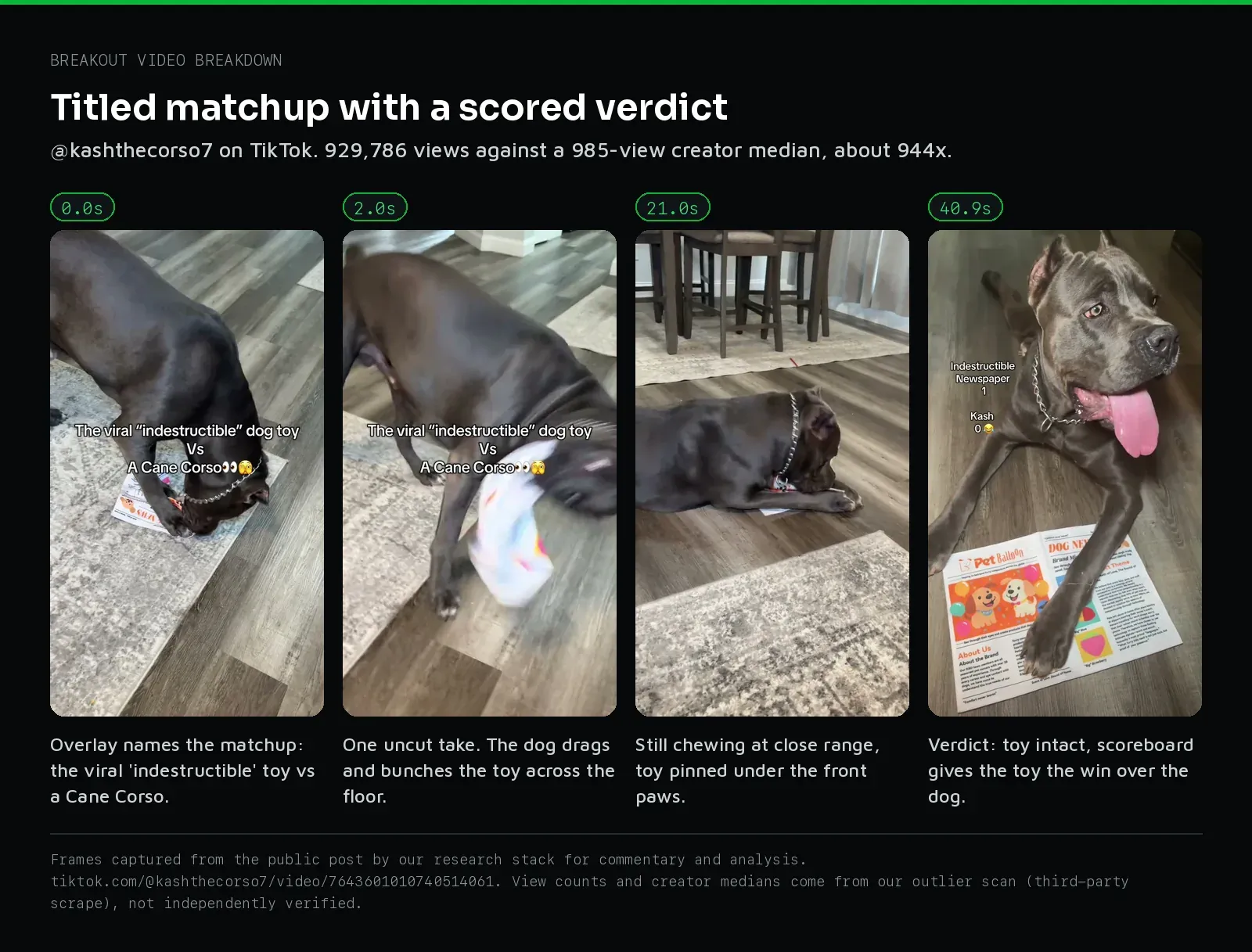
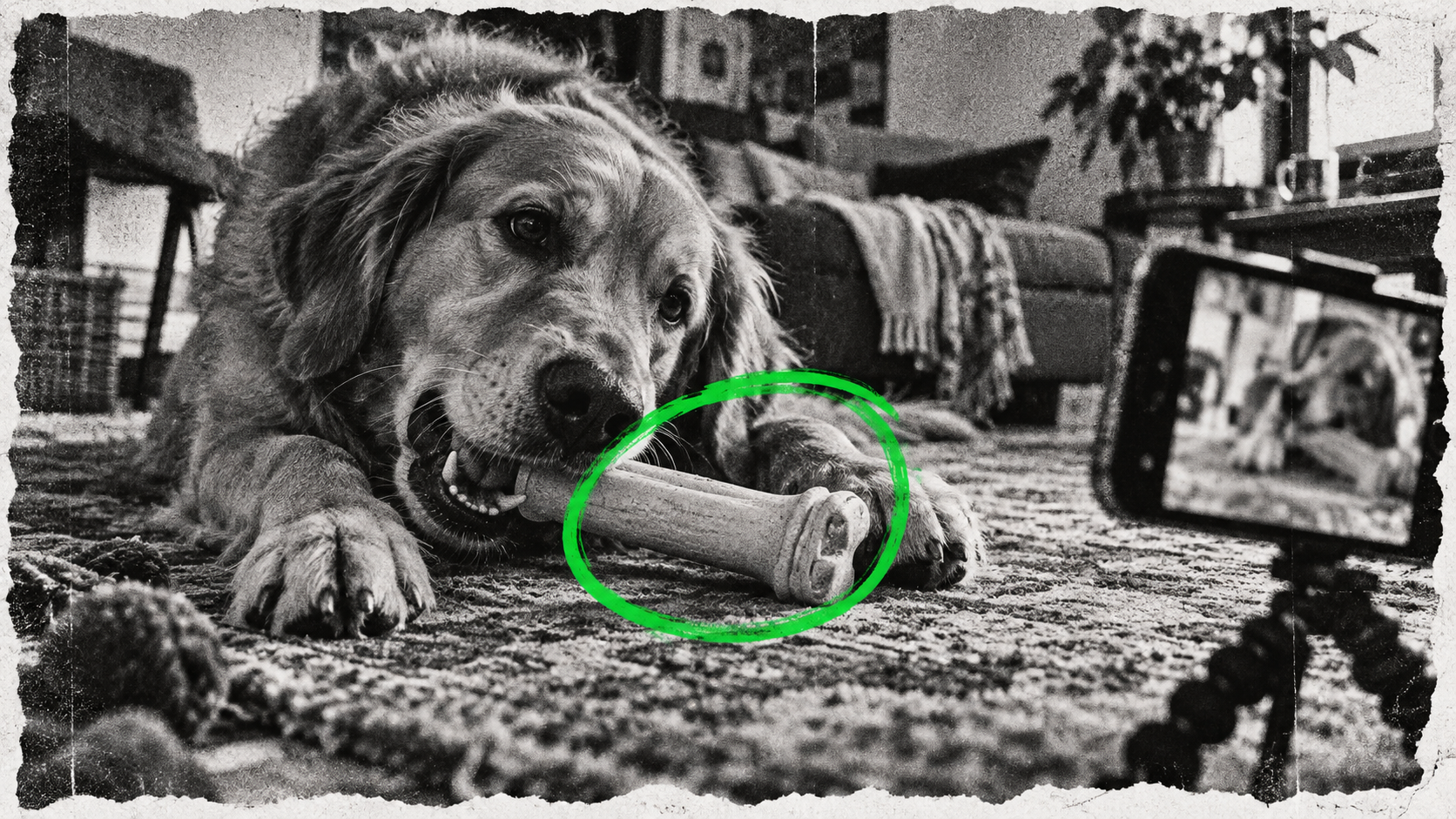
In the dog chew category, the primary buyer doubt was clear: will this chew actually last with a heavy or destructive chewer? One real video shows how a creator solved it. @kashthecorso7 posted a scored matchup, a single uncut take of a Cane Corso chewing and dragging a toy, ending on a scoreboard overlay that gives the toy the win. It pulled 929,786 views against a creator median of 985, about 944x.
To test how to resolve this doubt, I'd design three concepts, each using a different mechanism:
- The Chew Autopsy: A destroy-the-object proof. One concept I'd brief: the creator saws a heavily used chew in half on camera to show the solid cross-section, proving it wears down safely instead of splintering inside the dog's mouth. This is a directional idea based on the mechanics of visible proof, not footage that exists yet.
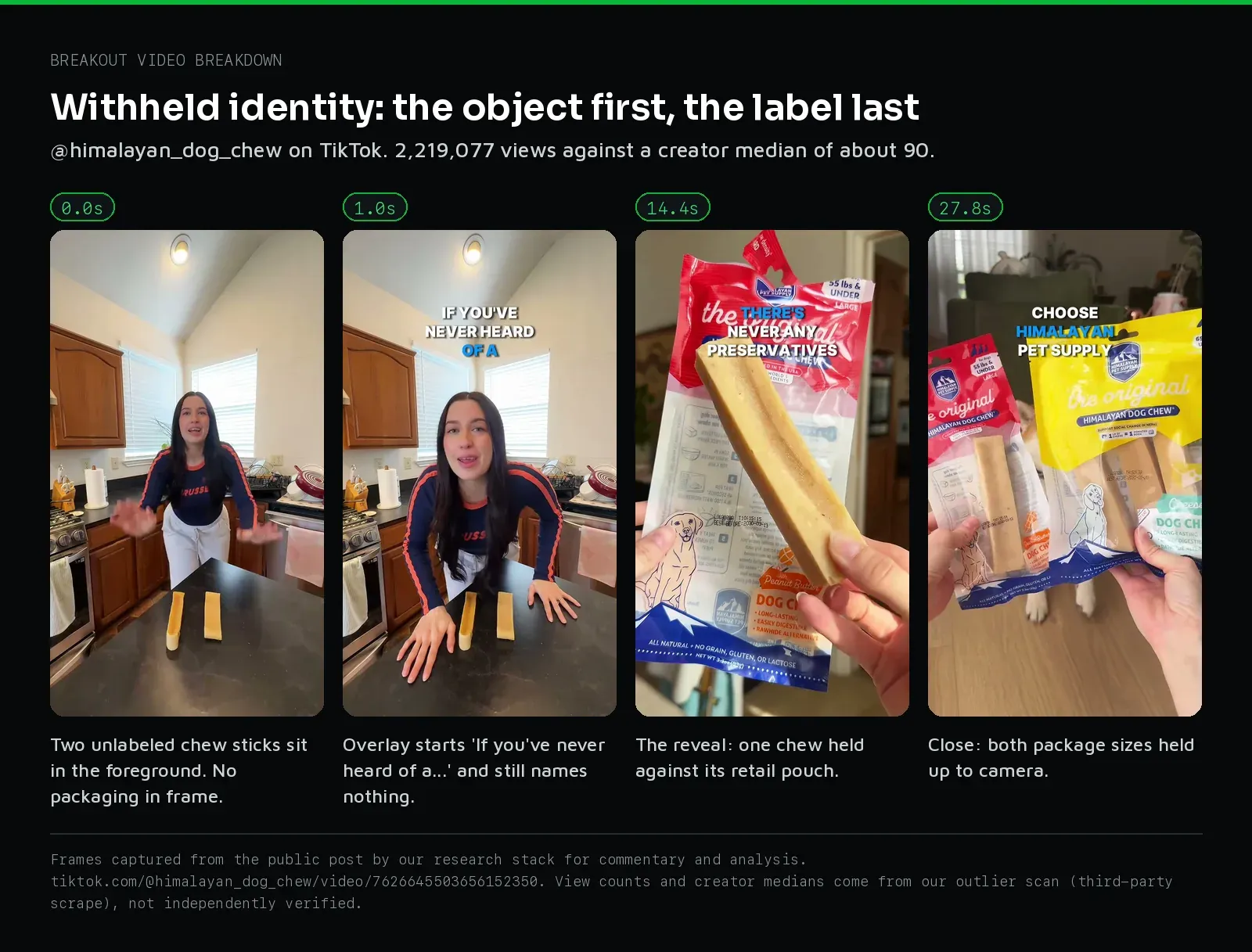
- The Wrong Aisle Test: A withheld-identity cold open. The idea I'd pitch: the creator places the chew on a counter next to real food items and asks a stranger to pick the one that isn't food. It tackles the objection that all chews look like synthetic plastic. @himalayan_dog_chew already runs a version of this pattern in the wild: two unlabeled chews sit on the counter and the packaging only shows up 14 seconds in, pulling 2.2M views against a creator median of about 90.
- Score It Against The Worst Chewer: A titled matchup adapted from the @kashthecorso7 video above, built as the version I'd brief for a dog chew brand: a top-down shot with a scoreboard and a caption like "Toy #5 this month," tallying the result at the end.
All three use a different structural mechanism to resolve the same core doubt. The test shows which framing the buyer actually believes.
Testing mechanisms for a custom picture frame company
For a premium custom picture frame company, the primary objection was visual. Buyers can't tell a good frame from a cheap one in a photo, so they default to price, and then they wonder why the cheap one looks wrong on the wall a year later.
I'd test two structurally different mechanisms against this doubt:
- Proof First, Reason Last: One concept I'd brief: open on six frames already hung dead straight on the wall, and hold the explanation of the premium mounting system until the end. It's adapted from a real pattern in @brokenfrenchfries's video, where an unfamiliar hanging tool is shown working on the wall a full 12 seconds before anyone explains what it is. That real video pulled 8.8M views against a creator median of 651, about 13,588x.
- Invisible Object Proxy Motion: A hand motion against an unseen surface, where the viewer infers the object from the gesture alone. The idea I'd pitch: use that same motion to show how the frame's components join together before revealing the finished piece. It's adapted from @essexgallery's reel, where a cloth wipes art glass the camera can't see, proving the glass is there through motion alone. That reel pulled 31.9M plays against a creator median of 140,994, about 226x.
Testing mechanisms for a women's hormone wellness brand
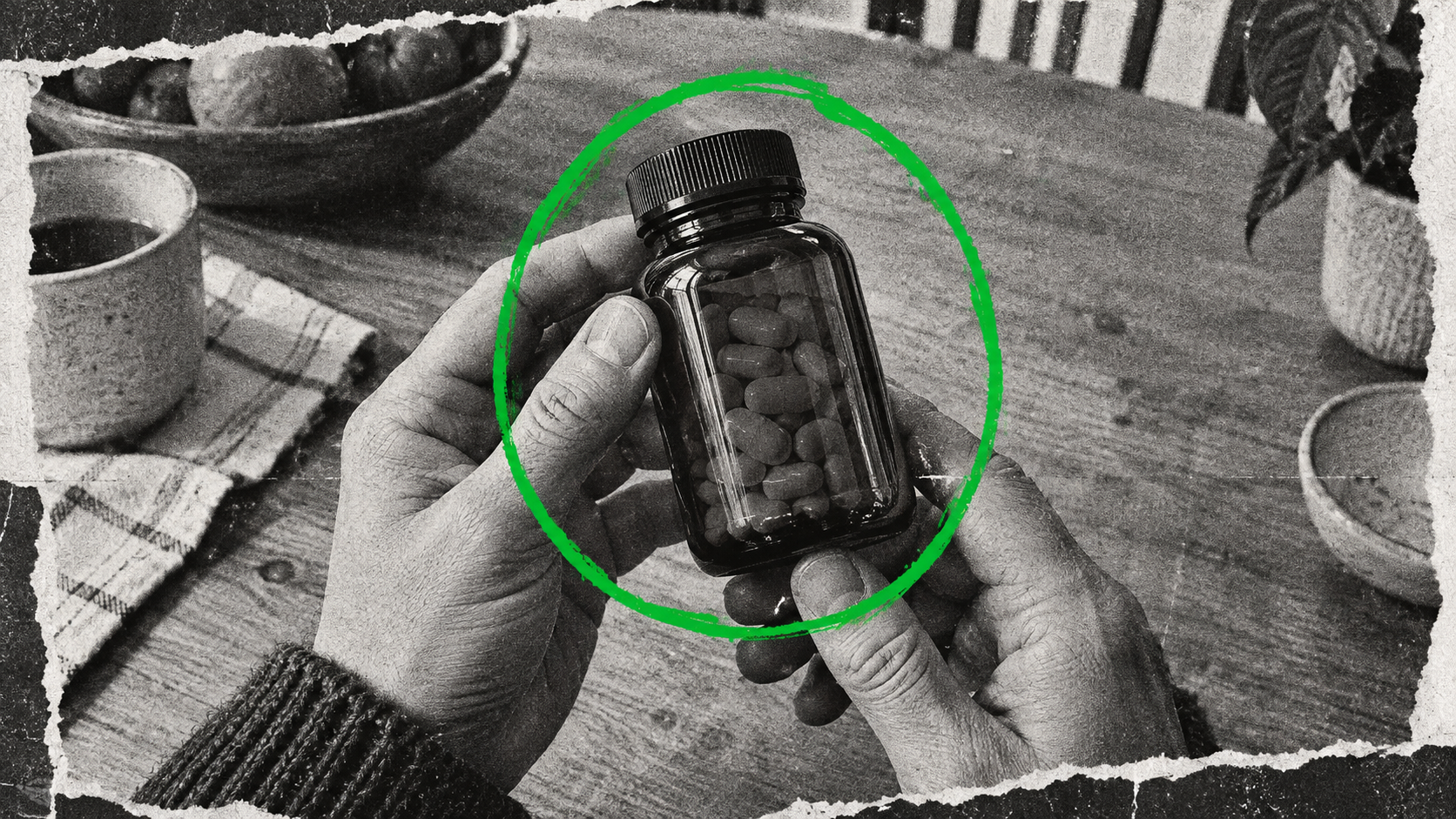
For a women's hormone wellness brand, the core buyer doubt was deep skepticism that natural or plant-based supplements could actually move hormones and produce a noticeable physical shift.
I'd test two different mechanisms on the same skeptical buyer:
- Two Weeks, Same Clothes: An effort-collapse reframe. One concept I'd brief: a woman strains to open a familiar jar and fails, reframing a self-blamed change in strength as a body signal. It's adapted from a real video by @klchealthandwellness, where a woman strains up a playground rope-climb ramp, falls about 9 seconds in, and the caption flips from an effort line to "HORMONAL IMBALANCE," with the subtext "Sometimes it's not burnout. It's your hormones." That reel pulled 32.4M plays. It makes the viewer confront a physical symptom before the brand enters the frame.
- Read Me The Label: The idea I'd pitch: a blind identification test where the creator picks among covered bottles on a counter using only the back ingredient labels. It's a different mechanism, built on a dense symptom-cause paired list, aimed at the same skepticism through comparative proof.
The adaptation boundary
When you adapt a mechanism from an outlier video, you're borrowing the structure, not the content. You can borrow the "Proof First, Reason Last" structure. You can't borrow the script, the creator's personal story, or the product claims.
The mechanism is the vehicle. Your brand's objection and proof are the cargo. Borrow the cargo and you're copying someone else's ad, and it'll fall flat because it isn't true to your brand. Take the architecture. Leave the details. If you're still hunting for the structure worth borrowing, start by finding a creative angle in outlier videos.
A practical test you could run
Start with your buyer's biggest doubt. Write it down in one clear sentence.
Then pick three different mechanisms to resolve that exact doubt. Don't change the offer. Don't change the target audience. Brief three creators, assigning one mechanism to each.
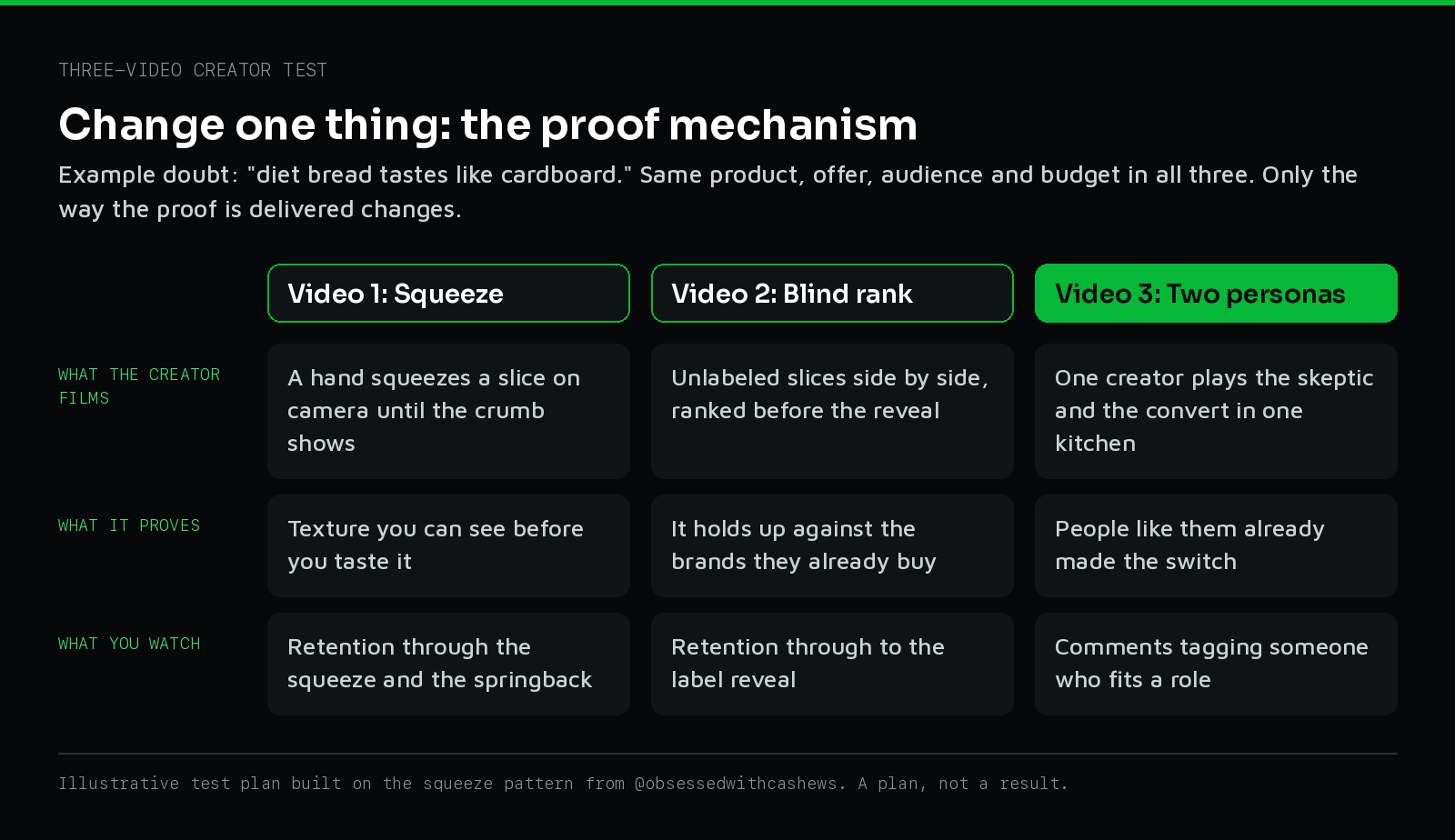
Say you run social media marketing for food and CPG brands and sell keto baked goods where the doubt is that they'll taste like cardboard. Your three mechanisms might be:
- The Squeeze Test: A physical texture proof, squeezing the product tightly on camera to show it isn't dense.
- Blind Ranking: An unlabeled side-by-side against popular alternatives, with the labels removed.
- Two People, One Kitchen: A two-persona dialogue about the tension of finding a keto treat that actually tastes good, shot in a single location.
Put equal budget behind all three. Look at the retention curves in your ad platform. The winner holds attention longest at the moment the physical proof lands. That's what you double down on in the next batch.
What would make the test fail
The test fails if all three videos are structurally identical and only differ in the script or the creator's energy. If you brief three creators to talk about how great the product tastes while holding it near their face, you're running a lottery.
It also fails if the mechanism doesn't match the objection. A destroy-the-object proof works well for durability, but it does nothing to prove taste or nutritional value.
And it fails if you pick the winner on click-through rate alone. A high CTR with no customers on the back end means you found a curiosity magnet, not a winning mechanism. You're optimizing for theater instead of pipeline.
FAQ
How many videos do I need for a creator video test?
Three is enough for a first test, as long as each one uses a different proof mechanism against the same buyer doubt. Three videos that share one structure and only swap the hook or the creator won't tell you why anything worked or failed.
What's a creative mechanism in a UGC ad?
It's the structural way the video delivers its proof. A scored matchup, an invisible-object proxy motion, and a destroy-the-object test are three different mechanisms. Testing mechanisms gives you results you can read, because you know what kind of proof held the buyer's attention.
Why isn't my UGC converting?
Usually because you're testing creator personalities or hooks instead of mechanisms. If the structure of the video never resolves the buyer's core doubt, a better hook only buys you more unqualified viewers.
Should I test hooks or concepts first in creator videos?
Test concepts first. Once one mechanism wins, run two or three hook variations on that proven concept. Testing hooks on an unproven mechanism tells you nothing about why the video failed.
How do I judge the winner of a creator video test?
Put equal budget behind all three and read the retention curves. The winner holds attention longest at the moment the proof lands, and it should bring real customers on the back end, not just a high click-through rate.
Stop buying the lottery
Random UGC packages won't give you a repeatable engine. Test mechanisms, keep the winner, and scale it into real customers. The test only works if each creator knows exactly which proof they're delivering, so the next step is learning how to brief a creator video for your product.