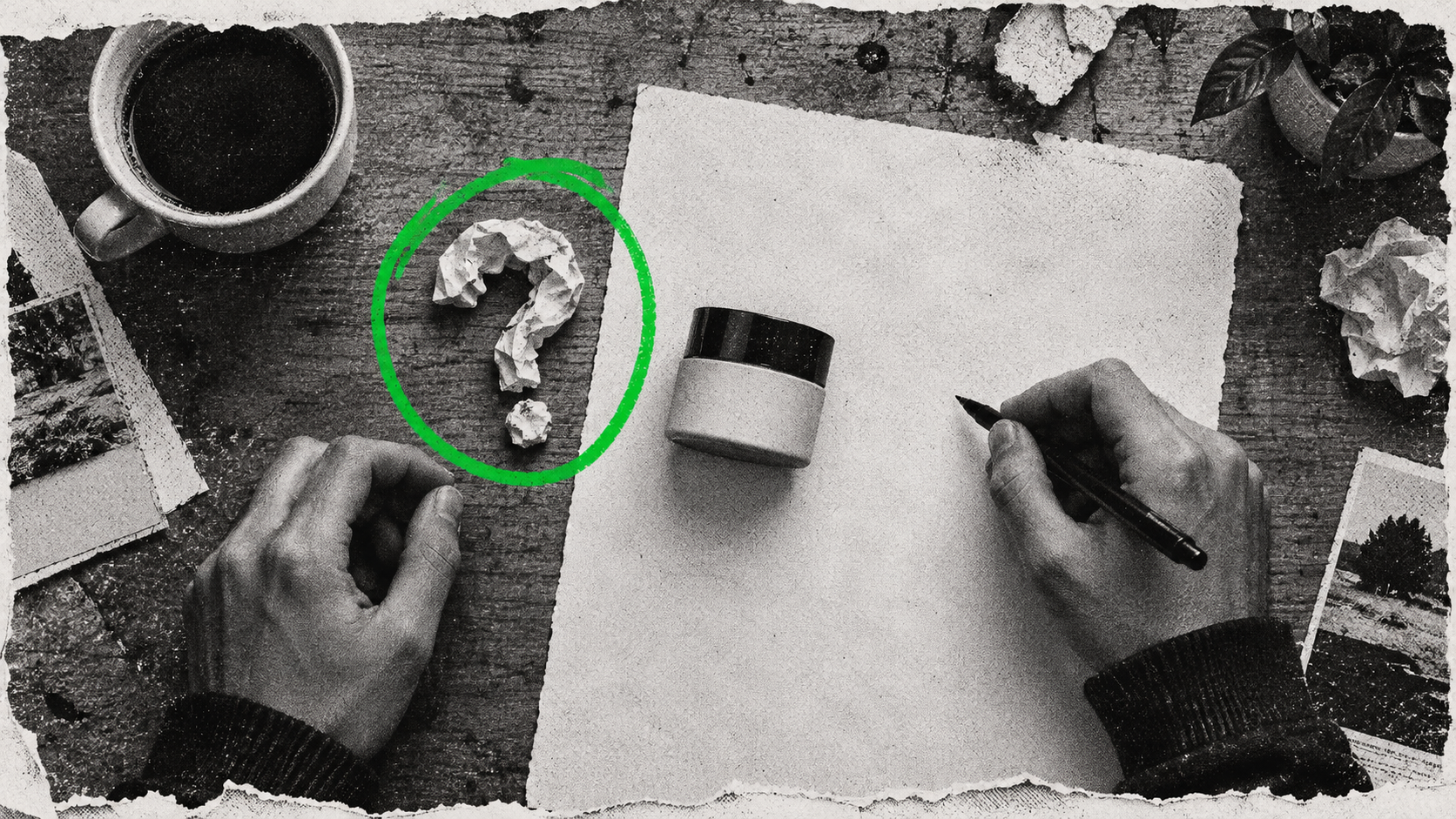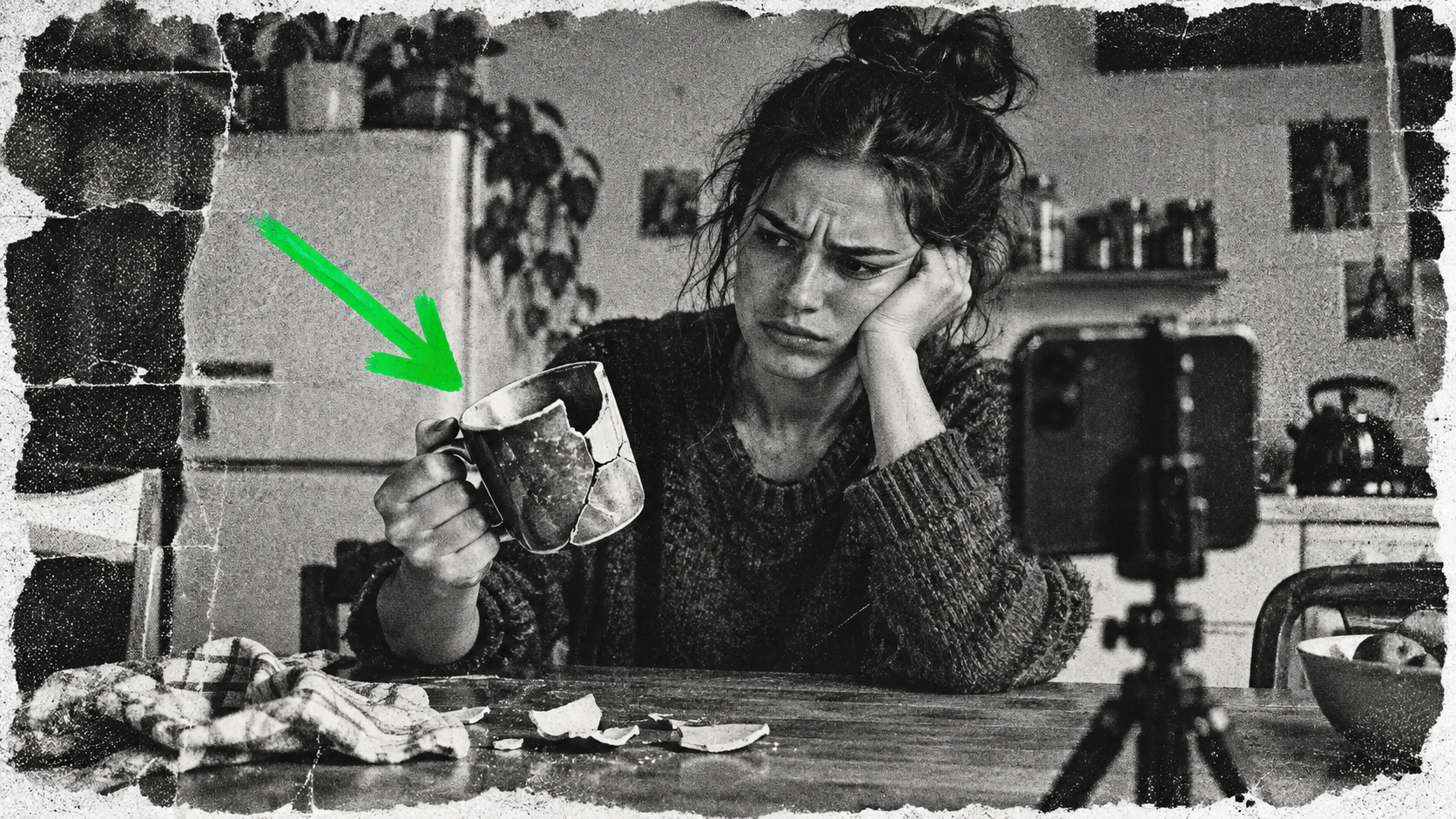
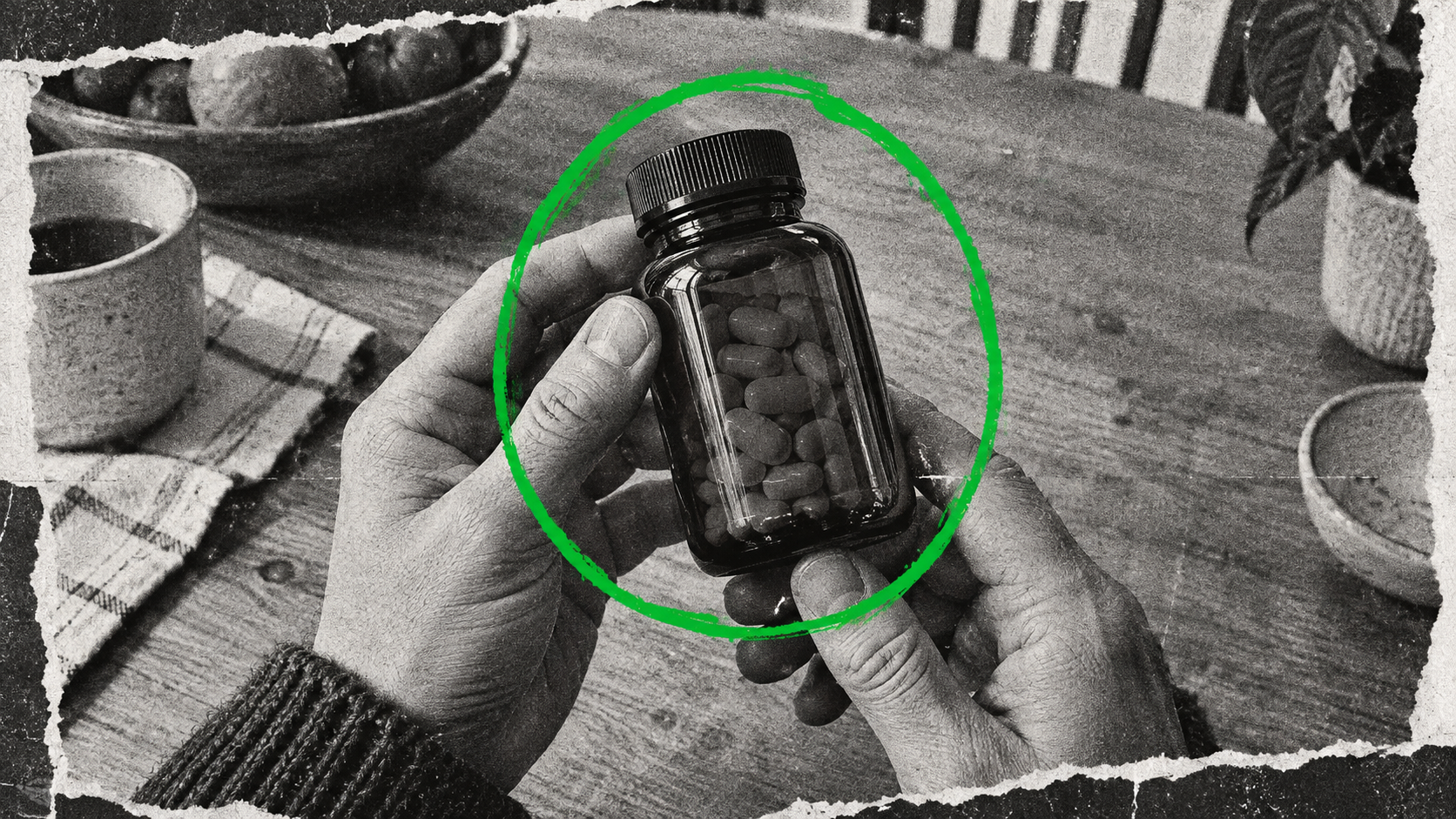
When you can't claim the benefit, brief the creator to show a symptom the buyer already has, name it without diagnosing it, and let the viewer map it to themselves. The product becomes the thing the creator uses, not the thing that cures anything.
That's the pattern I found after breaking down outlier creator videos in wellness and health categories frame by frame. If you sell a supplement, a health device, wellness coaching, or an over-the-counter product, you can't make therapeutic claims in a creator video. The platforms will reject it, regulators can fine you, and buyers won't believe it anyway.
Most brands respond in one of two ways. They go vague, telling the creator to look thoughtfully out a window and say the product "supports your wellness journey." Or they go heavily disclaimed, with asterisks on screen while the creator reads a compliance-approved script that sounds like a late-night pharma commercial.
Both kill conversion. You're paying to put videos in front of buyers that either mean nothing or feel like a legal deposition. The constraint isn't something to route around. The constraint is the brief.
Here's how I'd build creator concepts for sensitive products, from the patterns that broke out in our research and the concepts I'd test next.
The mechanism: show the struggle, withhold the claim
Visible proof of the problem beats a polished explanation of the product.
People don't buy health products because they want a supplement. They buy them because they want to wake up at 6 AM without feeling hit by a truck. They want to open a jar without their wrist shaking. They want to feel calmer and more rested without a complicated wellness ritual.
If you tell a creator to promise that outcome on camera, the bullshit detector fires immediately. If you tell a creator to film the struggle they already live with, the viewer says, "That's exactly what happens to me."
I'd build from three approaches that fit trust-heavy constraints. None of them makes a medical claim. Each one stops short of the big promise and stays on what the viewer can actually see happen.
1. Symptom-first, product-last
The creator shows or names the physical experience without any claim. They film the 3 AM wake-up, the jar lid they can't open, or the headache they get every Tuesday. The product appears in the final frame only as what they use.
2. Read Me the Label
The creator reads the actual ingredient list skeptically, not as an endorsement. The claim stays on the label where it's legally approved. The creator stays credible because they're questioning it, not pitching it.
3. The Observable Window
The creator tracks one observable metric over a defined window (like "one week of data") and reports what they measured, not what the product claims.
All three work the same way: the buyer's doubt gets answered by something on screen, which is the logic behind starting the creator brief with the buyer's doubt. If you want this run as a repeatable process across a product line, that's what we build in our creative systems work.
Next step
Get creator videos built around the doubt your buyer already has.
See how we build creative systems for niche brandsThe evidence: what this actually looks like
Here's what the pattern looks like across different trust-heavy verticals, with one real video per family and the concepts I'd brief off them.
Example 1: The Effort-Collapse Reframe
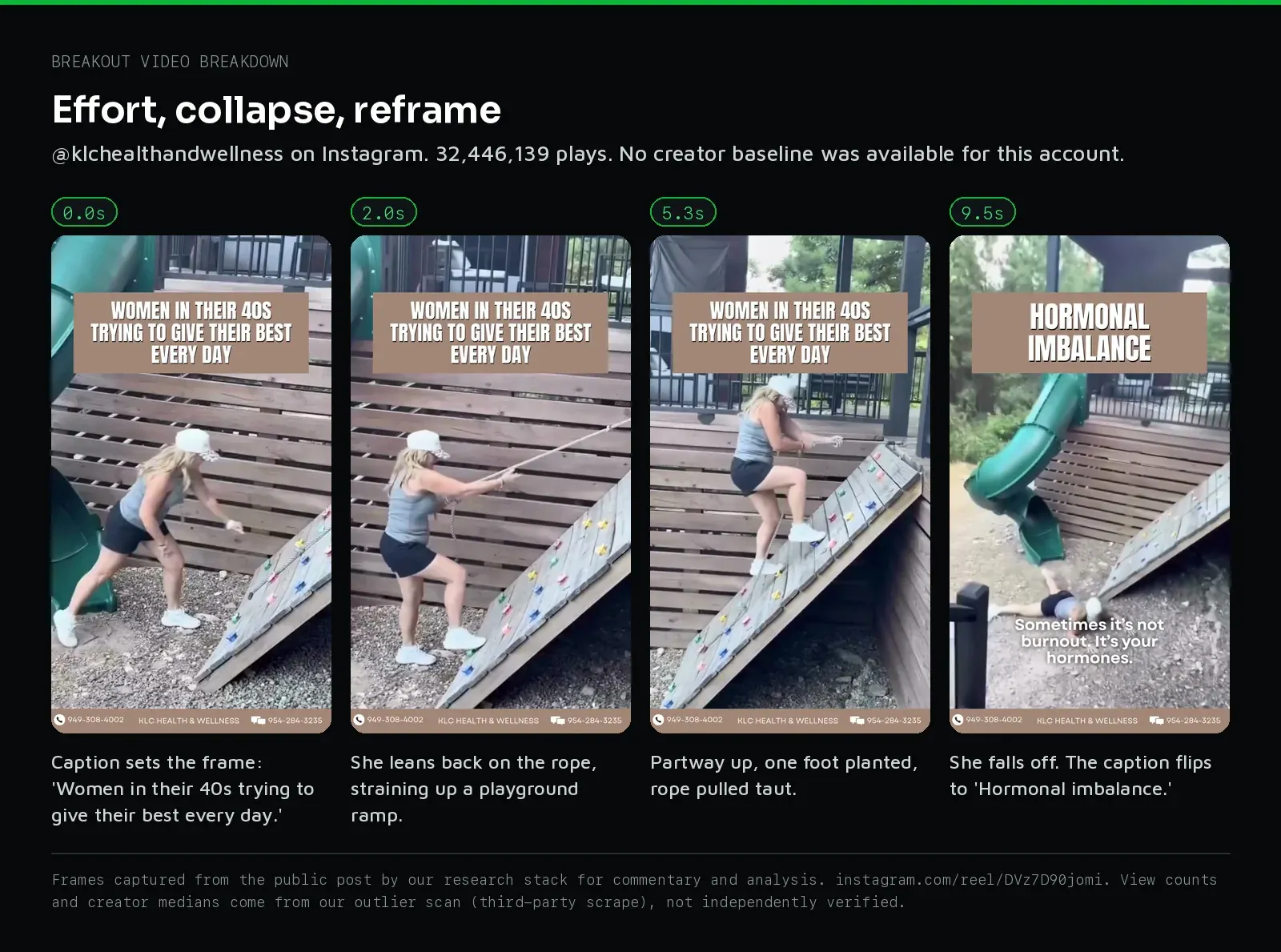
We looked at a women's hormone wellness brand. The buyer's main objection is doubt that natural or plant-based supplements can actually move hormones. She often thinks she's just getting older or lazier, absorbing the blame instead of treating it as a symptom.
There's a real video that shows why this works. In @klchealthandwellness's Instagram reel, a woman pulls herself up a playground rope-climb ramp, strains, and at about nine and a half seconds falls off. The caption flips at that exact moment, from "Women in their 40s trying to give their best every day" to "HORMONAL IMBALANCE," with the line "Sometimes it's not burnout. It's your hormones." That reel has 32.4 million plays.
She doesn't say "this product cures hormones." The video shows the physical strain, and the caption reframes it. The viewer maps that symptom to herself. One concept worth briefing off this pattern is what I'd call "Two Weeks, Same Clothes": the creator films a familiar task that has recently gotten harder, unbroken, then reveals a small detail like "same jar, same hands" before the pivot. It's an idea to test, not something I've seen run yet.
Example 2: The Symptom Drawer
For that same women's wellness brand, another concept worth testing is a fixed shot of a bathroom drawer. The creator tries to open a drawer stuffed with a separate fix for sleep, a fix for energy, and a fix for skin.
The drawer jams. It's a physical, visible mess. The creator asks, "What do these three things have in common?"
This is a pitched idea, not a video I've seen run. The logic: the drawer makes the problem physical before the brand appears, the jam stops the scroll, and the closing question gives the viewer a reason to connect the pile to their own routine, all without a single therapeutic claim.
Example 3: Read Me the Label
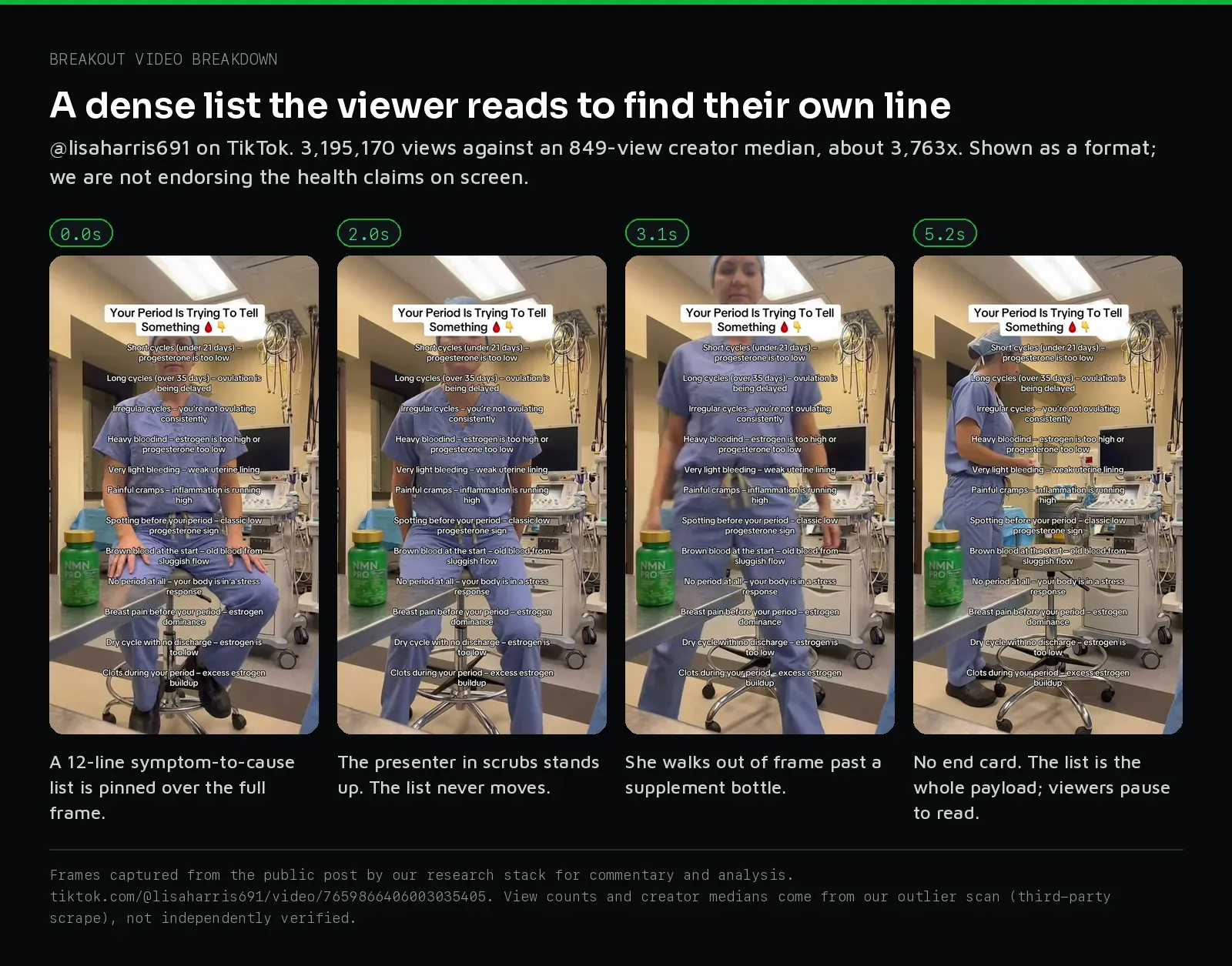
The real video in this family is @lisaharris691's TikTok. A presenter in scrubs pins a 12-line symptom-to-cause list over the entire video ("Your period is trying to tell you something"), then stands and walks off with no end card. The list is the whole payload. That video has 3,195,170 views, about 3,763x the creator's median. I won't repeat or endorse the specific symptom claims in that list here, but the format is worth studying: the payload is a static, scannable list the viewer pauses on to find their own line.
A concept I'd pitch off that pattern for an OTC-style product: the creator covers the front label of a few bottles, turns them around, and reads the back panels on camera, choosing the one they'd actually use based strictly on the approved ingredient list. This is an untested idea for a pharmacy-adjacent product where regulatory sensitivity is high, not something I've seen shot yet. The logic is the same as the label case: a public, on-camera choice keeps the viewer watching for the reveal, and the claim stays on the label where it's already approved.
Example 4: The Observable Window
This is an untested idea for a neuroscience recovery brand where the main desire is to feel rested without a complex ritual. The buyer is highly skeptical that a device will produce a noticeable shift in their sleep.
Instead of having a creator explain the neuroscience, the concept briefs them to log one specific metric for seven days. "I tracked my 3 AM wake-ups for a week using this." They report the data. They don't claim the device cures insomnia. They state what they observed, and the device is just the tool they used to gather it.
The adaptation boundary: what you can safely steal
You can borrow the structure. The symptom-first opening, the skeptical label-reading, and the 7-day observable window are structural mechanics. My read is that they hold attention because people respond to visible struggle and honest skepticism. They also keep you on safer ground, because they rely on personal observation, not medical promises.
You can't borrow the specific symptom. If you sell an OTC product, don't copy the jar-lid struggle unless your product is explicitly for joint support. Your symptom has to be the exact physical version of your buyer's problem. You have to do the work to figure out what your buyer's "jammed drawer" looks like.
The mechanism transfers. The details have to be native to your brand and your buyer's actual pain.
A practical test you can run this week
Stop briefing creators to talk about your product's features. Build a brief around the "Symptom-first, product-last" mechanic.
Identify the single most frustrating, visible symptom your buyer experiences before they look for your product. Don't use the medical term. Use the physical reality. Source three creators who fit your demographic. Ask each of them to film a 15-second video where the first 12 seconds are just them experiencing or naming that one physical frustration.
Tell them to end the video by showing your product and saying, "This is what I'm trying this week."
No claims. No promises. Just the symptom and the tool. Run those three variations against your current best-performing, heavily disclaimed ad.
What will make the test fail
It'll fail if you let legal or compliance turn the first 12 seconds into a brand manifesto.
It'll fail if the creator looks like they're acting in an infomercial. The physical struggle only works if it looks like a real moment in a real room, not a heavily lit prop set.
It'll fail if you pack three different symptoms into one video. One video, one symptom, one product. The moment you list multiple benefits, the viewer knows it's a commercial and scrolls. The power of this format is restraint.
FAQ
How do I run UGC for a health supplement without making claims?
Brief the creator to show a symptom the buyer already has, name it without diagnosing it, and let the viewer map it to themselves. The product shows up as the thing the creator uses, not a cure. The claim stays off camera.
What kind of creator video works for sensitive wellness products on TikTok?
A video that shows the physical experience of the problem instead of explaining the product. A visible struggle followed by a reframe or a question holds attention better than a polished lifestyle shot. The @klchealthandwellness reel that does this has 32.4 million plays.
How can OTC brands use creators without compliance problems?
Use a label-reading or observable-window format. The creator reads the actual ingredient list on camera with some skepticism, or tracks one personal metric for a week and reports it. The claim stays on the approved label, and the creator stays credible.
Why isn't my supplement UGC converting?
Usually it's gone too vague ('support your wellness journey') to stay safe, or it's so heavily disclaimed that it sounds like a pharma commercial. Neither resolves the buyer's doubt. Visible proof of the problem does.
How do I brief a creator for a sleep or recovery device?
Don't ask them to explain the science. Ask them to track one observable metric over a set window, like a week of 3 AM wake-ups, and report what they measured. The device is just the tool they used to gather it.
Where to take this next
If your creative is stuck between vague compliance and zero conversions, that's a structure problem, and the fix starts in the first scene. The next step is learning to use the buyer's objection as the opening scene of the video.