Visible proof works better than a product description because the viewer doesn't have to trust anyone. They watch their doubt get answered in the frame, and a spoken claim from a paid creator can't compete with that.
I broke down outlier short-form videos frame by frame across dog chews, picture frames, women's hormone wellness, and baked goods. I was looking for what separates the creative that captures attention from the creative that disappears.
Most brands approach video with a script. They hand a creator a list of talking points and ask them to read the features to a camera. The videos that broke out didn't do that. The viewer wasn't told the benefit. They were shown a moment that resolved their exact doubt, using only what they could see.
The problem with explaining your product
You have a physical product or a specialized service. You know what it does and why it's better than the alternative.
Your buyer has a specific, unstated fear.
If you sell a thirty-dollar dog chew, the owner is thinking about the last five toys their dog destroyed in under an hour. Their core objection is uncertainty that the chew will actually last with a heavy chewer.
If you sell natural hormone supplements, the buyer doubts that a plant-based product can actually move their hormones enough to feel a difference.
When you explain your product, you're fighting those objections with words. You're asking a skeptical scroller to trust a spoken claim from someone they know is being paid to talk. They scroll past because it sounds like every other ad in their feed.
The problem isn't that your product fails to work. It's that a spoken explanation requires trust you haven't earned yet. That's the gap our creative systems work for niche brands is built around: finding the proof a camera can show before anyone asks for trust.
Next step
Get creator videos built around the doubt your buyer already has.
See how we build creative systems for niche brandsThe visible proof mechanism
Visible proof means the answer to the core objection is observable in the frame, not described in the narration.
The creator doesn't have to make a claim. The footage makes it. If you play the video on mute, the argument still lands.
This works because it gets past the viewer's advertising filter. People judge physical reality with their own eyes. When you see a heavy weight hanging from a thin wire, you believe the wire is strong. You don't need a voiceover quoting the tensile strength.
When you shift from product explanation to visible proof, your creative strategy changes. You stop asking what the creator should say. You start asking what the creator needs to physically demonstrate to prove the objection wrong.
What visible proof looks like in the wild
I found the same mechanism in entirely different categories, with different products and different buyers. Some of these are real videos I scanned. Two are concepts I'd pitch, and I say so where that's the case.
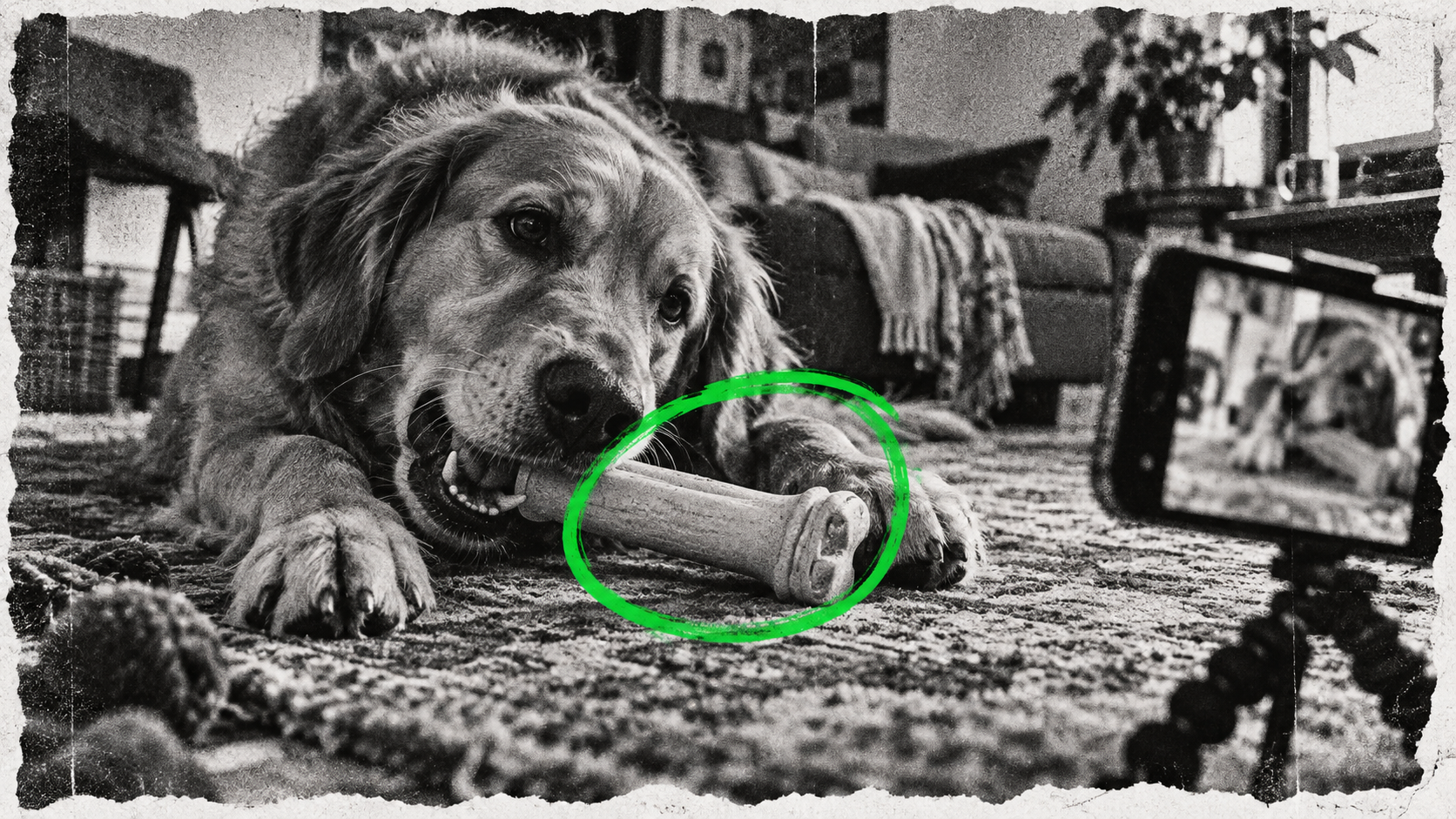
The Chew Autopsy
A dog chew brand sells durable chews for heavy-chewing dogs. The buyer tension is obvious. Owners can't tell whether a chew is being safely worn down or shredded into pieces their dog is swallowing.
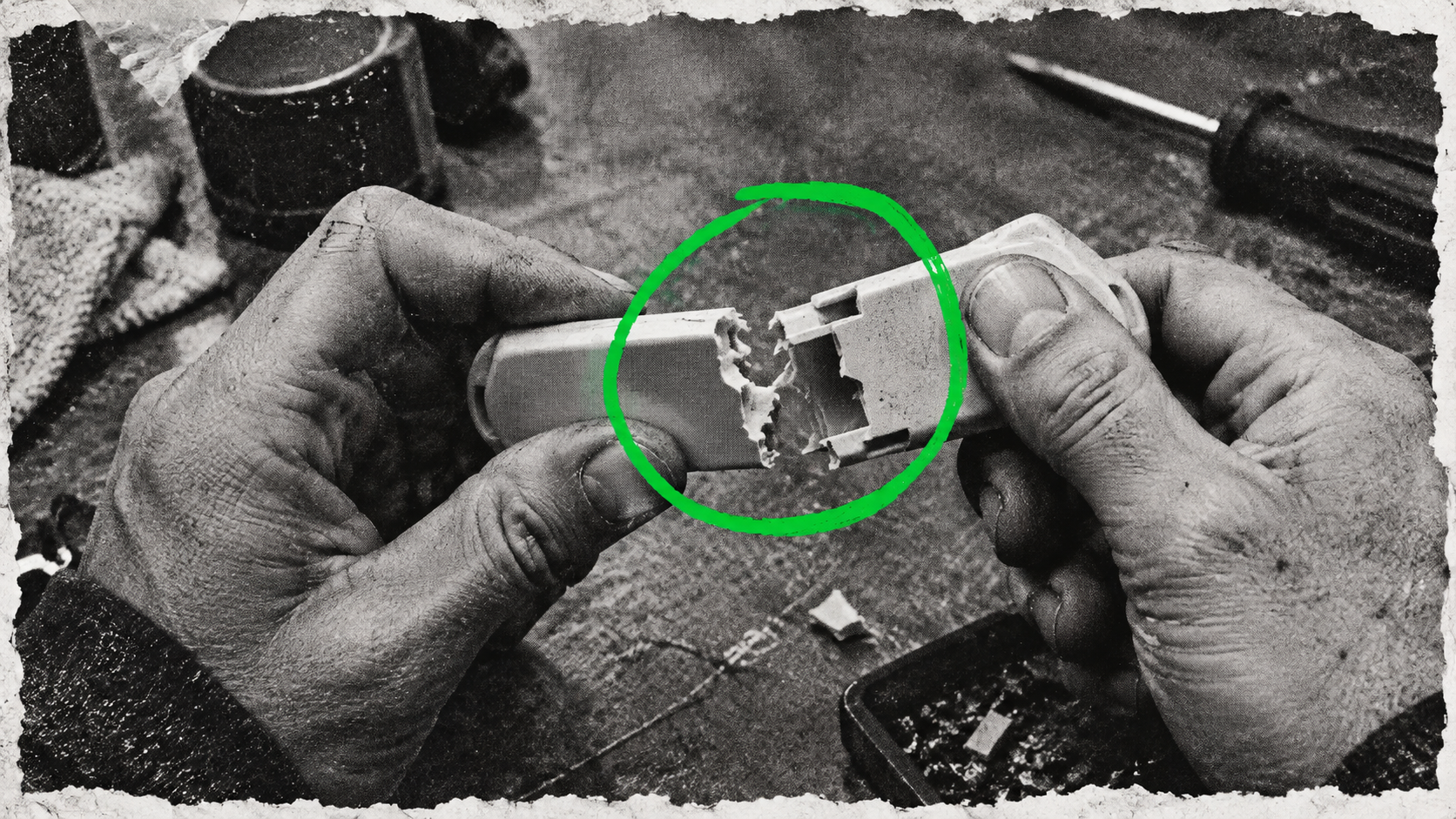
A standard ad explains the durable nylon material. Here's a visible proof concept I'd pitch instead, untested so far: the Chew Autopsy. A creator takes a chew that's been worked on for weeks, saws it in half on a cutting board, and holds the cross-section up to the lens. The viewer would see the solid interior and the safe wear pattern. The material itself becomes the evidence.
The Scoreboard Matchup
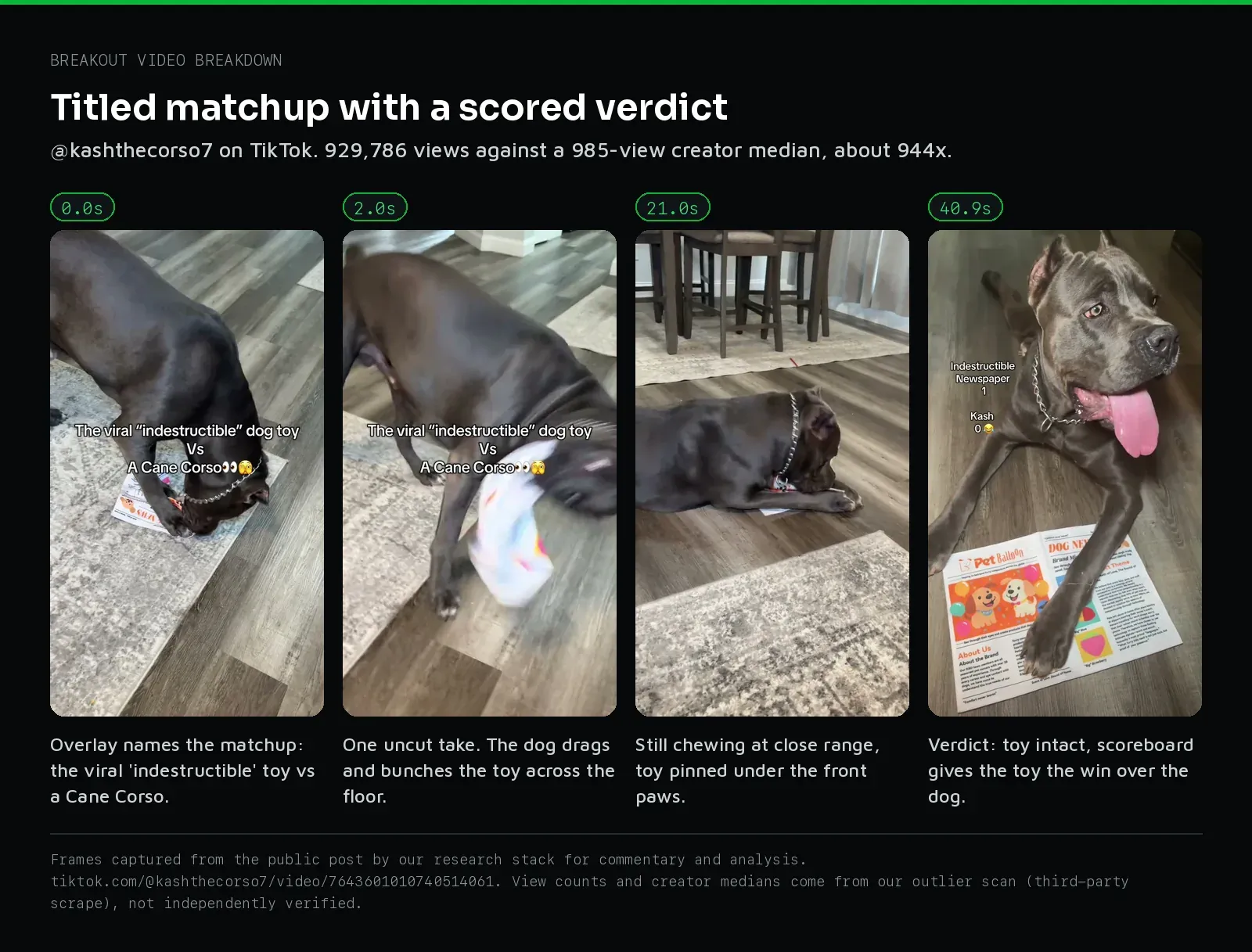
A real video from creator @kashthecorso7 shows the same instinct with a challenger already on the field. A Cane Corso chews and drags a plush toy overlaid with the text "The viral 'indestructible' dog toy Vs A Cane Corso." It's one uncut take, ending about 41 seconds in with the toy intact under the dog's paws and a scoreboard overlay: "Indestructible Newspaper 1 / Kash 0." The video went to 929,786 views against a creator median of 985, about 944x.
The visible proof is the undamaged toy in the final frame. The viewer doesn't need to hear a durability claim. They just watched the dog try and fail to destroy it.
Proof First, Reason Last
A custom picture frame company sells premium custom frames. The buyer wants their art and rooms to feel intentional. Their objection is that they can't tell a good frame from a cheap one, and they assume their gallery wall will look crooked anyway.
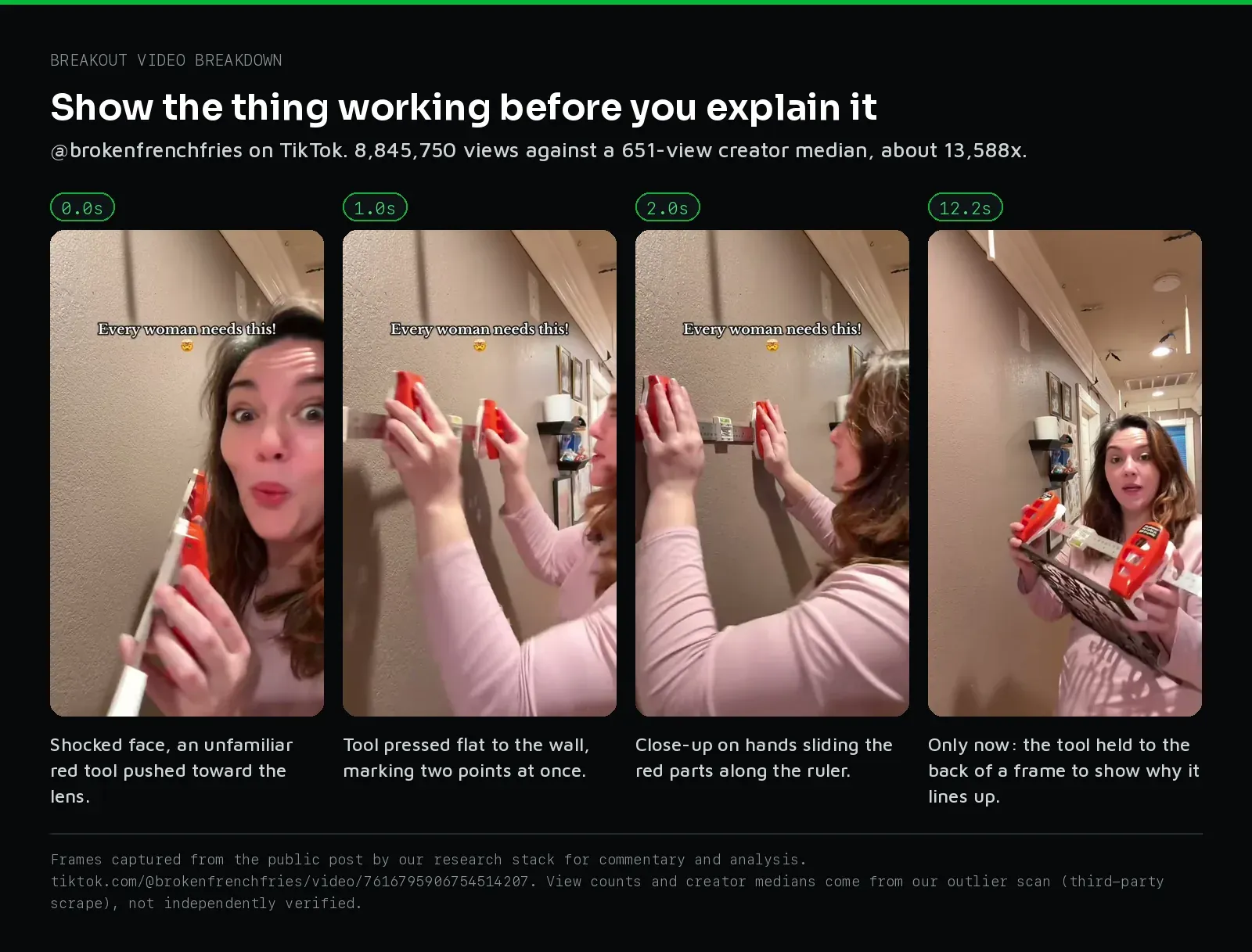
A real video from creator @brokenfrenchfries shows the pattern. She presses an unfamiliar red picture-hanging tool to the wall with a shocked look on her face, marking two points at once, then slides its parts along a ruler. Only about 12 seconds in does she hold it to the back of a frame to show why it lines up, and then she explains it to camera. The video went to 8.8M views, about 13,588x her median.
This is visible proof in reverse. The tool works on screen before anyone explains it. The viewer already watched the result, so they stick around to find out how it happened.
Effort, Collapse, Reframe
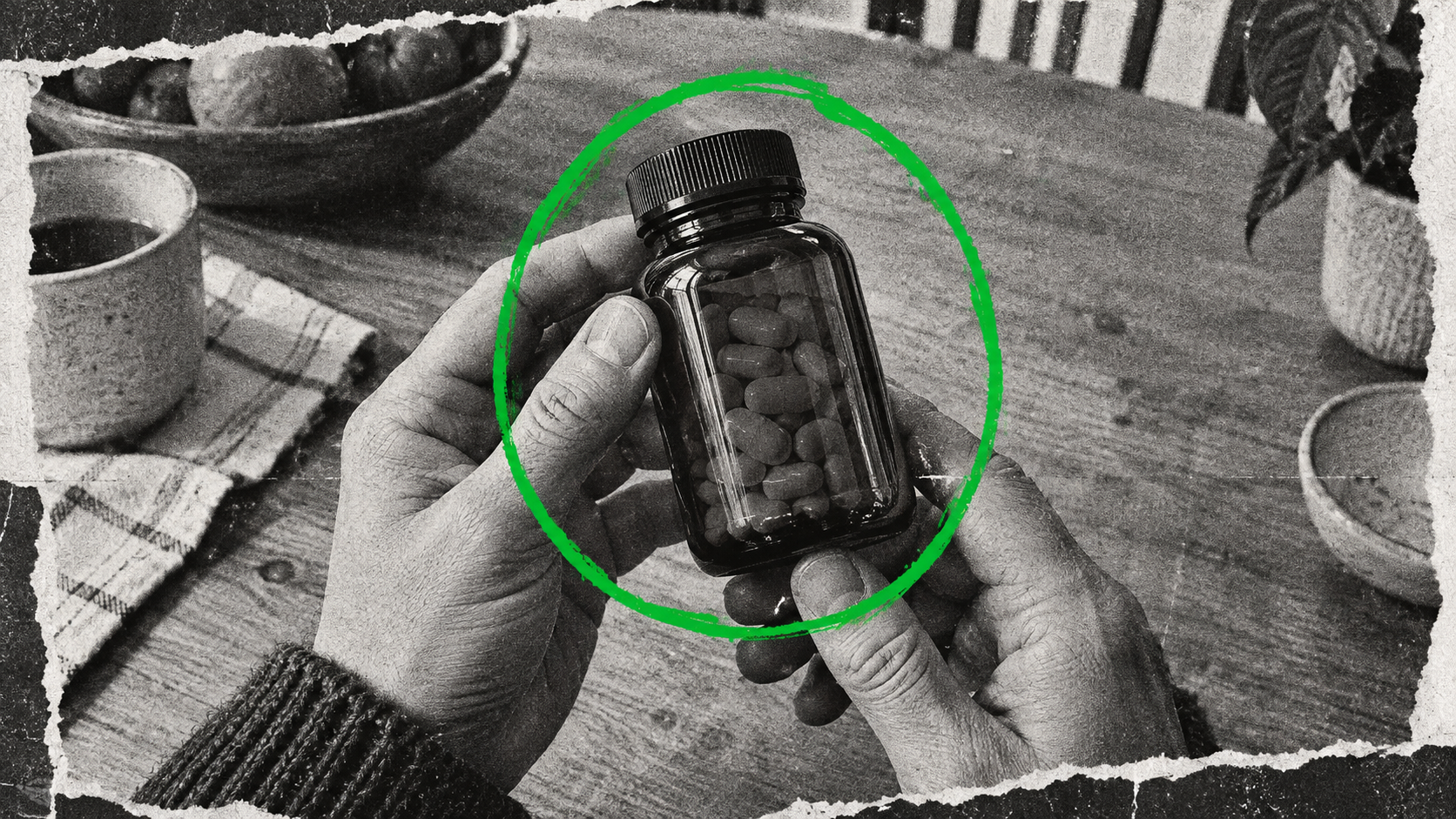
A women's hormone wellness brand offers coaching and plant-based supplements. The buyer doubts that natural supplements can produce a noticeable shift.
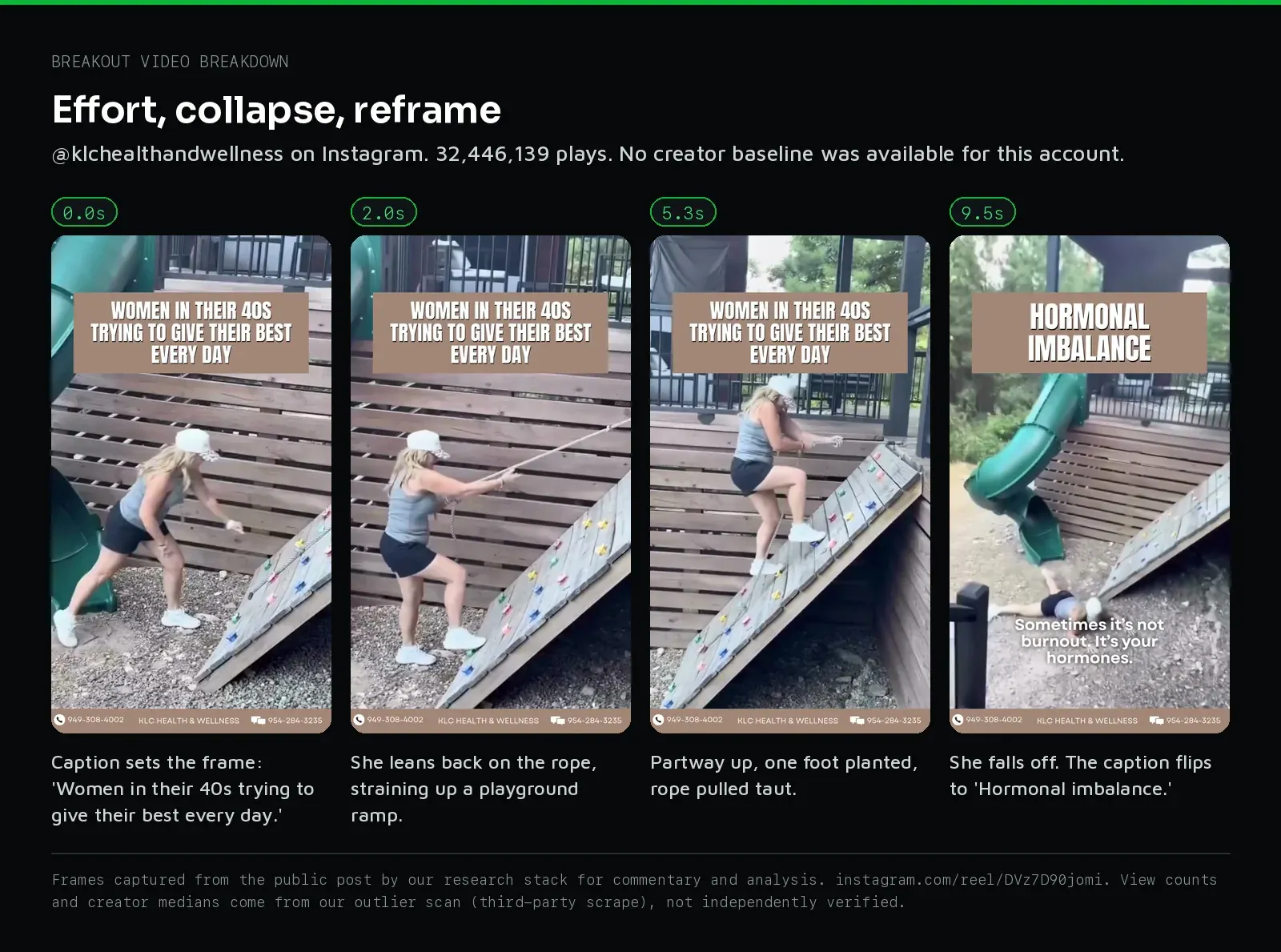
A reel from @klchealthandwellness on Instagram shows a strong visible proof mechanic. Captioned "Women in their 40s trying to give their best every day," a woman pulls herself up a playground rope-climb ramp, strains, and falls off at about 9.5 seconds. The caption then flips to "HORMONAL IMBALANCE," with the subtext: "Sometimes it's not burnout. It's your hormones." The reel went to 32.4M plays.
This is effort, collapse, reframe. The woman straining on the ramp is a physical struggle the viewer can map to themselves. It makes the symptom undeniable on camera. You see the strain before anyone names the cause.
The Squeeze Test
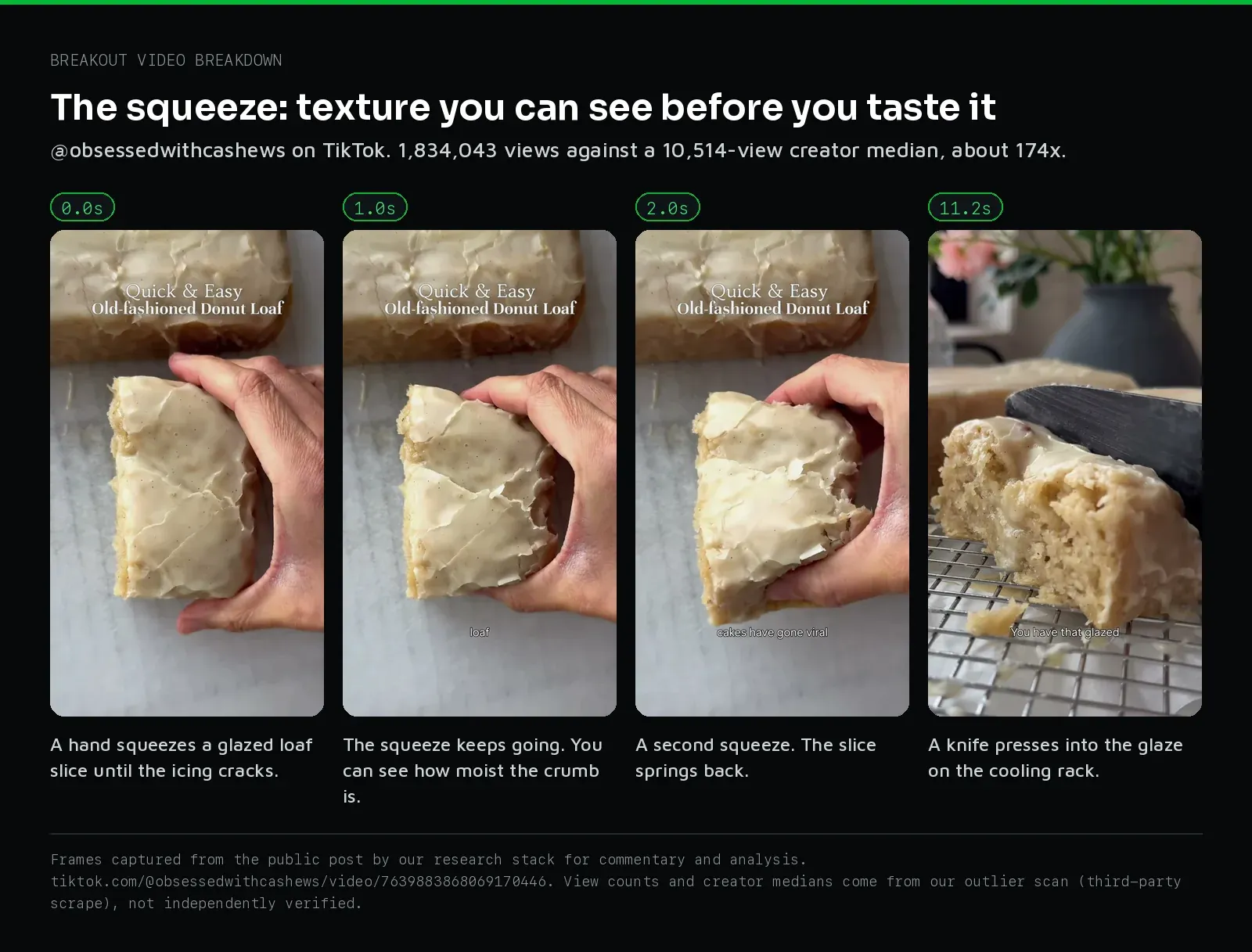
The real version of this pattern comes from a recipe creator, not a brand: @obsessedwithcashews. A hand squeezes a glazed loaf slice until the icing cracks and the crumb shows, squeezes again, then a knife goes into the glaze. The video went to 1.8M views against a creator median of 10,514, about 174x. The texture proof happens before anyone takes a bite.
A keto baked goods brand makes low-carb bread and sweets. Buyers' main objection is that gluten-free and low-carb bread tastes like dry cardboard and crumbles instantly. A standard ad has a creator taking a bite and saying it tastes great. Here's the concept I'd pitch instead, adapted from the squeeze pattern above and untested so far: a fist compresses a muffin as hard as possible, then opens, and the muffin springs back without crumbling. The viewer would see the moisture and density with their own eyes, before anyone takes a bite.
The adaptation boundary
You can borrow these patterns. You can adapt the Squeeze Test for a different food product, or the Chew Autopsy for a piece of sporting equipment.
But there's a strict boundary. The visible proof has to be real and repeatable. A creator can't perform your product working if it doesn't actually work.
If your dog chew splinters when sawed in half, the Chew Autopsy fails. If your low-carb muffin crumbles into dust when squeezed, the Squeeze Test fails. If your frames don't hang square, leading with a perfect gallery wall is impossible.
You can't fix a product problem with clever editing. The audience will spot the cut, and the moment they suspect a camera trick, the proof becomes a lie. Find the physical proxy your product can actually pass, every time, on a phone camera, in one take.
A practical test you can run this month
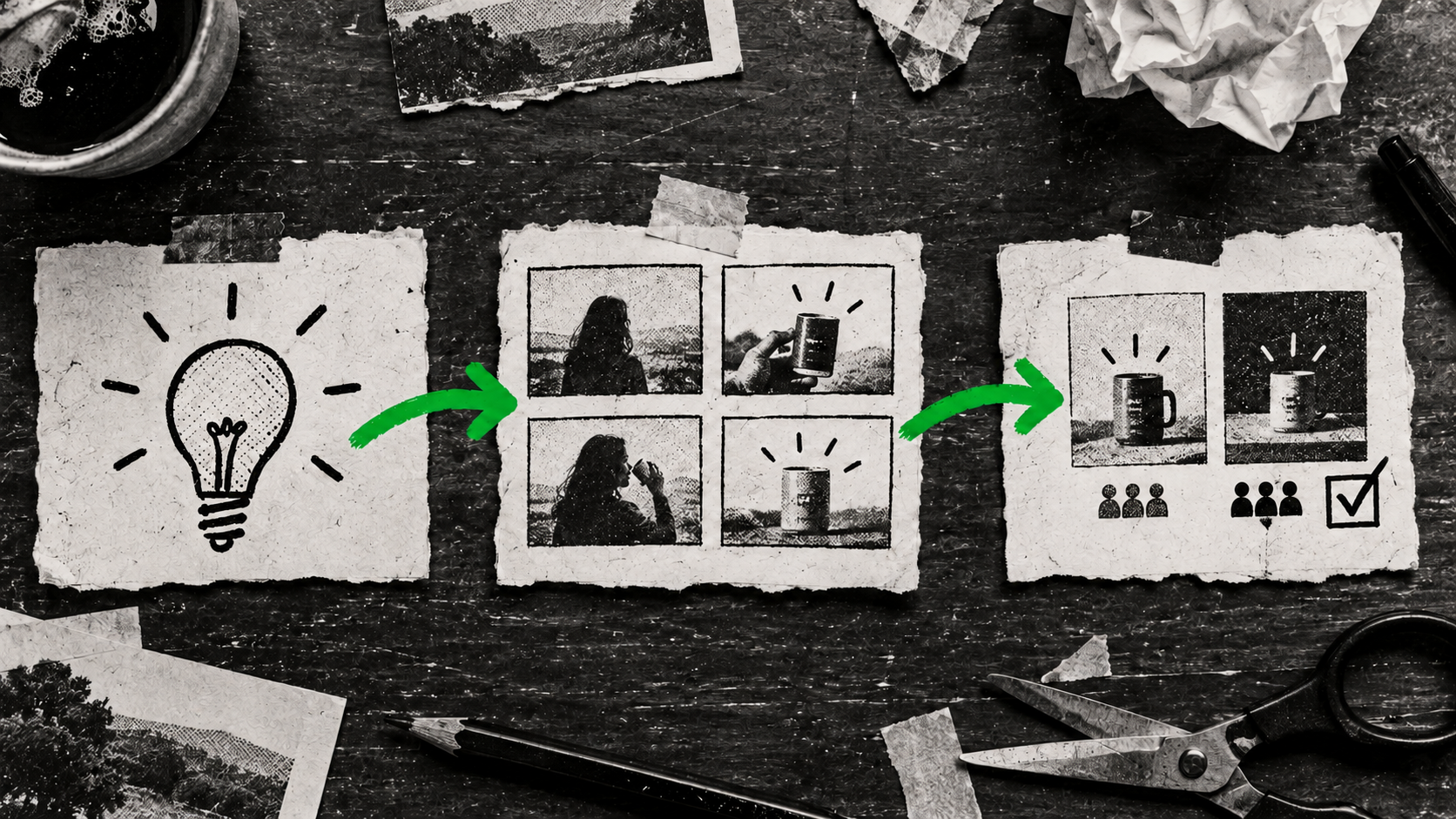
Stop briefing creators with a list of product features. Run a focused visible proof test instead.
- Pick your buyer's single biggest objection. Write it down exactly as they'd say it.
- Design a physical test that proves the objection wrong without any spoken words.
- Brief three creators to film this exact test in one unbroken take.
- Tell them to withhold the brand name until the test is complete.
- Run these videos against your best talking-head explainer.
Measure the results by the cost to acquire a real customer, not by click-through rate. My bet is the visible proof video holds attention longer and converts better, because it answers the buyer's actual fear.
What will make this test fail
Your test will fail if you try to cheat the physics.
If the creator has to cut away right before the payoff to make the product look good, the test is dead. If the proof needs an elaborate setup no normal person would ever run into, it's dead too.
The test also fails if you pick the wrong objection. Proving your packaging is waterproof doesn't matter if the buyer is worried about the taste. The proof has to answer the specific fear that's stopping the purchase.
Do the work to find the right objection. Then let the camera prove it.
Next steps
Visible proof is one mechanism. The brands that win keep testing to find the creative angles that convert their specific buyers, and the brief is where that starts. If you're about to hand this to a creator, here's how to brief a creator video around your buyer's doubt.