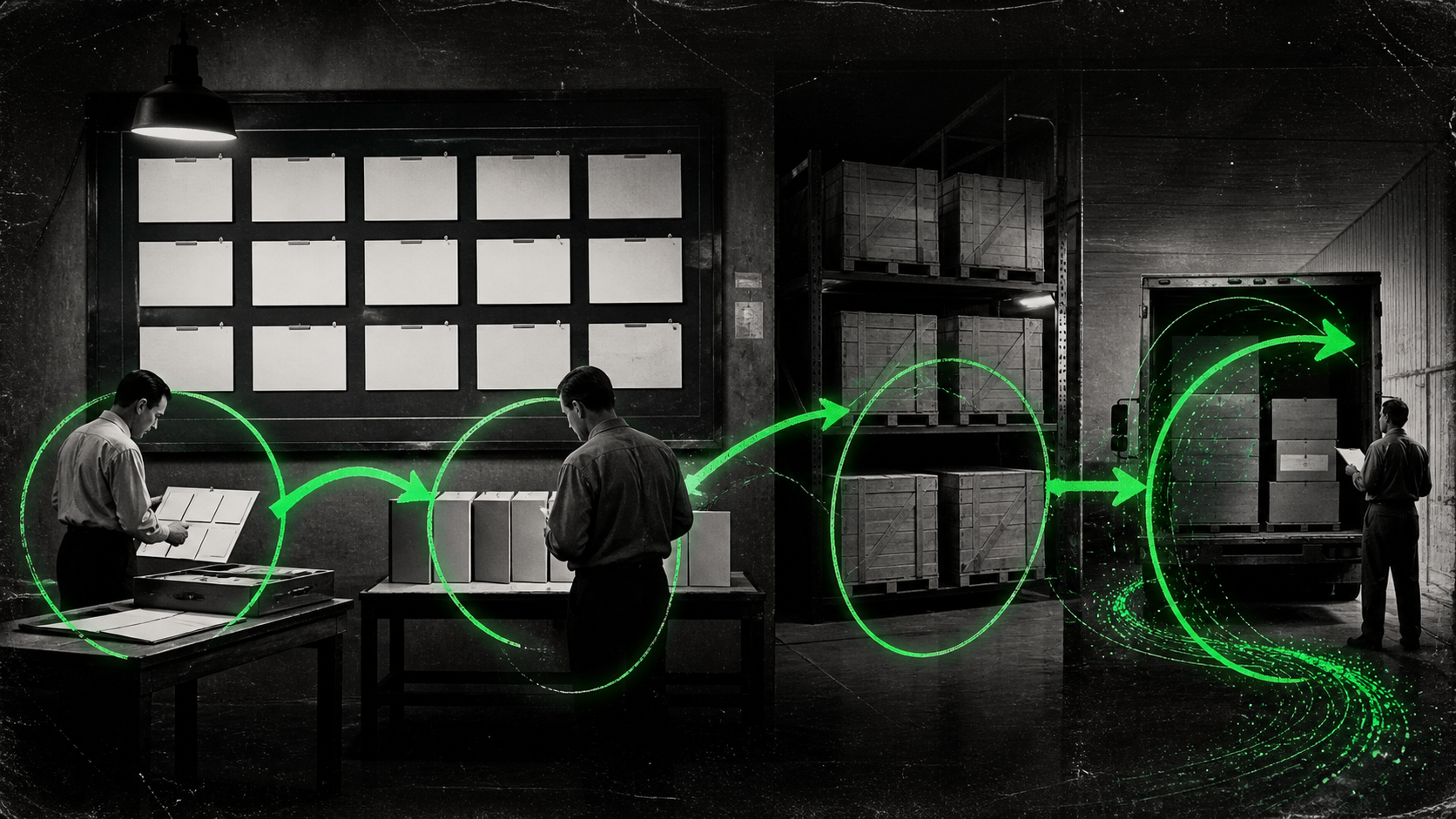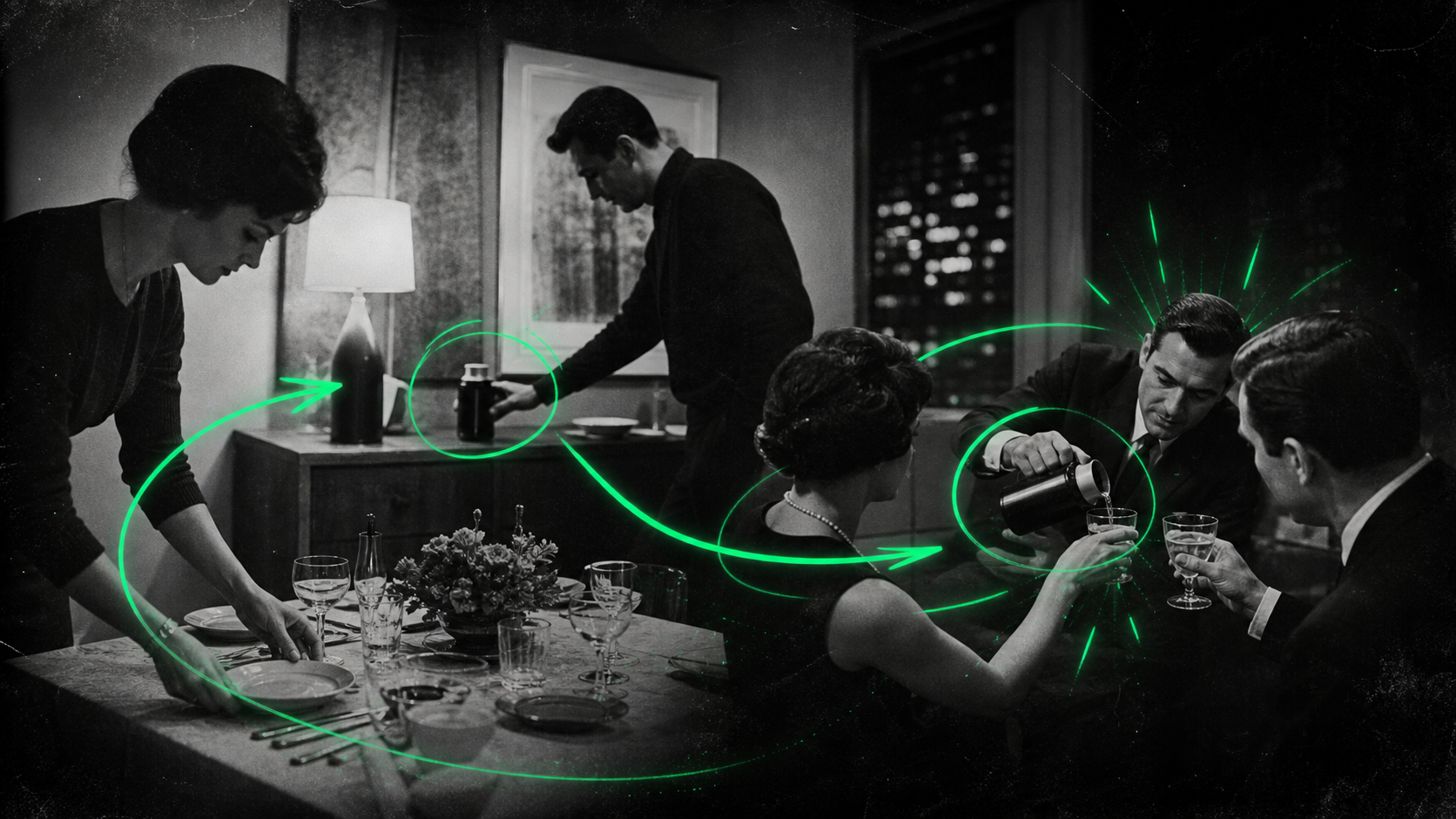
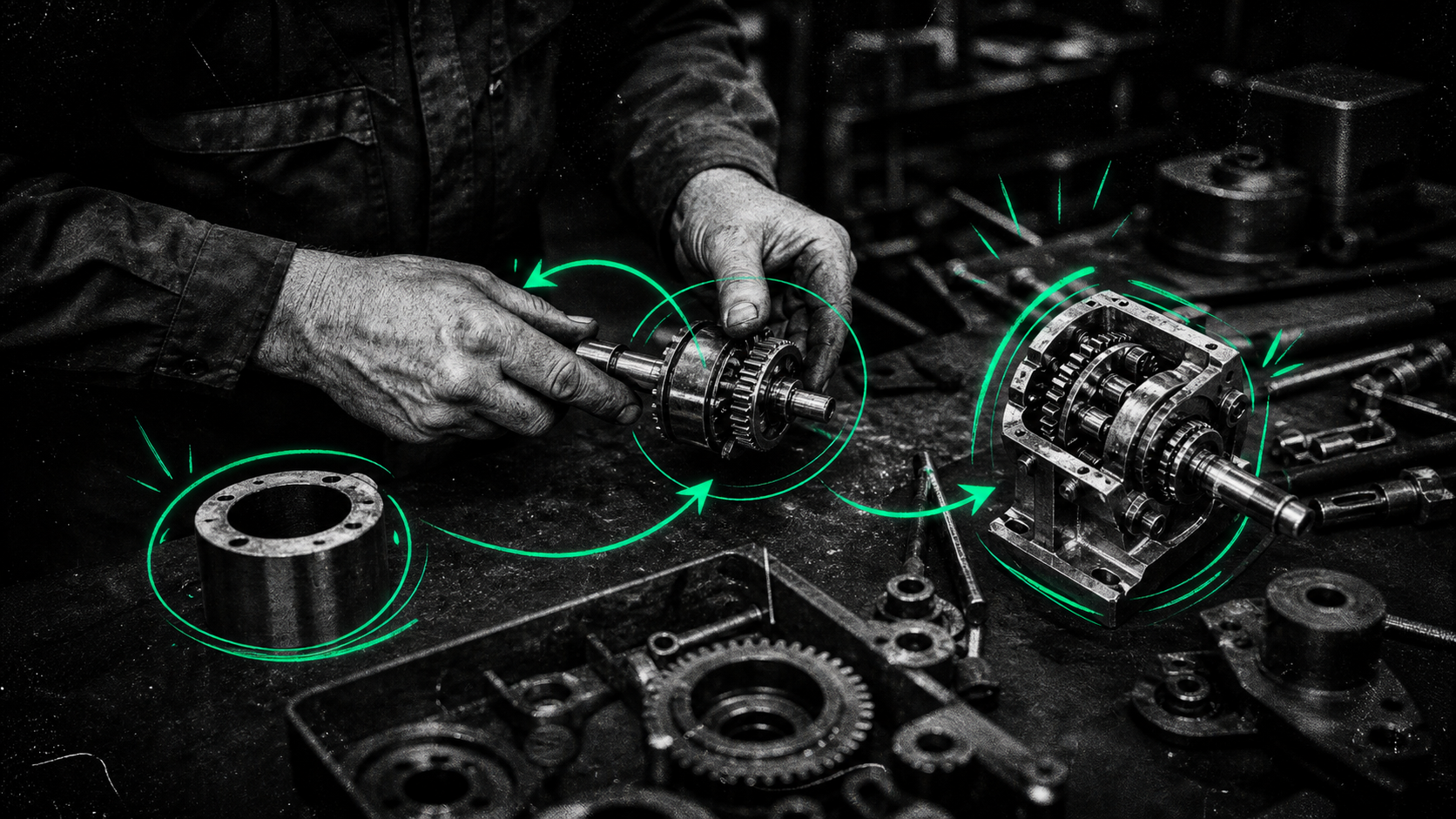
A product is rarely too boring for social media. It is usually being filmed as a noun.
Bolt. Frame. Filter. Fastener. Software. Insurance form.
The content gets better when you show what the product prevents, changes, simplifies, reveals, or survives. That gives the viewer a problem to recognize and a mechanism to inspect.
The useful question is not how to make the object entertaining. It is which problem, mechanism, or difficult task makes the object matter.
How do you market a boring product on social media?
Market a boring product by moving attention from the object to the work around it. Show the difficult task, hidden failure, physical mechanism, expert judgment, or before-and-after state that makes the product matter.
Do not start by asking how to make the brand entertaining. Start here:
- What goes wrong without the product?
- What does an experienced operator notice that a beginner misses?
- Which part moves, fits, aligns, seals, measures, or changes?
- What comparison makes the difference visible on a phone?
- What task looks satisfying when done correctly?
Those questions create content because they create stakes.
Find the invisible problem
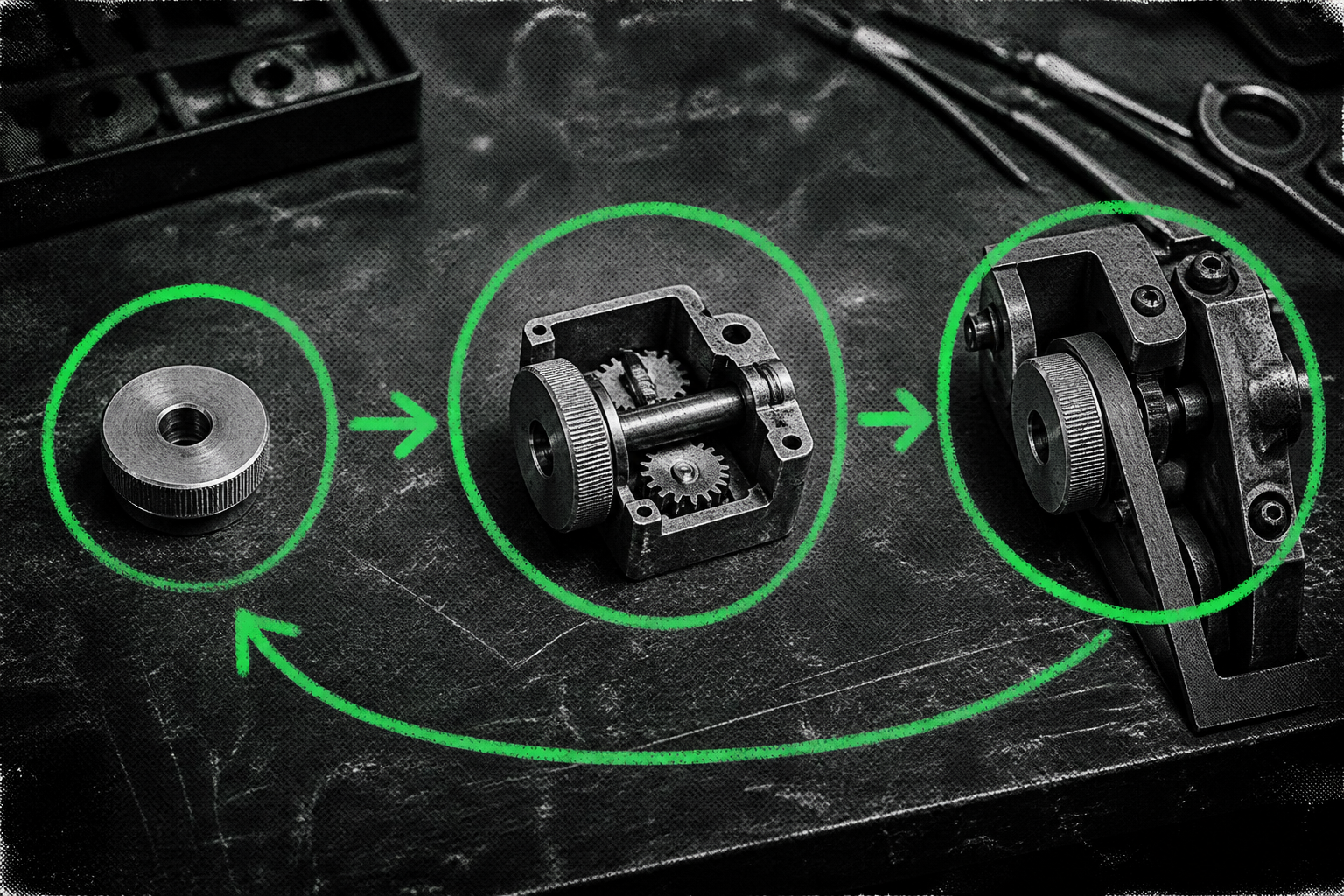
Many ordinary products solve problems that appear only after the wrong choice.
A picture frame component matters when glare hides the art. A level matters when the finished row is crooked. A seal matters when moisture gets through. A software rule matters when duplicate work hits the customer.
The problem is not boring. It is hidden.
Turn it into the opening:
- Show the glare before showing the special glass.
- Show the crooked result before showing the spacing tool.
- Show the failed assembly before explaining the component.
- Show the manual workaround before showing the automation.
This gives the product a reason to enter the story. Without that problem, the viewer sees a piece of hardware. With it, they see the thing standing between a clean result and an annoying failure.
Start with the component when assembly is the story
Finished products can hide the most interesting part.
In one public example, separate pieces of a hammer appeared on a work surface. The viewer could not immediately see the final form, so each fitting and tightening action advanced the reveal. The ordinary tool became an assembly question.
This format works when the parts explain value:
- modular products
- replacement components
- custom manufacturing
- packaging systems
- furniture hardware
- tools and fixtures
- technical kits
The shot sequence is simple:
→ place the unfamiliar component in frame
→ show the receiving part
→ connect them in a tight shot
→ apply the correct tool or motion
→ reveal the finished object in use
Do not add a mystery if the component is impossible to read. The audience should be able to track the transformation, even if they cannot name every part.
Use optical comparison for invisible differences
Some products work by removing something: glare, noise, vibration, friction, waste, delay, or risk. That can be hard to film because the better state looks like nothing happened.
Create a side-by-side comparison.
In one source example, a frame showed a reflective surface beside an anti-reflective surface. The product difference was visible without a long explanation. That is the key. The comparison turned a technical property into an immediate judgment.
Build the comparison carefully:
- Match the camera angle.
- Match the lighting and background.
- Label each side plainly.
- Change only the product property you want to show.
- Hold the result long enough to inspect.
If you change the angle, light, and product at the same time, the comparison stops being evidence.
For more demonstration structures, see product demo video.
Let the difficult task earn attention
A product can become interesting because the work is difficult.
Another public example documented a gallery wall installation on a high stairwell. Ladders, tools, blank space, and the final grid created a real progression. The product did not need a comedy sketch. The task already had risk, skill, and payoff.
Look for work with visible stakes:
- a narrow tolerance
- an awkward location
- expensive material
- a fragile surface
- a process that fails if the order is wrong
- a repetitive task experts perform smoothly
Show enough of the setup for viewers to understand the difficulty. Then show the operator making decisions.
Do not fake danger. If a task requires safety equipment, training, or a controlled environment, include that reality. “Hard to do well” is a strong content premise. “Unsafe for attention” is not.
Put expertise in the hands
Technical product content often overuses talking heads. The expert explains for 30 seconds while the product sits untouched.
Reverse it.
Let the hands do the first explanation. Cleaning motion, alignment, tightening sequence, material handling, and inspection can establish expertise before a credential appears.
Then use voice or captions to answer the question the action created:
- Why this tool and not the common alternative?
- What error is the operator avoiding?
- How do they know the result is correct?
- What should a buyer inspect before choosing?
An expert creator does not need to act like an entertainer. They need to make one useful judgment visible.
Know when to explain and when to demonstrate
Use explanation when the concept is invisible or the decision has consequences the camera cannot show. Use demonstration when the physical behavior carries the answer.
Buyer question: How does it fit together?. Better starting format: Component-first assembly
Buyer question: Can I see the difference?. Better starting format: Controlled side-by-side
Buyer question: Why does this detail matter?. Better starting format: Expert explanation plus close-up
Buyer question: Is the task easier?. Better starting format: Full process comparison
Buyer question: Will it work in my setting?. Better starting format: Real-location demonstration
Buyer question: What happens when it fails?. Better starting format: Failure-state teardown
Most strong technical posts use both. The demonstration earns attention. The explanation turns the moment into a useful decision.
Five content formats for an ordinary product
1. The failure teardown
Open on the broken, crooked, delayed, or rejected result. Walk backward to the overlooked choice.
2. The invisible difference
Compare two surfaces, materials, outputs, or workflows under the same conditions.
3. The component reveal
Begin with the smallest unfamiliar part. Assemble toward the object the viewer recognizes.
4. The expert handoff
Ask an operator to show the one check they make before accepting the work.
5. The difficult install
Document a real job where the setting creates a natural open loop. Keep the product connected to the result.
These formats do not require trend audio or a fake founder dance. They require access to the work.
Build the brief from one objection
Use this exact block:
Buyer objection: What makes them delay or choose the cheaper option?
Visible problem: What can the camera show before the product appears?
Mechanism: Which part, motion, or decision resolves the problem?
Expert: Who performs the task credibly?
Proof shot: What uninterrupted moment makes the result easy to judge?
Limit: What does the video not establish?
Next step: Where can the viewer verify fit, specs, availability, or service details?
<!-- factcheck-allow-quote: "Make this boring product fun" --> That is a usable brief. “Make this boring product fun” is not.
Test the decision, not the editing trick
Build three openings around the same objection:
- Version A: failure state first
- Version B: component first
- Version C: expert question first
Keep the creator, offer, product, and destination comparable. Watch early retention, qualified comments, clicks, and the type of question the post produces.
If viewers watch the assembly but never understand why the product matters, the reveal worked and the product story failed. If the comparison produces buying questions, you may have found a stronger demonstration.
Record the learning. Do not reduce it to “fast cuts won.”
Our guide to reverse engineering viral content explains how to carry the underlying tension into new creative without copying someone else's execution.
The product was never the whole story
An industrial component does not need a personality. It needs a situation where its value becomes obvious.
Open it up, put it under real conditions, compare it fairly, and let someone who knows the work make a useful judgment. The content gets interesting when viewers can see the decision, not just the object.
If you want help turning one product objection into a clear on-camera test, see Emerald's social media marketing approach.
FAQ
Can boring products work on TikTok or Instagram?
Yes. Technical and ordinary products can support useful short-form content when the post shows a recognizable problem, mechanism, comparison, difficult task, or expert judgment.
What should a technical product post show first?
Start with the consequence, unfamiliar component, or visible difference that creates the viewer's question. Introduce the product when it answers that question.
Do boring brands need humor on social media?
No. Humor can work when it fits the brand and audience, but utility, skill, transformation, and satisfying process can carry attention without turning the product into a joke.
How do you measure social content for a technical product?
Match the metric to the job. Use retention for the opening, qualified comments for understanding, clicks for product interest, and downstream sales data where attribution is reliable.
How we built this guide
This article uses visible observations from public short-form posts about framing, tools, furniture, and home improvement. Those observations create creative hypotheses. They do not prove causality, product performance, or results for an adapted campaign.
- Niche maintenance demonstration
- Optical side-by-side comparison
- Difficult installation progression
- Component-first assembly
- Physical furniture stress test
Structured data
```json { "@context": "https://schema.org", "@type": "Article", "headline": "Social Media for Boring Products: Stop Selling the Noun", "description": "How to turn technical and ordinary products into useful social content through problems, mechanisms, and proof.", "mainEntityOfPage": "https://emerald.digital/insights/social-media-for-boring-products", "author": { "@type": "Person", "name": "Matthew Berman" }, "publisher": { "@type": "Organization", "name": "Emerald Digital" }, "image": "https://emerald.digital/media/insights/creator-breakout-program/social-media-for-boring-products-hero.png" } ```
```json { "@context": "https://schema.org", "@type": "FAQPage", "mainEntity": [ { "@type": "Question", "name": "Can boring products work on TikTok or Instagram?", "acceptedAnswer": { "@type": "Answer", "text": "Yes. Technical and ordinary products can support useful short-form content when the post shows a recognizable problem, mechanism, comparison, difficult task, or expert judgment." } }, { "@type": "Question", "name": "What should a technical product post show first?", "acceptedAnswer": { "@type": "Answer", "text": "Start with the consequence, unfamiliar component, or visible difference that creates the viewer's question." } }, { "@type": "Question", "name": "Do boring brands need humor on social media?", "acceptedAnswer": { "@type": "Answer", "text": "No. Utility, skill, transformation, and satisfying process can carry attention without turning the product into a joke." } }, { "@type": "Question", "name": "How do you measure social content for a technical product?", "acceptedAnswer": { "@type": "Answer", "text": "Match the metric to the job: retention for the opening, qualified comments for understanding, clicks for product interest, and downstream sales data where attribution is reliable." } } ] } ```